
Millions affected by severe flooding across Asia, with reports of hundreds of deaths
By the IFRC
(This story is an IFRC press release issued in Kuala Lumpur and Geneva yesterday.)
The IFRC is responding to severe flooding that has affected millions of people across South-East and South Asia. Countries including Indonesia, Sri Lanka, Malaysia, and Viet Nam are reporting widespread devastation, displacement, and urgent humanitarian needs.
Intense monsoon rains and climate-driven weather extremes have triggered rapid-onset floods and landslides, destroying homes, livelihoods, and critical infrastructure.
Families have lost homes and incomes, and thousands are sheltering in evacuation centers. Health risks from waterborne diseases and sanitation challenges are rising, while flooded roads and damaged bridges are cutting off access to essential services.
In Indonesia, severe flooding and landslides have impacted 39 districts across Aceh, North Sumatra, and West Sumatra, following high-intensity rains linked to Tropical Cyclone Senyar. Approximately 1.1 million people have been affected, with 290,700 displaced and 435 deaths reported.
The Indonesian Red Cross has mobilized staff and volunteers to conduct evacuations, provide first aid, distribute clean water, and operate public kitchens, but access remains difficult and resources are stretched.
Road closures and the risk of landslides hamper relief efforts
In Sri Lanka, more than 968,000 people across 25 districts have been affected, with 193 deaths and 228 missing. Over 41,000 families are sheltering in official safety centres, while thousands remain with relatives.
The Sri Lanka Red Cross Society has deployed over 3,500 volunteers to provide first aid and distribute water, hygiene kits, bedding, and clothing. However, road closures and the risk of secondary landslides continue to hamper relief efforts.
In Malaysia and Viet Nam, localized flooding has disrupted transport and essential services, compounding vulnerabilities for communities already facing economic pressures and climate-related shocks. Recovery will be slow and difficult without sustained support.
Beyond immediate response, these floods underscore the urgent need for stronger legal and policy frameworks to protect people in disasters.
The goal of the ongoing negotiations towards a Treaty on the Protection of Persons in the Event of Disasters aims to establish binding international obligations for disaster risk reduction and humanitarian assistance.
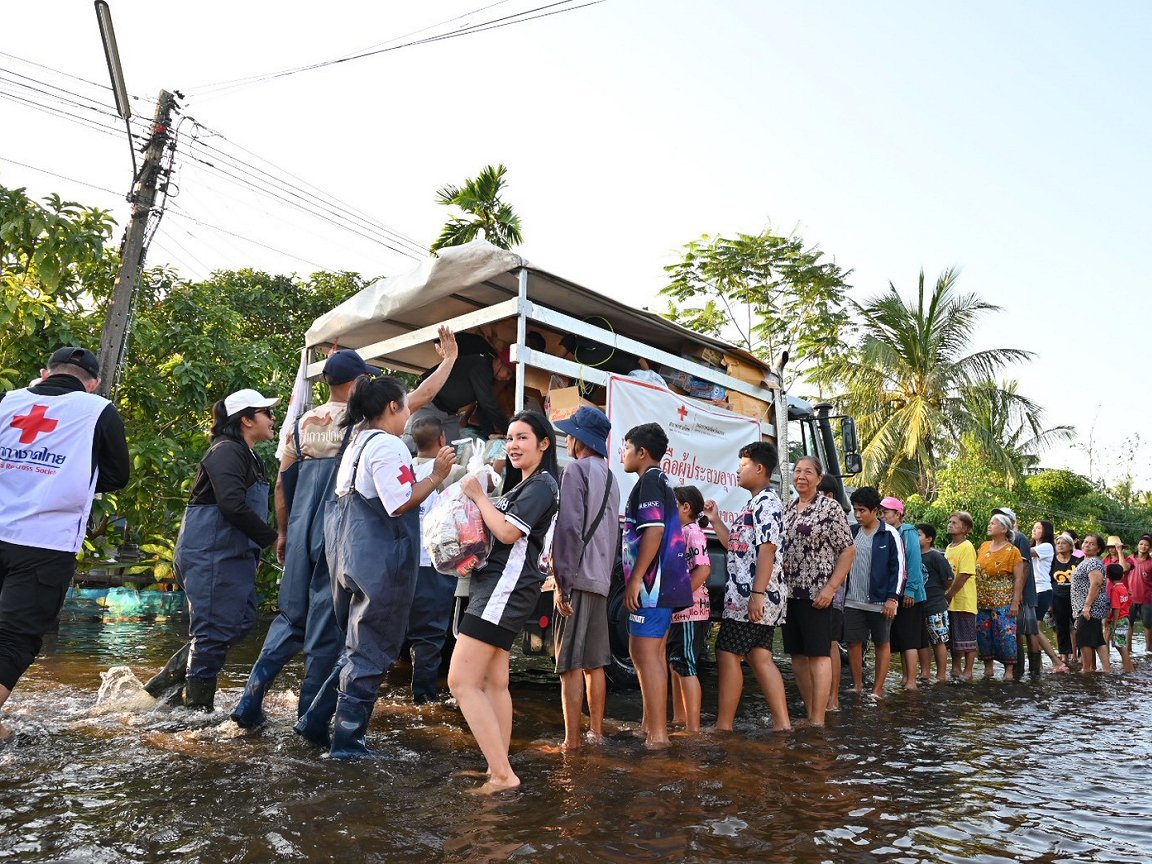
The Philippines and Thailand (pictured) have played key roles in advancing this treaty, which would help ensure faster, more coordinated support and better protection for vulnerable communities in future crises.
A stark reminder that climate-driven disasters are becoming the new normal
Alexander Matheou, IFRC Regional Director for Asia Pacific, said yesterday: “The picture in South-East Asia shows that you still need even better early warning systems. Even better shelter for people to go to in times of flooding if you’re really going to mitigate these risks. Even more nature-based solutions – the planting of trees and mangroves in those places, particularly at risk of flooding to keep people safer.
“Better social protection systems in disaster so they can immediately get cash and get the food, the medicine, and the shelter they need when a disaster strikes.
“These are all things that the IFRC is working on and we’ll continue to work on in the years to come.”
Red Cross and Red Crescent societies are on the front lines of the response, but the scale of needs is growing faster than local capacity. IFRC calls for urgent international support to meet immediate humanitarian needs and help communities rebuild.
These floods are a stark reminder that climate-driven disasters are becoming the new normal, and investment in resilience and preparedness is critical.
Reading University research scientist Akshay Deoras adds: Climate change is rewriting the Asian monsoon. Rain now arrives in sharper bursts, dry spells stretch further, and downpours hit with greater ferocity.
What was once a steady heartbeat for communities has become an erratic pulse, capable of unleashing a month’s rainfall in just one day.
This latest flood is a stark warning that a turbo-charged monsoon, coupled with gaps in disaster preparedness and planning, is costing lives across Asia.
Preparing for yesterday’s risks is no longer enough. We must instead build systems that can stay a step ahead of these growing extremes.
Thai Red Cross volunteers join forces with the Songkhla Provincial Volunteer Rescue Unit in the south of the country to distribute relief supplies to flood-affected villagers yesterday. (Photo: Thai Red Cross via social media)