
IFRC triples appeal for Cyclone Ditwah in Sri Lanka with storm’s full impact only now becoming clear
By the Climate Centre
The IFRC this week nearly tripled to 14 million Swiss francs its emergency appeal for people in Sri Lanka affected by Cyclone Ditwah, whose “supercharged” rainfall triggered extreme flooding and landslides and whose full impact is only now becoming apparent; it initially launched a 5m CHF appeal in addition to a 1m CHF IFRC-DREF grant.
The Sri Lankan government this week said a total of 646 people had died and a further 174 were still missing.
Cyclone Ditwah rapidly intensified into a devastating tropical storm from a low pressure system in the Bay of Bengal in late November near Sri Lanka, unleashing unprecedented rainfall and severe impacts across the country, says the IFRC’s revised emergency appeal issued Monday.
Rainfall exceeded 200mm within 24 hours and in some districts reached 540mm, causing catastrophic flash flooding in low-lying areas and along major river basins that is difficult to predict.
The Department of Meteorology issued a red alert, its highest level of warning, on 27 November, covering both land and sea areas, and the government declared a nationwide state of emergency the next day.
Future climate-related shocks
The Sri Lanka Red Cross Society quickly mobilized 300 volunteers from all 25 district branches to conduct assessments and provide first aid, while the National Society’s headquarters sent essential household items to branches in districts affected by landslides.
The IFRC says access to many affected areas remains “severely constrained, with more than 200 roads still impassable and at least ten key bridges damaged, limiting overland deliveries and restricting population movement from isolated communities.”
The IFRC added this week that needs of affected communities are becoming increasingly distinct as more information becomes available: they include cash support for transitional shelter, latrines, and livelihood interventions.
The Red Cross operational timeframe has been revised to a full two years, aimed at reaching nearly 600,000 people, prioritizing those currently staying in shelters, with relatives or in their damaged homes.
“In parallel, a strong emphasis will be placed on branch capacity building in disaster preparedness to strengthen community resilience against future climate-related shocks,” the IFRC revised appeal adds.
Storms hugged the coast
Lalith Rajapakse, a professor in the Department of Civil Engineering at the University of Moratuwa in Sri Lanka who took part in the World Weather Attribution rapid study, said last month: “Cyclones like Ditwah have become an alarming new reality for Sri Lanka and the wider South and South-East Asian region, bringing unprecedented rainfall, widespread loss of life, massive disruption to economic activities, and unrecoverable damage to the environment … This should be an unequivocal eye-opener to the scale of future climate-driven extremes the country and the region must prepare for.”
Cyclone Senyar, Ditwah was one of two major storms that devastated communities in Sri Lanka, Indonesia and Thailand starting in late November despite accurate forecast warnings.
Scientists say the storms “were not dangerous because of their winds, but because they produced unusually intense rainfall … Both Ditwah and Senyar formed unusually close to land and travelled along the coastline for an extended period. This meant they stayed over warm waters long enough to continuously draw moisture, but remained close enough to land to dump that moisture as intense rainfall almost immediately.”
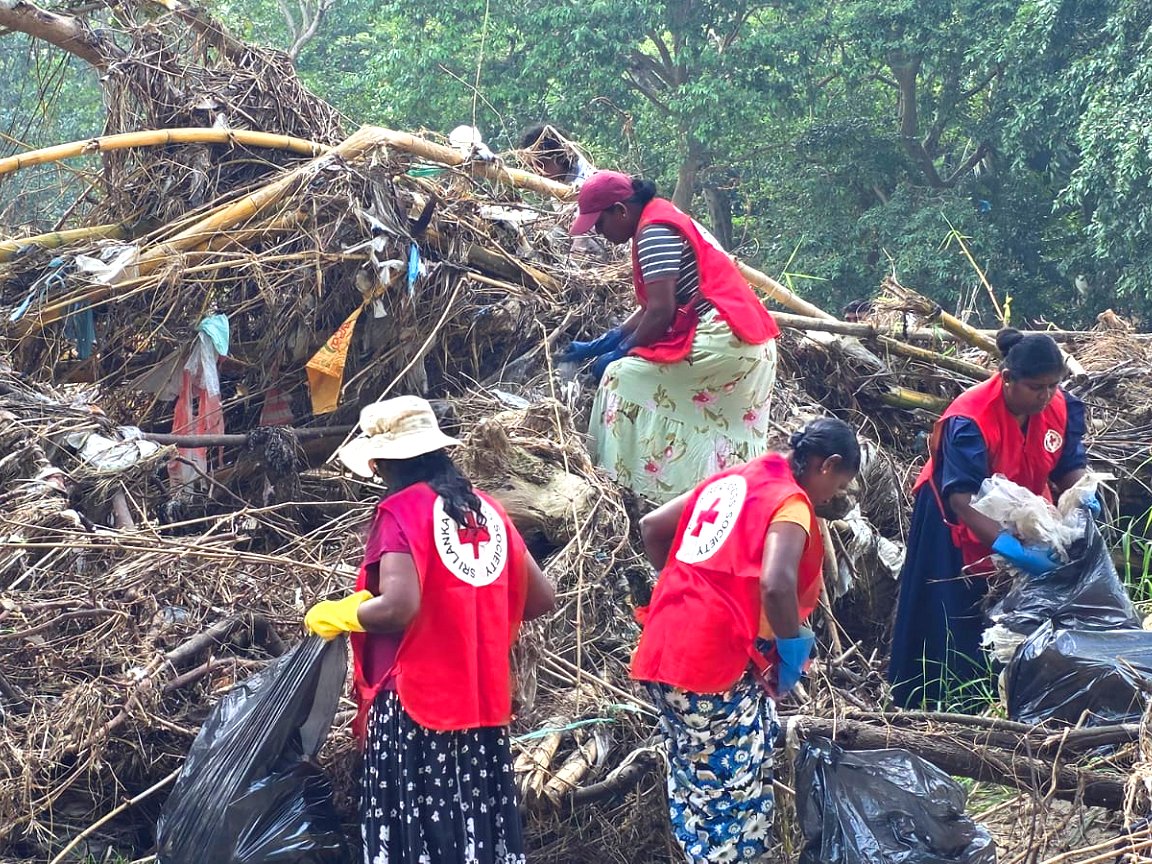
The northern Sri Lankan district of Anuradhapura was among the hardest-hit areas during Cyclone Ditwah, the National Society said earlier this week. Its branch volunteers are now engaged in a full-on clean-up campaign (pictured), supported by local residents. (Photo: SLRC via X)