
Climate impacts, inclusion and livelihoods in the Sahel: the importance of social protection
By Sajanika Sivanu and Sneha Ganguly, Climate Centre
The Climate Centre today publishes two studies aimed at improving the use of weather and climate information by social protection and climate stakeholders in Burkina Faso and Mauritania.
The reports are outputs of the Clima-Social project, led by the Climate Centre, part of the WISER Africa programme supported by the UK through the British Met Office.
Clima-Social aims to enhance resilience of communities disproportionately affected by extreme weather through strengthened social protection and improved access to weather and climate information services.
In the Sahel generally, climate change is not only an environmental issue but a deeply social one. Vulnerable groups are disproportionately affected because they often live in high-risk, flood-prone areas and have limited resources to prepare for, respond to, and recover from climate-related shocks.
An important finding of one of our two studies, on Gender, Equality and Social Inclusion (GESI) in Burkina Faso and Mauritania, is that communities most exposed to climate risks are often the least covered by formal social protection, while displaced populations and informal workers frequently fall outside existing safety nets.
Participation in decision-making
Additionally, limited access to timely and usable climate information further reduces their ability to benefit from shock-responsive or anticipatory social protection.
This GESI analysis identified particularly vulnerable groups, including agricultural workers, people affected by conflict, and low-income rural households and the urban poor.
Vulnerability is further intensified for women and girls, people with disabilities, the elderly, and ethnic minorities because of limited resources, services and participation in decision-making.
These findings from the Climate Centre’s social protection team were used to inform the project and strengthen coordination between climate and social protection actors, improve the use of climate information for early action, and ensure interventions do not reinforce existing inequalities.
Validation workshops with national stakeholders helped anchor the analysis in local realities.
The backdrop for the other study which centred on Burkina Faso is the interplay of multiple factors impacting the security of livelihoods and general resilience in the Sahel. The analysis pinpointed the complex relationship between people’s livelihoods and growing risks from climate hazard like floods, droughts and heatwaves there.
Evidence base
It Identifies opportunities to strengthen social protection systems, enabling them to respond proactively to climate warnings and support communities in safeguarding agricultural livelihoods.
This study, backed by data collected from nearly 400 participants in rural and urban settings, found that heatwaves contributed to substantial losses in productivity and income.
It also underscored the lack of social protection mechanisms while highlighting the potential benefits of instruments such as cash transfers, vocational training and credit.
Recommendations for reducing impacts, improving coping capacities and strengthening adaptation included expanded shock-responsive social protection, sustainable livelihood interventions, and access to early warning systems.
Strengthening the evidence base on specific climate impacts on livelihoods, including through social protection, should also be on the agenda for the future.
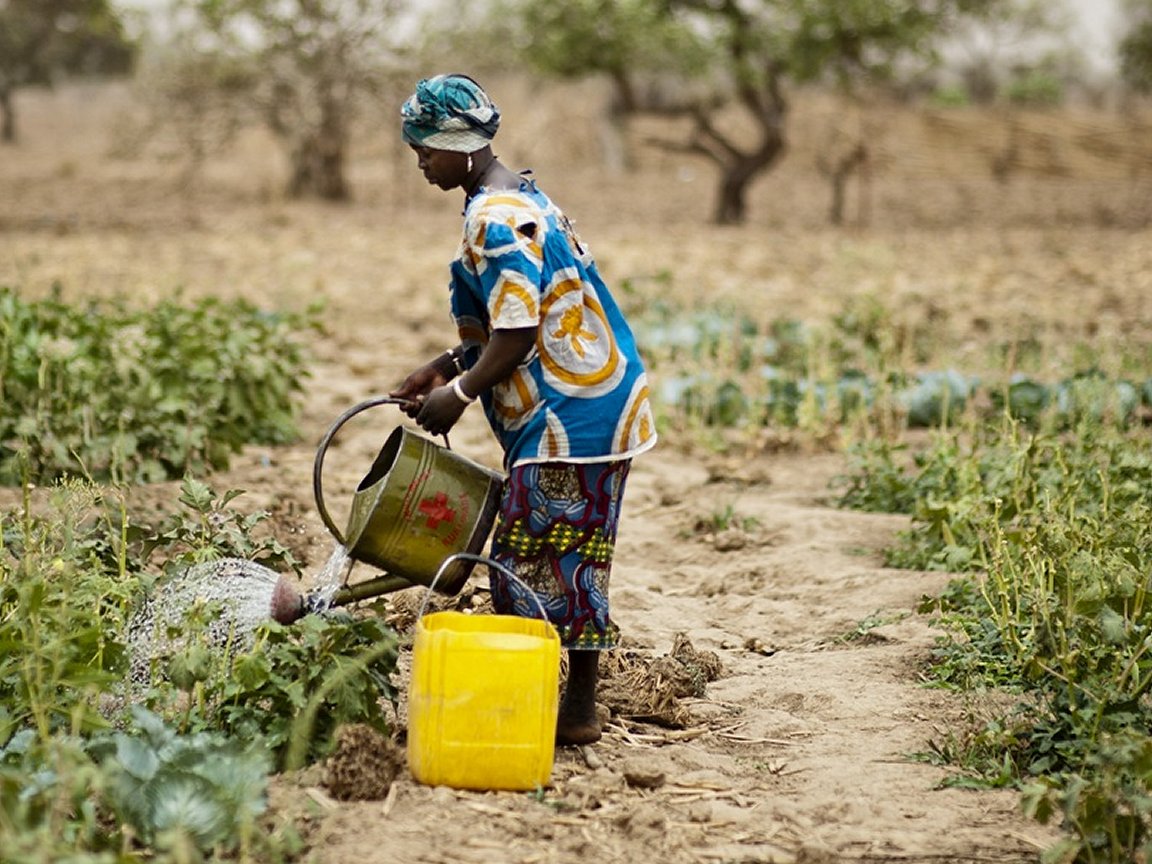
A woman in the Burkina Faso village of Niaptana, Yagha province tends her crops that benefitted from a Spanish Red Cross food security programme. Two new UK-supported studies from the Climate Centre are aimed at improving the use of weather and climate information by social protection and climate stakeholders in Burkina Faso and Mauritania. They argue for expanded social protection as part of the solution. (Photo: Ollivier Girard/IFRC).