
Malawi Red Cross early action in the face of killer ‘storms, strong winds, flash floods, lightning’
By the Climate Centre
Amid the peak phase of the rainy season in Malawi, the government there last week said 160,000 people have been affected by “storms, strong winds, flash floods and lightning” since the beginning of September in most of the country’s administrative areas, including the capital Lilongwe.
In a statement Thursday, the Department of Disaster Management Affairs (DODMA) said it was “reaching out to the affected [areas] with food and non-food items”, while search and rescue operations continued in central Nkhotakota district, top of the list of affected areas, where 11 people had died.
Then-current forecasts indicated a continuing danger of flash floods in half the affected areas, and councils at risk were being advised to move people to evacuations centres.
Deaths had now reached 36, the authorities said last week.
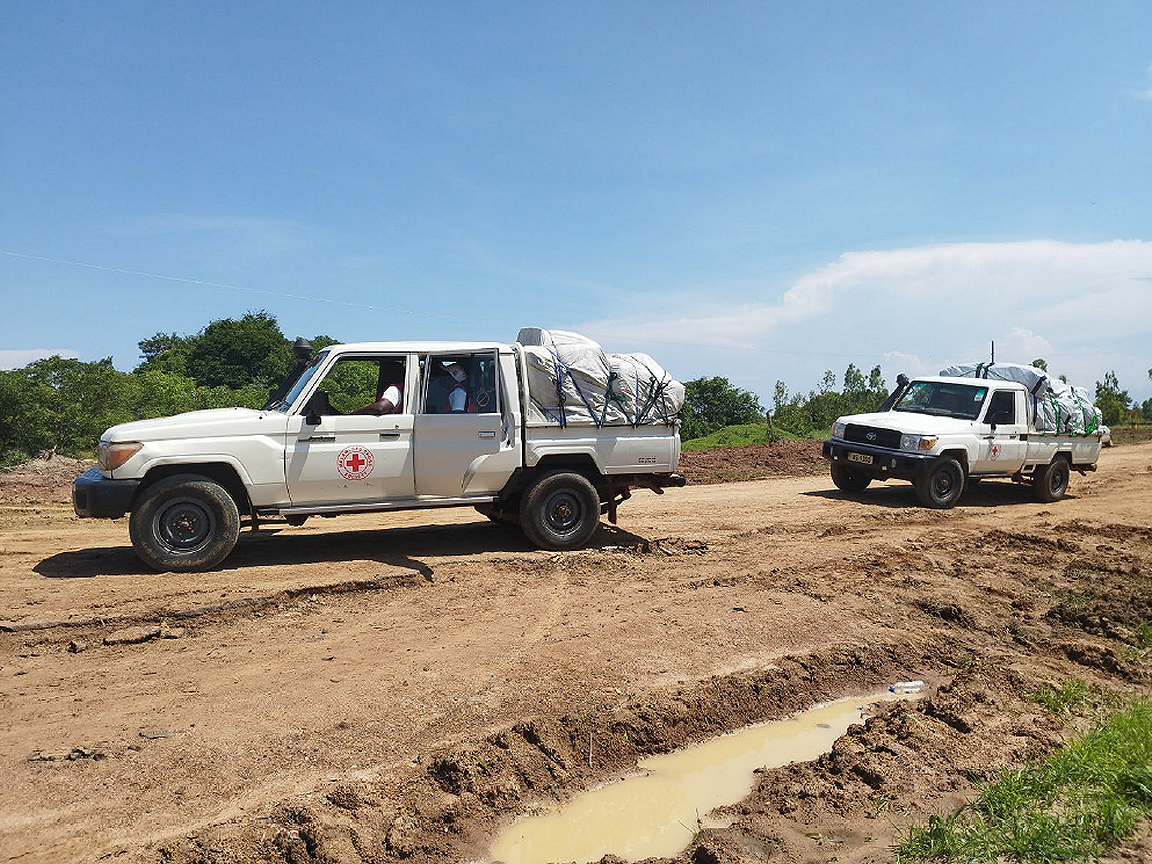
The Malawi Red Cross acted early at the beginning of the year to provide assistance in Nkhotakota where there were more than 20,000 people affected by the extreme weather: after a seven-hour drive on damaged roads, volunteers delivered relief supplies including blankets, sleeping mats, soap, buckets, and hygiene kits.
The National Society then activated its simplified early action protocol on 5 January after the Department of Climate Change and Meteorological Services forecast extremely heavy rainfall across several parts of the country.
Over a five-day period, it has been supporting 12,500 people in Salima district at risk from floods with shelter materials and cash as well as tents, tarpaulins, blankets and sleeping mats.
‘The right time’
Under the EAP, the Malawi Red Cross was also disseminating early warnings over community radio, announcements from vans, and by volunteers going door-to-door in at-risk areas; the messages are expected to reach over 100,000 people.
Communities will also be mobilized to clear storm drains which will protect a similar number of people from rising waters.
Once the EAP was triggered, the IFRC provided 220,000 Swiss francs from its Disaster Response Emergency Fund.
Salima District Commissioner Salima Thokozile Munthali praised the Red Cross for its anticipatory actions, saying they came “at the right time when people are panicking due the heavy rains that have already destroyed some houses”, the National Society said on social media.
At the end of December, Malawi’s Vice-President Vice-President Jane Ansah, writing on Facebook, expressed deep concern over the impact of “incessant rains that are continuing to destroy crops, wash away livestock, and damage houses, roads, and bridges”.
She continued: “The damage caused by these rains is heartbreaking, as families are losing their livelihoods, homes, and sources of food across the country.”
The DODMA was coordinating response efforts, including search and rescue, emergency operation centres, and the deployment of security forces.
Malawi Red Cross volunteers fight their way through to Nkhotakota, the worst affected district in the latest seasonal floods. Eleven people have died there, out of a total of 36 countrywide, the government says. (Photo: Malawi Red Cross via X)