
Climate Centre sets out its game plan for coming five years
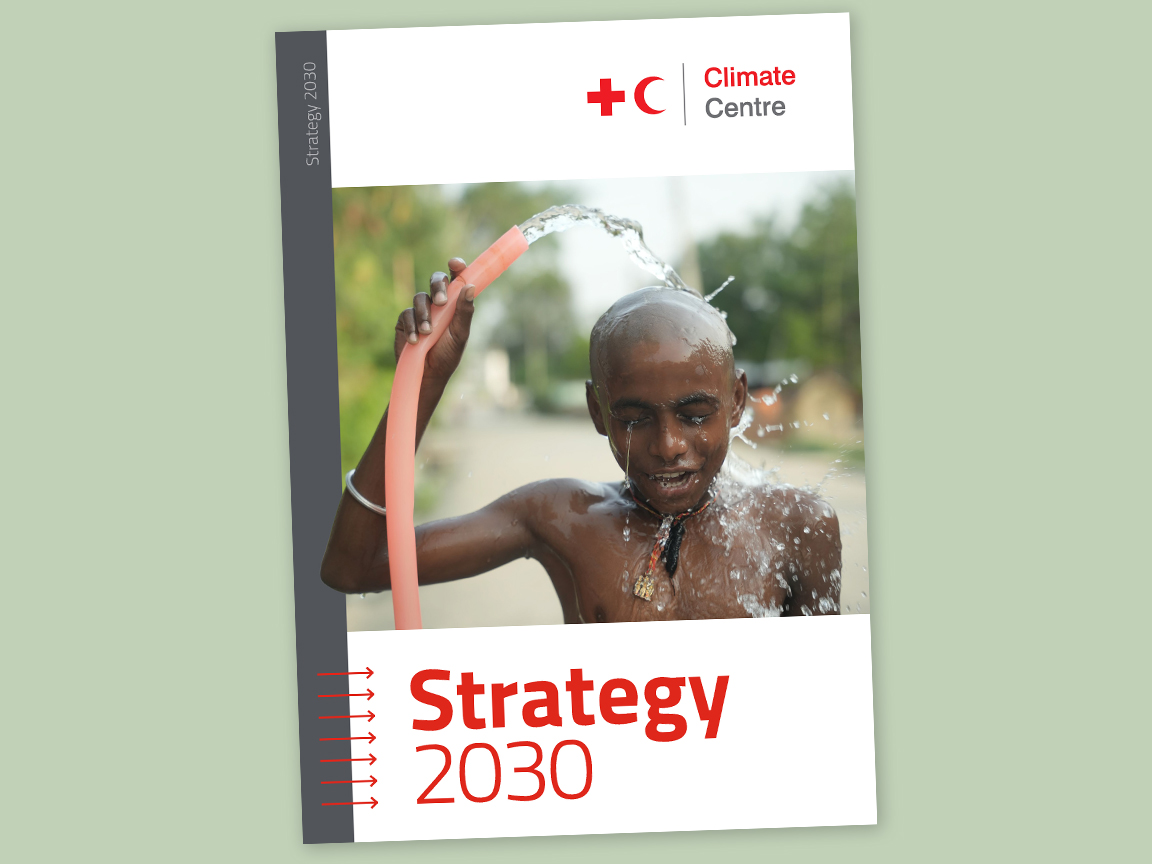
by the Climate Centre
Against a backdrop of what it calls the “increasing frequency, intensity and spread of extreme weather and climate impacts that destroy the natural world while disproportionately affecting people in vulnerable conditions,” the Climate Centre today rolled out its strategy for the next five years.
Humanity is “experiencing rising inequality and political turmoil – exacerbating risk and limiting their capacity to adapt,” says the centre’s Strategy 2030, while meeting the challenges “requires greater resolve and resources than ever before”.
The overarching mission of the Climate Centre, one of five IFRC Global Reference Centres, remains what it has been since its establishment by the IFRC and the Netherlands Red Cross in 2002: to support the Red Cross Red Crescent Movement and its partners in reducing the impacts of climate change and extreme-weather events on, above all, vulnerable people.
What has changed relatively recently, however, is the scaling down by key donor institutions of their commitments to supporting climate action on the scale and with the urgency needed, said Climate Centre Director Aditya Bahadur, who was introducing the strategy in person in London on Wednesday at an event hosted by the British Red Cross.
“While a new climate finance target was agreed at COP 29, this failed to meet the expectations of countries worst affected by the climate crisis,” he said, along with “shifts in the priorities of the humanitarian sector, calls to reform the system at large, and growing misinformation and a lack of public trust in science.”
But speaking also of “a time of possibility,” he added that the new strategy was being launched “as recognition of the humanitarian threats posed by climate change is greater than ever, while artificial intelligence has opened up new opportunities, philanthropic and private finance is expanding, and the next five years will see major policies renewed such as the Sustainable Development Goals, the Sendai framework and national plans on mitigation and adaptation.”
A plan for success in a complex, dynamic world beset with interconnected crises by helping at-risk communities
to function and flourish
The Climate Centre’s Strategy 2030 – developed after extensive consultation with staff and partners – succeeds its five-year predecessor and reflects the IFRC’s own Strategy 2030 that acknowledges the climate and environmental crisis as the principal humanitarian challenge facing its network.
The crisis also appears in the ICRC’s Institutional Strategy 2024–2027, and the Climate Centre will support climate action across Movement components “through insights, evidence, and technical solutions”, underpinned by cutting-edge research and evidence-based input to policy.
The launch event in London is expected to include some 60 external partners, including the UK Foreign, Commonwealth and Development Office, the British Met Office, several UK universities, and other UK-based humanitarian, development and climate agencies.
The Climate Centre strategy maps out a comprehensive vision for change, broken down into three key areas – creative solutions, collective action and capable institutions – along its traditional pathways of science, policy and practice, as well as specific enablers that now include AI.
Its aspirations for a better future will involve the Climate Centre in: encouraging fresh ideas and tools to tackle climate impacts; demonstrating the value of bringing together the climate, development, and humanitarian sectors “to work as one”; and helping partner institutions gain the skills they need to respond effectively to climate risks and impacts.
The strategy concludes by noting that the 2021 principles for locally led adaptation have been endorsed by the IFRC and the Climate Centre, and a commitment to operationalize them now underlies the new vision.
In addition, with the climate crisis is now represented in all major policies and plans across the Movement and most partner institutions, the Climate Centre can “shift away from advocating for the greater recognition of climate risk to a focus on supporting the operationalization of climate action at scale”.
The strategy constitutes a plan for success in “a complex and dynamic world beset by multiple, interconnected crises, ensuring that we are able to do our outmost to support at-risk communities not only to function but also to flourish”.
A young boy cools off in a heatwave in Nepal, where the risk of extreme heat is growing. The Climate Centre’s new five-year strategy reinforces the pledge in its predecessor to support the IFRC in ensuring 250 million people are covered by plans for action on heat in 150 cities and towns globally. To coincide with Heat Action Day 2025 on 2 June, it published a heat action plan for the Nepalese city of Dhangadhi, supported by the British Red Cross – the latest of several involving the Nepal Red Cross. The new strategy promises practical research-led solutions that increase resilience. (Photo: American Red Cross)