ZCRA framework helps Mexican Red Cross strengthen communities’ climate resilience
By Brenda Ávila Flores, Francisco Gabriel Reyes Gil, Jessica Rosales, Karla Hernandez and Daniela Aguilar, Mexican Red Cross
(The IFRC last week published this adaptation of an original 15 December article by the Mexican Red Cross on the website of the Zurich Climate Resilience Alliance. It has been edited slightly here for length.)
Mexico is vulnerable to a variety of climate-related risks. These include droughts in the northern desert region, frosts in the north, heavy rainfall in the south, and tropical cyclones along the coast.
According to Mexico’s National Centre for Disaster Prevention, approximately 80 per cent of disaster-related costs in Mexico between 2000 and 2022 were associated with water-related events.
Flooding in the country has consistently caused damage to infrastructure, loss of life, displacement of communities and economic losses.
Heatwaves are also common during the summer; the National Water Commission reports that most of the country has experienced above-average temperatures due to climate change.
Two contrasting locations are Mexicali, the capital of Baja California state, and the Sotavento region of Veracruz state. They differ widely in terms of their geography, the threats they face, their vulnerabilities and their capacities.
‘Knowledge and experience shared with communities, professionals, and political leaders, and is used to promote better
laws, policies, plans’
Mexicali is an urban centre on the northern border where people work in agriculture, industry and services, but face extreme heat, scarce rainfall and limited cooling options.
In contrast, peri-urban and rural communities in Sotavento depend on agriculture, experience abundant rainfall and have access to river systems. However, they are constantly exposed to flooding and tropical cyclones.
In recent months, the Mexican Red Cross has used the Climate Resilience Measurement for Communities (CRMC) framework of the Zurich Climate Resilience Alliance to guide a holistic and participatory process.
This included people’s concerns about flooding in Veracruz communities, as well as the health implications of heat-related vector-borne diseases in Mexicali.
The framework enables context-specific information on climate resilience to be obtained. By linking local knowledge with regional action, the Mexican Red Cross and its partners are addressing the immediate risks of extreme heat and flooding while also shaping systemic solutions for Mexico’s future.
The programme works with local populations to strengthen flood resilience at household and community levels by implementing interventions such as forming community brigades, developing family emergency plans and raising risk awareness through community resilience fairs.
In both rural and urban areas, the Mexican Red Cross facilitates collaboration and integration with various sectors, including health, education, universities, and civil protection. This knowledge and experience is shared with communities, professionals, and political leaders, and is used to promote better laws, policies, and plans.
In recent years, Mexicali has experienced record temperatures in summer and an increasing number of heatwaves. In 2024 alone, 47 deaths were directly attributed to extreme heat, marking a notable rise compared to previous years. This trend highlights the urgent need to address extreme heat as a critical public health issue.
In Mexicali, families and workers depend on improved infrastructure and protective equipment, such as air conditioning, thermally insulated buildings and public cooling centres. This is not only to safeguard their health, but also to maintain their livelihoods and economic activities.
‘Resilience fairs in Mexicali brought community members together to participate in
measuring the CRMC’
However, air conditioning is not accessible to all, and marginalized communities often experience power outages, which increases their vulnerability. This highlights the need to explore affordable, accessible alternative cooling solutions to ensure heat protection for the most vulnerable.
The assessment conducted through the CRMC identified opportunities to improve understanding of, and implementation of, nature-based solutions.
The municipalities of the Sotavento region in Veracruz are regularly affected by hurricanes and tropical cyclones. These events bring heavy rainfall, which causes flooding in the basin and in low-lying areas.
A key factor in the region’s resilience is the presence of community brigades: local groups trained in disaster preparedness and response.
The CRMC analysis identified an opportunity to strengthen these brigades by providing them with training and coordination, and by linking them to early warning systems, which currently have limited reach at the local level.
These findings emphasize the importance of promoting context-specific resilience measures and influencing local and regional stakeholders to address shared challenges.
Rather than conducting door-to-door surveys, resilience fairs were organised in Mexicali and Veracruz. These events brought community members together to participate actively in measuring the CRMC and in interactive activities designed to raise awareness of the risks in their territories.
Additionally, data was collected through focus groups and interviews with key stakeholders. These included community leaders and government authorities from various civil protection organisations.
This engagement continues today as the Mexican Red Cross communicates the main results of the CRMC to decision-makers and communities, strengthening shared responsibility, empowering local actors to lead resilience efforts and ensuring that actions are appropriated by those most affected.
To complement the actions of the Mexican Red Cross at a local level, the IFRC will work to ensure that the lessons learned from this initiative are recognised, adopted and replicated internationally in various strategic areas.
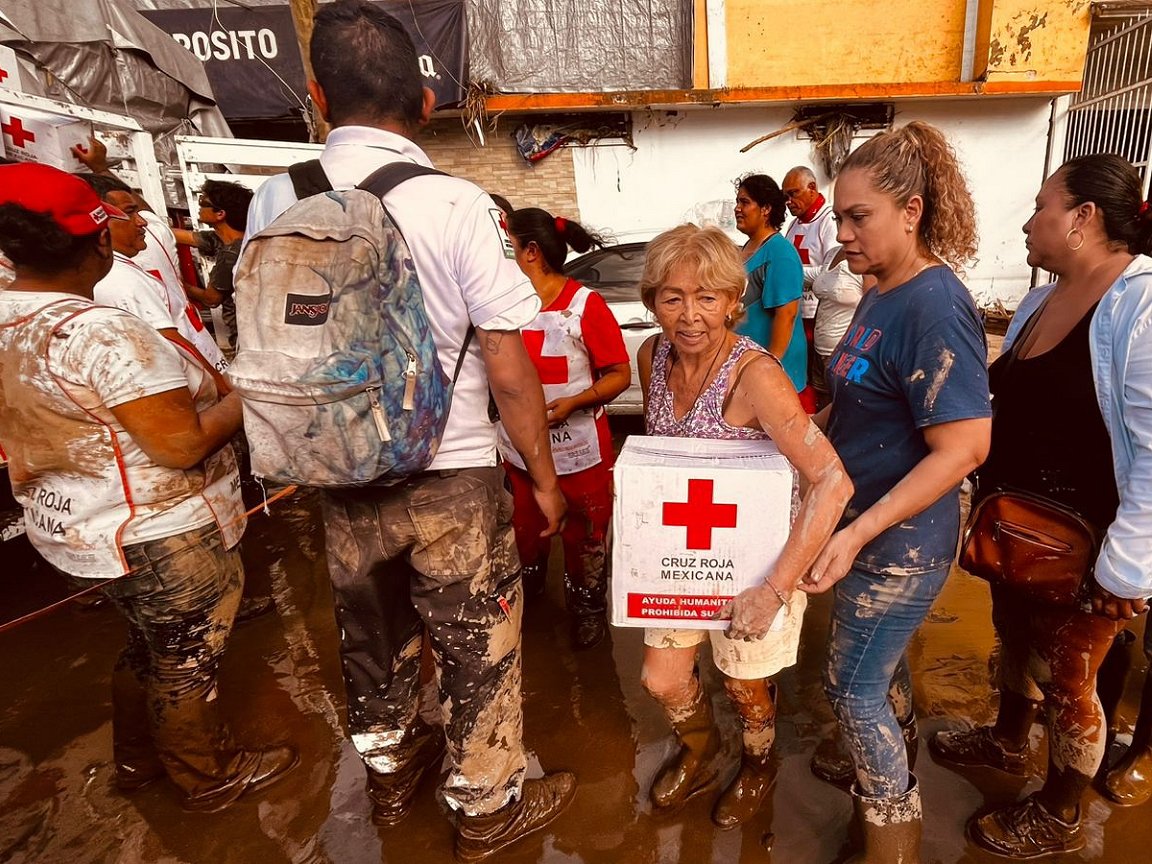
The Mexican Red Cross delivered scores of tons of humanitarian aid to the most severely affected areas of Veracruz state in floods last October. The National Society is using a methodology developed by the Zurich Climate Resilience Alliance to guide a holistic and participatory process for flood resilience in the state, as well as health issues raised by heat-related vector-borne diseases in Mexicali. (File photo: MRC via IFRC)