
New online library on urban heat
By the Climate Centre
The Zurich Climate Resilience Alliance, an IFRC partner organization, last week posted an updated Urban Heat Library mini-site as a “collaborative space dedicated to sharing knowledge, tools, and best practices related to urban heat,” the ZCRA website says.
“Whether you’re a practitioner, researcher, policymaker, or community leader, you’ll find a wide range of resources here,” it adds.
The compilation of the directory was coordinated by the IFRC and the Climate Centre and currently comprises at least 60 individual resources on heat – nearly half of them new in the 2.0 version.
These resources range from high-level strategy and governance to operational tools, evidence, case studies and communications.
Included are the recently published Handbook on Urban Heat Management in the Global South, the IFRC-Climate Centre flagship report, the Asian Development Bank’s multimedia production on women’s resilience, and Thermofeel – the map-based tool illustrating environmental indicators of heat and cold from the European Centre for Medium-Range Weather Forecasts
‘By 2050 nearly 1,000 cities will see average highs of 35°C in summer’
The most valued types of resource are training guides, toolkits and communications materials, a poll of potential users conducted by the Climate Centre found – a result reflected in the inclusion of Urban Heat and Equity: Experiences from C40’s Cool Cities Network and reports from the Global Heat Health Information Network.
A major gap on resources on rural heat is filled with a link to The Unjust Climate: Measuring the Impacts of Climate Change on Rural Poor, Women and Youth – a 2024 analysis from the FAO highlighting evidence on heat stress in rural areas.
“The number of cities exposed to extreme temperatures will nearly triple over the next decades,” according to the ZCRA. By 2050, nearly 1,000 cities will “experience average summertime temperature highs of 35˚C. With trends of rapid urbanization, ageing populations, and increased temperatures, the risk posed by extreme heat will only increase.
“The magnitude of future impacts from extreme heat will largely depend on global mitigation efforts, local heat governance, and response plans.”
The new directory is a living resource and will be added to and updated on a quarterly basis.
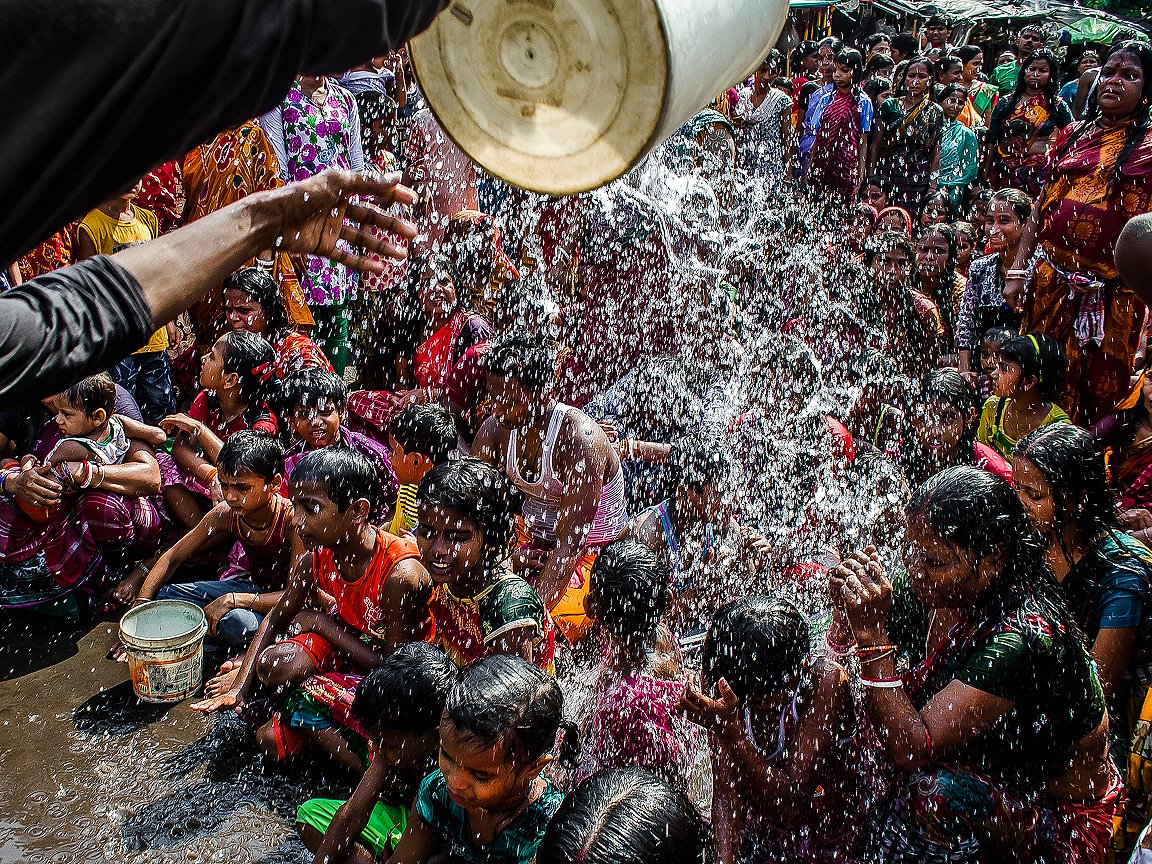
In a scorching Kolkata April, when temperatures can climb above 40˚C, water is scarce and tankers from the municipality are lifelines for entire neighbourhoods. This photograph – overall winner in the 2025 GHHIN photography competition – “captures a raw moment, children and families, gathered on the burning streets for a local ritual, drenched in water thrown by the local helpers.” (Photo: Ayanava Sil/GHHIN)