
Madagascar faces compounding crises and major damage to its main port after second cyclone in ten days
By the Climate Centre
The IFRC Friday launched a 7.5m Swiss franc emergency appeal for Madagascar, battered by near-consecutive Cyclones Fytia and Gezani that have affected at least 250,000 people, causing significant loss of life, damaging homes and critical infrastructure in several parts of the country.
The storms compounded the impacts of two other worsening crises in Madagascar: an Mpox outbreak confirmed by the authorities at the end of December has since spread to all but three of the country’s 24 regions, and at the end of last month the government – requesting international assistance – reported that nearly 1.1m people are in urgent need of nutritional support.
The new IFRC appeal will enable the Malagasy Red Cross to assist 45,000 people with health care, psychosocial support, water and sanitation, cash assistance, emergency shelter, and early recovery.
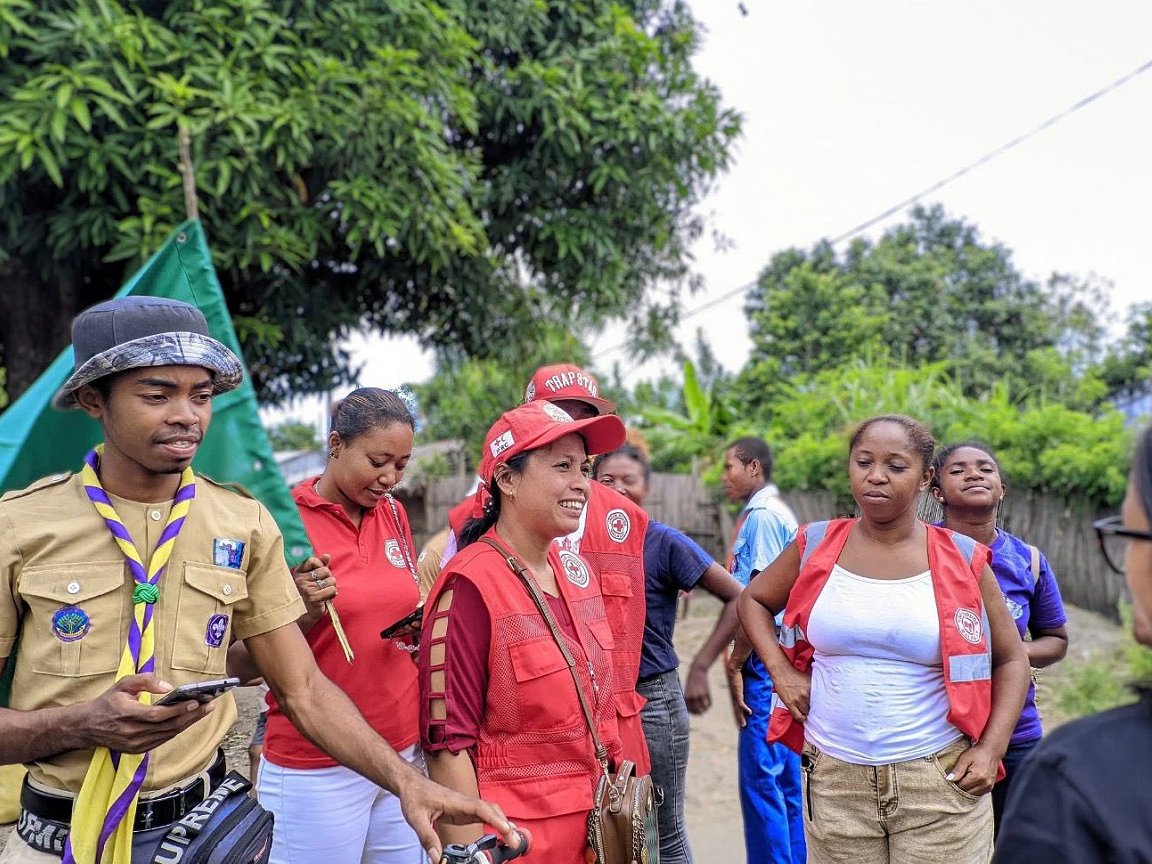
Early action protocols for cyclones were activated in both Madagascar and Mozambique last Monday – the day before Gezani made landfall on the east coast of Madagascar.
EAP actions in Madagascar included 600 home visits to ensure early warnings were understood and Red Cross volunteers assisted those unable to evacuate independently; the EAP operation in Mozambique is planned to reach 10,000 of the most vulnerable people with early warnings from the government, materials to reinforce vulnerable houses and school buildings, and water, sanitation and hygiene items.
‘Total chaos’
The island’s main port and second-largest city, Toamasina, close to where Gezani made landfall as a high-end Category 3, has this weekend emerged as the worst-hit area, media and IFRC reports say.
At least 35 people are reported to have died and the BBC quotes the authorities as speaking of “total chaos”.
People in Toamasina described the scene as the cyclone made landfall: “I have never experienced winds this violent … The doors and windows are made of metal, but they are being violently shaken,” Harimanga Ranaivo, a resident, told Reuters.
As of Sunday evening local time, Meteo France placed Gezani some 400km out to sea south-west of Madagascar heading back toeward the island nation, but added that it is expected to turn southwards again by Tuesday.
Gezani’s landfall is likely to have been one of the most intense around Toamasina recorded in the satellite era, according to Meteo France on La Réunion
“It takes many, many years” to restore infrastructure and recover, Environment Minister Andonirina told the BBC, adding that parts of Madagascar ravaged by cyclones in the past three years still “have not been rebuilt as it was before”.
The cyclone season in the Indian Ocean around Madagascar normally lasts from November to April and is currently expected to be near- to above-normal across the south-west Indian Ocean, with up to 14 storms (including Gezani) in total and up to eight reaching tropical cyclone strength, according to Meteo France.
Mozambique was already by far the worst-affected country among south-east African nations facing destructive rainy-season floods – with a new IFRC emergency appeal for 7m CHF targeting 75,000 people; the government has said more than 650,000 were affected across much of the country.
Malagasy Red Cross volunteers prepare to deploy last week after an early action protocol for cyclones was triggered. (Photo: Malagasy Red Cross via Facebook)