After near-record rain in parts, every UK household must be ready to act – British Red Cross
By the Climate Centre
The British Red Cross is calling for better public information to ensure more people know what to do before, during and after storms and floods, as the UK endures 50 days of continuous rain as well as a battering from storms Chandra, Goretti and Ingrid.
New research by the National Society published today shows 67 per cent of UK households said they were impacted by storms and floods since the start of the year, with 12 per cent reporting a high or severe impact; despite this, almost three quarters said they had not signed up to flood alerts.
Around a third of people said they were not sure what actions to take to prepare themselves or their homes.
Reasons for not signing up for flood alerts included a feeling of not being at risk, not knowing a warning service existed, or not thinking it would be relevant or helpful.
Asked how they would most like to receive flood alerts and updates, nearly half of respondents opted for text messages.
‘Floodwater can move quickly
and take people by surprise’
British Red Cross CEO Béatrice Butsana-Sita said: “The frequency and intensity of severe weather events in the UK are increasing, yet too often people don’t have the information they need to protect themselves and their homes.
She continued: “Getting timely information is vital. Floodwater can move quickly and take people by surprise – this is something our teams hear often when they’re out supporting communities.
“When guidance is accessible and relevant to people’s circumstances, they are better able to keep themselves and those around them safe. As severe weather becomes more frequent, we need to get to a place where every household is ready to act.”
The new research, which follows earlier BRC reports on floods and flood preparedness, was released the day after a World Weather Attribution study of the intense rainfall embedded in the onslaught of named storms that hit the western Mediterranean since the middle of January, affecting Spain, Portugal and Morocco worst.
The team concluded that “while all lines of evidence are highly uncertain, especially in the southern [Mediterranean] region, and exact numbers strongly depend on the region and dataset chosen, they point towards an increased intensity of especially the most extreme heavy-rainfall events.”
David García-García of Spain’s University of Alicante said: “The sheer volume of water we’ve seen in places like Grazalema and during this succession of storms is staggering. To have a year’s worth of rain fall in just a few days is a massive shock to our infrastructure and our soil.”
‘Warmth, light, reassurance’
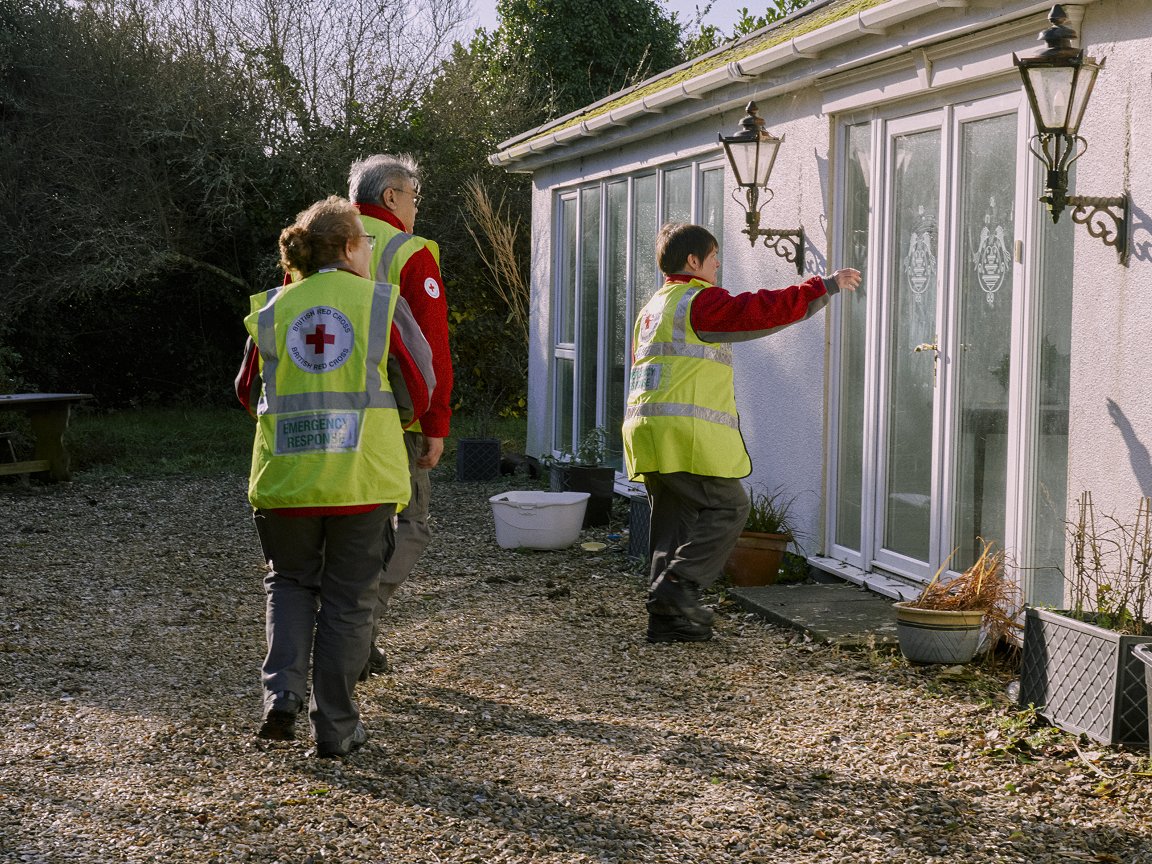
During and after Storm Goretti, British Red Cross emergency response teams in the western county of Cornwall, which saw its wettest January on record and whose coast was badly hit, carried out urgent door-to-door checks for people left without power and unable to receive vital information (pictured).
Prolonged power cuts meant many vulnerable residents had no heating, and limited communications and support.
Jennifer Land, senior British Red Cross emergency response officer for Cornwall and Devon, said the role of the Red Cross team was to provide “warmth, light and reassurance” during a highly stressful time.
She praised the strong community resilience she had witnessed, including local groups who opened their homes for charging, hot meals and warm showers for neighbours still without power.
Volunteers in Northern Ireland and Scotland supported by transporting health workers or delivering food.
Provisional UK Met Office statistics show Northern Ireland had its wettest January in 149 years – and the second wettest on record – while southern England also recorded its sixth wettest January since records began in 1836, with the southerly position of the jet stream “the main architect” of the weather.
Overall, the UK recorded 17 per cent more rainfall than the long-term meteorological average for January.
British Red Cross volunteers in Cornwall going door-to-door to check on people left without power and unable to receive vital information. (Photo: Marco Kesseler/British Red Cross)