
ICRC: Prolonged drought pushes 6.5 million Somalis toward acute food insecurity
By the ICRC
(This is a version of a story released by the ICRC on Tuesday; it has been slightly edited here for length. The IFRC launched a complex emergency appeal centred on drought for 25m Swiss francs for the Somali Red Crescent Society last October.)
Somalia is on the brink of a deepening humanitarian crisis, with an estimated 6.5 million people facing acute food insecurity as prolonged drought devastates livelihood across the country.
After two consecutive failed rainy seasons, fear of a renewed slide toward the catastrophic levels of hunger seen in 2022 is high.
Pastoralism is the backbone of the Somali economy, supporting more than 60 per cent of the population. Now it is collapsing under the weight of repeated climate shocks.
Livestock are dying in large numbers, stripping families of income and food sources, and driving thousands to seek refuge in makeshift displacement camps.
In Dhusamareb, 61-year-old herder Abdulkadir Mohamed Farah watches the horizon with growing dread. In less than a year, he lost almost all his goats and more than two-thirds of his camels.
“Now we fear that people may follow,” he says. “The animals are dying. They have nothing to eat. I had 500 goats, only 50 remain. I had 70 camels, 20 are left.”
For pastoralist communities, the loss of animals does not only mean lost income, it marks the collapse of their entire way of life, often forcing them to leave rural areas in search of assistance.
Near Dangoroyo, in the country’s northern Nugal region, Maymun Ali Mohamed, 19, recently arrived at a settlement for internally displaced persons. After her animals perished, she fled to the camp seeking refuge with her two young children.
“When I saw the animals dying, I decided to move and stay with relatives … I told myself my young children must not die,” Maymun says.
Without rain and a significantly greater humanitarian response, millions of people could slip deeper into emergency levels of hunger
Displacement is on the rise in Somalia. In 2025, over half a million people were forced from their homes by the combined effects of conflict and drought that made already fragile communities even more vulnerable.
“The fighting has caused displacement. The drought has caused displacement … The situation will become desperate if the rains don’t come soon,” said Mohamed Sheikh, who oversees ICRC operations in Galmudug region.
At the same time, humanitarian funding for Somalia has sharply decreased, forcing many organizations to close programmes, limiting food and water assistance, as well as healthcare and livelihood support, even as needs are rising sharply.
Without urgent rainfall and a significant scale-up of the humanitarian response, millions of people could slip deeper into emergency levels of hunger.
The ICRC response since November includes: more than 5,000 drought-affected families displaced by conflict in the Bari region of Puntland received US$ 120 each for basic needs; five boreholes in Bari and Sanaag have been rehabilitated; pumping units, control panels, generators, pipes and cables have been donated to the Puntland Water Development Agency; under-fives with severe malnutrition and medical complications get life-saving care at the ICRC-run stabilization centre in Kismayo hospital while nutritional services are provided at 11 Red Crescent clinics.
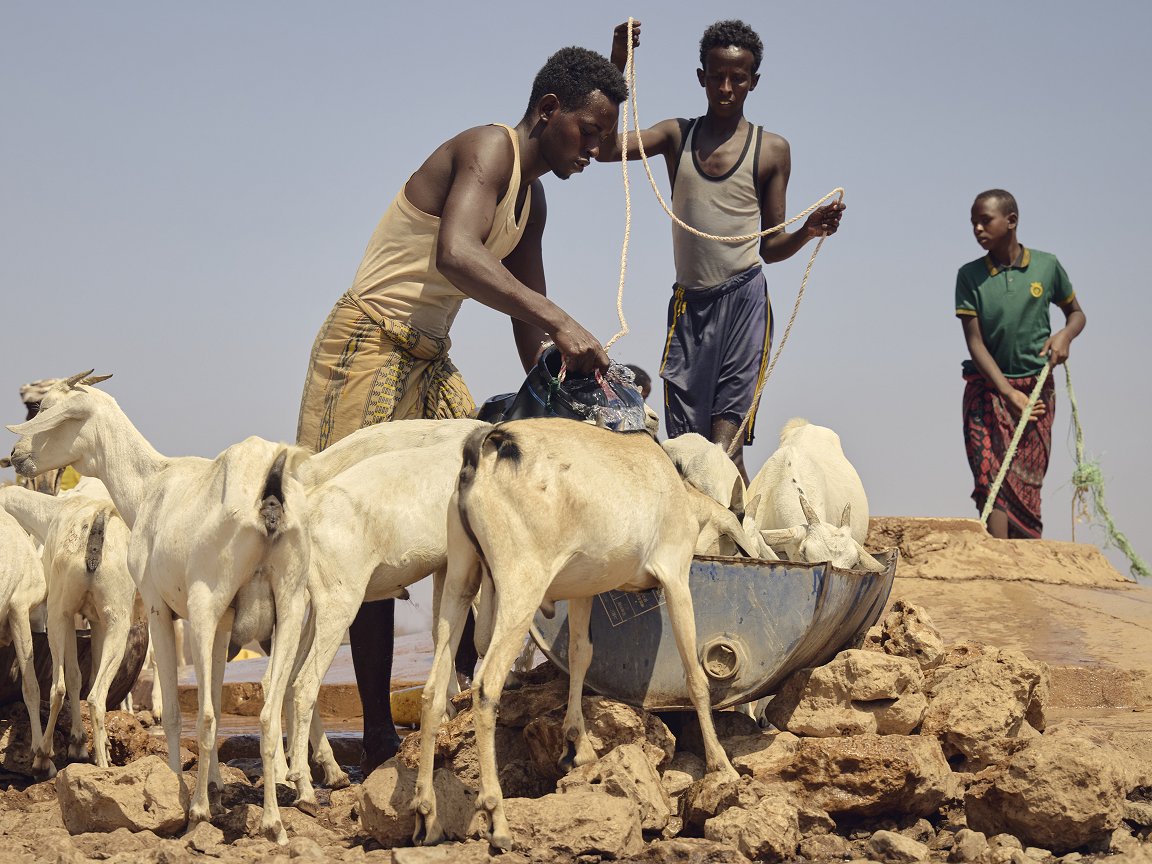
Some pastoralists in Somalia are losing almost all their animals as drought tightens its grip, just as humanitarian funding has sharply decreased, forcing many organizations to close programmes. (Photo: Abdikarim Mohamed/ICRC)