#WorldMetDay: ‘Earth’s climate increasingly unbalanced’, says World Meteorological Organization
By the Climate Centre
For the first time, the WMO’s State of Global Climate 2025, published today, includes the Earth’s energy imbalance as a key climate indicator. In a stable climate, incoming energy from the sun is about the same as outgoing energy from the planet’s surface, but increasing greenhouse gases – at their highest concentration in at least 800,000 years – have upset this equilibrium, the WMO says.
The Earth’s energy imbalance has increased since the relevant observational record began in 1960, particularly in the past 20 years, reaching a new high in 2025, with almost all the excess heat being stored in oceans that were warmer in 2025 than ever previously measured.
“Scientific advances have improved our understanding of the Earth’s energy imbalance and of the reality facing our planet and our climate right now,” said WMO Secretary-General Celeste Saulo.
“Human activities are increasingly disrupting the natural equilibrium and we will live with these consequences for hundreds and thousands of years.”
She added that “when we observe today, we don’t just predict the weather, we protect tomorrow. Tomorrow’s people. Tomorrow’s planet.”
The Red Cross Red Crescent also today announced a major forthcoming report, Future Fit Anticipatory Action: Flagship Report 2026, due to be published later in the northern spring and constituting the first in-depth attempt in the humanitarian sector to analyse how future climate trends are likely to affect the operationalization of humanitarian Anticipatory Action.*
The latest annual report from the WMO confirms 2015–2025 were the hottest 11 years on record; sea ice in the Arctic was at or near a record low and the third lowest on record in the Antarctic, and glacier melt “continued unabated”.
‘When history repeats itself 11 times
it’s no longer a coincidence’
UN Secretary-General António Guterres said today that the global climate is in a state of emergency. “Planet Earth is being pushed beyond its limits. Every key climate indicator is flashing red.
“Humanity has just endured the 11 hottest years on record. When history repeats itself eleven times, it is no longer a coincidence. It is a call to act.”
The WMO report also includes a chapter on climate and health, showing how rising temperatures, shifting rainfall patterns and changes in extremes are increasing health risks. It highlights the examples of mosquito-borne dengue disease and of heat stress, and illustrates how climate data, early warning and integrated climate services for health can protect people.
A supplement to the report provides a snapshot of extreme events, including “cascading impacts” on agriculture, social stability, migration and biosecurity through pests and animal diseases.
“There is an urgent need to integrate meteorological and climate data with health information systems to allow decision-makers to move from reactive response towards proactive prevention which saves lives,” the WMO argues.
*For preview interviews, please message media@climatecentre.org.
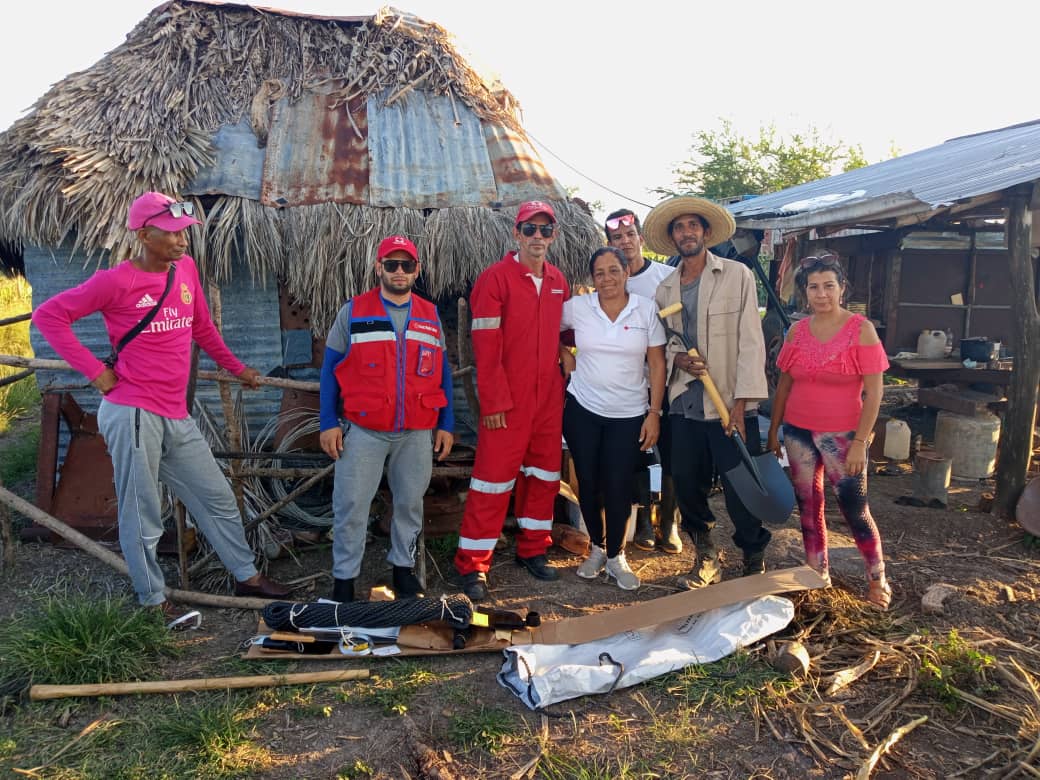
Hurricane Melissa tied for the most intense landfall on record in the Caribbean region, says the WMO in its State of the Global Climate 2025 report. Pictured, the Cuban Red Cross delivering tools, kitchen supplies and hygiene kits to affected families affected Granma province last November. (Photo: Cuban Red Cross via IFRC)