
Winners announced in architecture competition for adaptation to extreme heat
By the Climate Centre
The winners were announced this week in the inaugural Red Cross Red Crescent Heat Adaptive Architecture Design Competition (HAAD), celebrating designs for houses that “exemplify creativity, resilience, and real-world impact”.
A distinguished jury chose three overall winners and three runners-up who also made “outstanding contributions to climate-adaptive design,” organizers said.
The HAAD competition was launched last year by the Climate Centre in partnership with IFRC and the Global Disaster Preparedness Center.
It tasked students of architecture and urban design worldwide to develop affordable and scalable structural solutions that address the growing threat of extreme heat in cities, with a focus on protecting elderly people, young children, and those living in informal settings.
After initial evaluation, ten designs went through to a second stage and were assigned a specialist mentor to guide the refinement of their designs.
‘A design to address rising temperatures
and economic precarity in a single,
integrated solution’
The winning projects tackle extreme heat across multiple contexts and demonstrate that “thoughtful, community-rooted design can make a measurable difference in the lives of those most at risk.”
Two of the three overall winners drew inspiration from the informal settlements of Bangladesh – a country severely affected by climate change and rising seas in which people flee vulnerable coastal areas, for example, and crowd into the densely populated capital Dhaka, where average summer temperatures rise relentlessly and low-income residents bear the brunt.
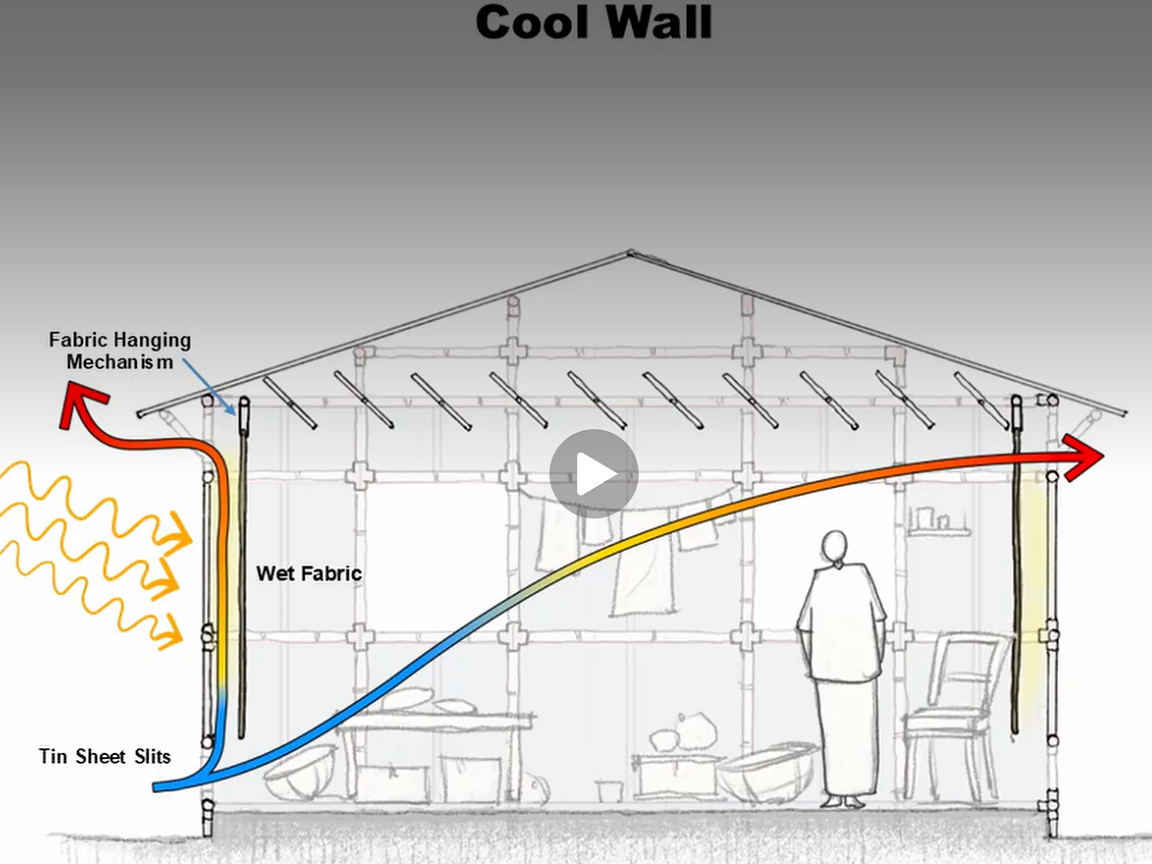
One of the Bangladesh projects, Cool Surfaces: Enhancing Local Techniques for Thermal Comfort, proposed three “passive surface solutions” for floods, walls and roofs to transform a typical dwelling into a home naturally adapted to extreme heat in the Sattola informal settlement of Dhaka.
A Shelter of Hope: Holistic Cooling Solutions for Informal Settlements centred on the city’s Korail district and involved “a climate-adaptive shophouse unit designed to address rising temperatures and economic precarity in a single, integrated solution [providing] dignified shelter and space to earn a living, allowing families to sustain themselves without being displaced from their social networks.”
The third overall winners hailed from Kenya’s Kajiado county and entered an Adaptable, Modular Design Based on Local Material and Techniques to help schools be resilient to heat.
Three runners-up received honourable mentions: Mexico’s University of Monterrey and its National Autonomous University, and the Bangladesh University of Engineering and Technology.
Full details of winners and runners-up and their designs, in video and printable formats, are available on the website of the Global Disaster Preparedness Center.
A grab from the video presentation Cool Surfaces: Enhancing Local Techniques for Thermal Comfort, one of two winners from Bangladesh in the inaugural Red Cross Red Crescent Heat Adaptive Architecture Design Competition. (Still: GDPC)