
El Niño conditions a virtual certainty by mid-summer, say US scientists
By the Climate Centre
Scientists at the US National Oceanic and Atmospheric Administration now put at just over 80 per cent the chance of El Niño establishing itself by the end of July, and all but certain (98 per cent) by the end of the northern summer.
At its greatest, the chance of a “strong” to “very strong” phenomenon is nearly 70 per cent by the end of the year, they add.
The NOAA update for May was issued two weeks ago.
Shifts in ocean temperatures across the Pacific under El Niño conditions result in higher than normal global air temperatures while La Niña tends to have a cooling effect.
Forecasts will become more reliable after what meteorologists call the “spring predictability barrier” passes over the next few weeks, but they are already consistent and impacts are regarded as likely.
Among the regions where they will be monitored very closely is the Central American “Dry Corridor” – including El Salvador – where nations are especially vulnerable to climate change, drought, and natural events like El Niño.
Drought-resistant seeds
The Salvadoran Red Cross last week activated its Early Action Protocol for drought, based on analysis by the country’s General Directorate of the Environmental Observatory, which reported “conditions associated with the El Niño phenomenon … with a probability equal to or greater than 60 per cent.”
As a second trigger agreed, the directorate forecast significantly below-normal rainfall for May to July.
The National Society will now work to mitigate water scarcity in its eastern Dry Corridor region especially, which is already experiencing food insecurity, loss of livelihoods, and limited access to safe water.
The actions supported by more than 540,000 Swiss francs from IFRC-DREF and are expected to benefit more than 10,000 people.
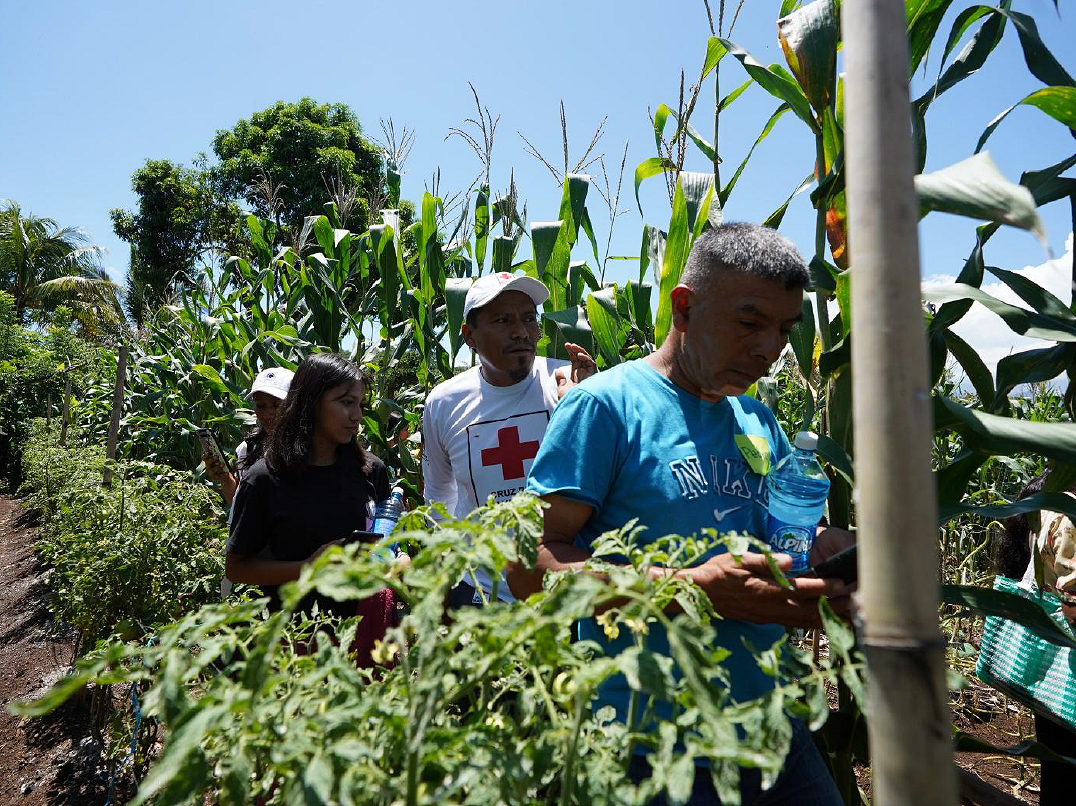
For example, cash transfers will allow farming families to buy drought-resistant seeds and agricultural inputs for rapid planting before the drought peaks, while highly vulnerable households can buy food and essential household items.
This activation is the first for the Salvadoran Red Cross and marks “another milestone in the country’s evolving ecosystem for anticipatory action,” a report on the Anticipation Hub said yesterday.
Farmers in El Salvador, who face a looming and potentially destructive El Niño, check their crops. (File photo: Salvadoran Red Cross via IFRC)