
Heat Action Day 2026: tackling the dangers of indoor heat
By the IFRC
(This story appeared first on the IFRC website earlier today. It has been edited slightly here for length.)
This year’s Heat Action Day today confronts the threat of extreme heat to people working, living or studying indoors.
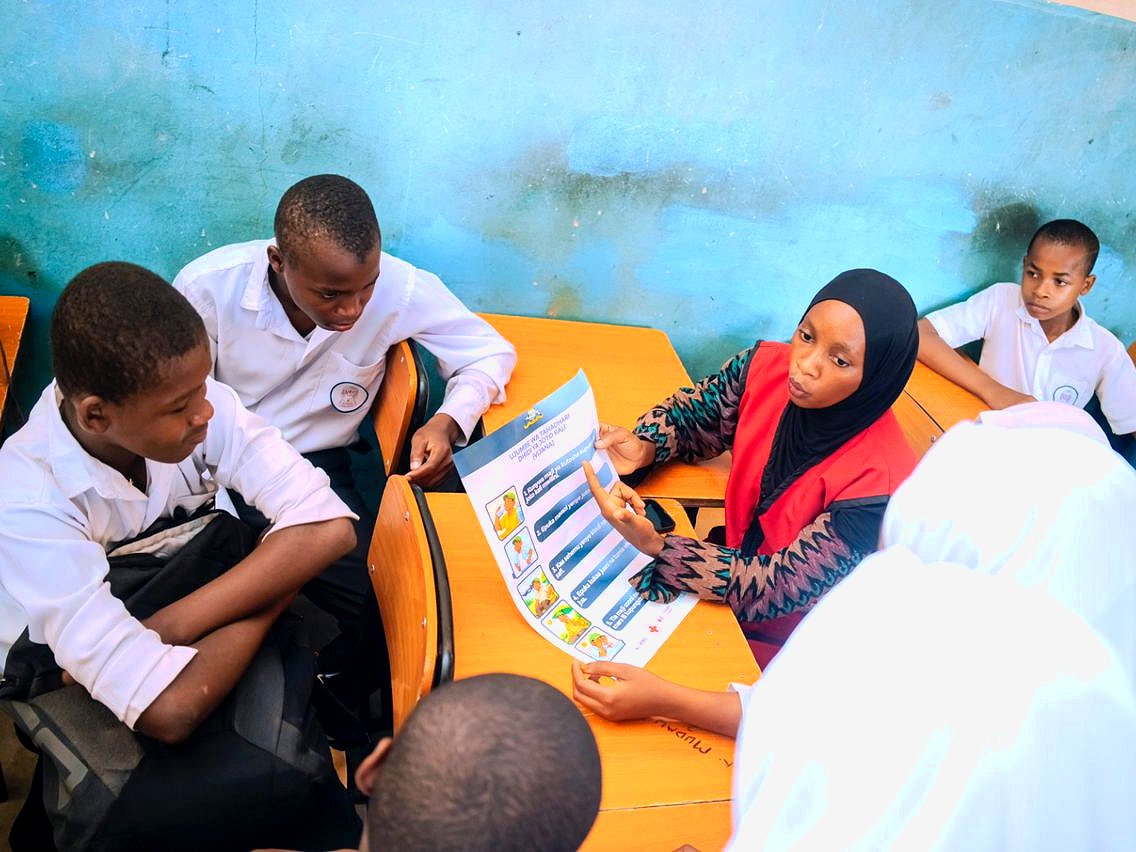
At a school on the Unguja Island, Zanzibar, volunteers from the Tanzania Red Cross Society explain to a classroom full of students how to protect themselves from the dangers of extreme heat (pictured).
The volunteers’ efforts were part of a larger heatwave awareness campaign in early 2026, led by the National Society, that has reached more than 4,000 people in schools, madrasas, markets, and communities around the island.
This is just one of many ways National Societies around the world regularly work to protect people from the dangers of extreme heat – including the very particular dangers of indoor heat.
Why focus on indoor heat?
When preparing for heatwaves, people often think of blistering days outside in the hot sun. But living or working indoors, in uncooled or poorly ventilated spaces, can sometimes be an even greater risk from heatstroke, dehydration and other dangers.
Those most susceptible to rising body temperatures – children and the elderly – are particularly vulnerable and must often spend long periods of the day inside.
These are some of the reasons Heat Action Day 2026 focuses on indoor heat – putting the spotlight on the health risks people face in their homes, schools, workplaces, care facilities, transport hubs, prisons and even public buses and taxis. (Learn more about how to #BeatTheHeat and take part in Heat Action Day.)
This threat is nothing new to Red Cross and Red Crescent volunteers who often go door-to-door during heatwaves, visiting people who live in densely populated urban neighbourhoods or camps for the displaced or who work in poorly insulated industrial areas.
Very often, such facilities or temporary shelters lack insulation or access to energy or water that can help keep people cool. Building materials, design characteristics, and “urban heat islands” all play a role in determining indoor temperatures.
Rising risks
Without respite and access to cooling, high day- and night-time indoor temperatures pose significant health risks, particularly for older people and those with pre-existing medical conditions.
Beyond heatstroke, high temperatures can have a wide range of health effects. According to a 2020 study, for example, high indoor temperatures affect multiple aspects of human health, with the strongest implications for respiratory problems, diabetes, schizophrenia and dementia.
Other studies show that prolonged exposure to high indoor temperatures is also responsible for sleep disturbance, cognitive impairment of workers, domestic violence and reduced learning by students.
More research needs to be done, however, so policy-makers, urban planners and architects can better understand how to reduce extreme urban heat; at the same time, building standards and indoor heat policies need urgent updates.
In many places, indoor heat standards do not exist, or they overlook vulnerable populations and climate projections.
The good news is that it is possible to improve the way buildings and public spaces are designed and constructed.
Meanwhile, more governments, agencies and communities are taking action. For example, painting roofs white, keeping windows covered during the hottest times of day, and using passive cooling at night when temperatures outside cool down.
There are also many low-cost actions one can take to cool the body: showers, submerging feet in cool water, dousing with water, using an evaporative cooler or misting fan, drinking cold water, wearing clothing made from natural fibres, and sleeping with a wet sheet, among other measures.
How can you take part in Heat Action Day?
As part of its 2026 Heat Action Day, the IFRC also encourages people to proactively reach out to support the elderly and chronically ill during times of extreme heat, especially those with limited mobility who may need help getting to a cooler space.
As the organization that created Heat Action Day, the IFRC each year encourages activities to raise awareness and action to prevent heat-related illness and death.
Whether you’re sharing life-saving tips on social media or organizing a community event, there are many ways to get involved and help #BeatTheHeat. Learn more and register to participate and create your own Heat Action Day event or activity.
Tanzania Red Cross volunteers on Unguja Island, Zanzibar, earlier this year explain to pupils how to protect themselves from the dangers of extreme heat. (File photo: TRC via IFRC)