
Blog: Positioning humanitarians at the intersection of environment, climate, conflict and peace
By Juliane Schillinger, Climate Centre, Netherlands
What role can humanitarian organizations play at the intersection of conflict, climate change and environmental degradation? As these challenges increasingly converge in some of the most severe contemporary humanitarian crises, this question is becoming more important than ever.
Two approaches are currently helping to advance conversations on these interconnected challenges: climate security and environmental peacebuilding. While the former commonly encompasses links between climate, conflict, human livelihoods and disruption to basic services, the concept of environmental peacebuilding seeks to address such issues by connecting local peacebuilding and social cohesion with environmental and climate action, and vice versa.
Both approaches increasingly connect to humanitarian programming in fragile and conflict-affected contexts. Alongside several Red Cross and Red Crescent National Societies, the Climate Centre has been engaging in a number of recent dialogues to better understand the role of humanitarians in climate security and environmental peacebuilding, and to explore opportunities for collaboration across sectors.
Kate Proctor, Lead for Public Policy and Parliamentary Affairs at the Canadian Red Cross, summarizes CRC’s motivations to be part of these conversations: “As a humanitarian organization, the Canadian Red Cross has an important role in supporting people dealing with the impacts of climate change, which has wide-ranging effects across the security spectrum such as food, health and economic security and can be a factor in, and be exacerbated by, conflict.
“The CRC is engaging in dialogue on climate security to explore how humanitarian realities on the ground can be better connected to environment and climate change policies, programmes and initiatives, and how we can effectively connect and integrate academic and scientific research with operational experience, local knowledge, and traditional knowledge to assist with solutions, all while ensuring that the experiences and perspectives of those impacted are at the centre.”
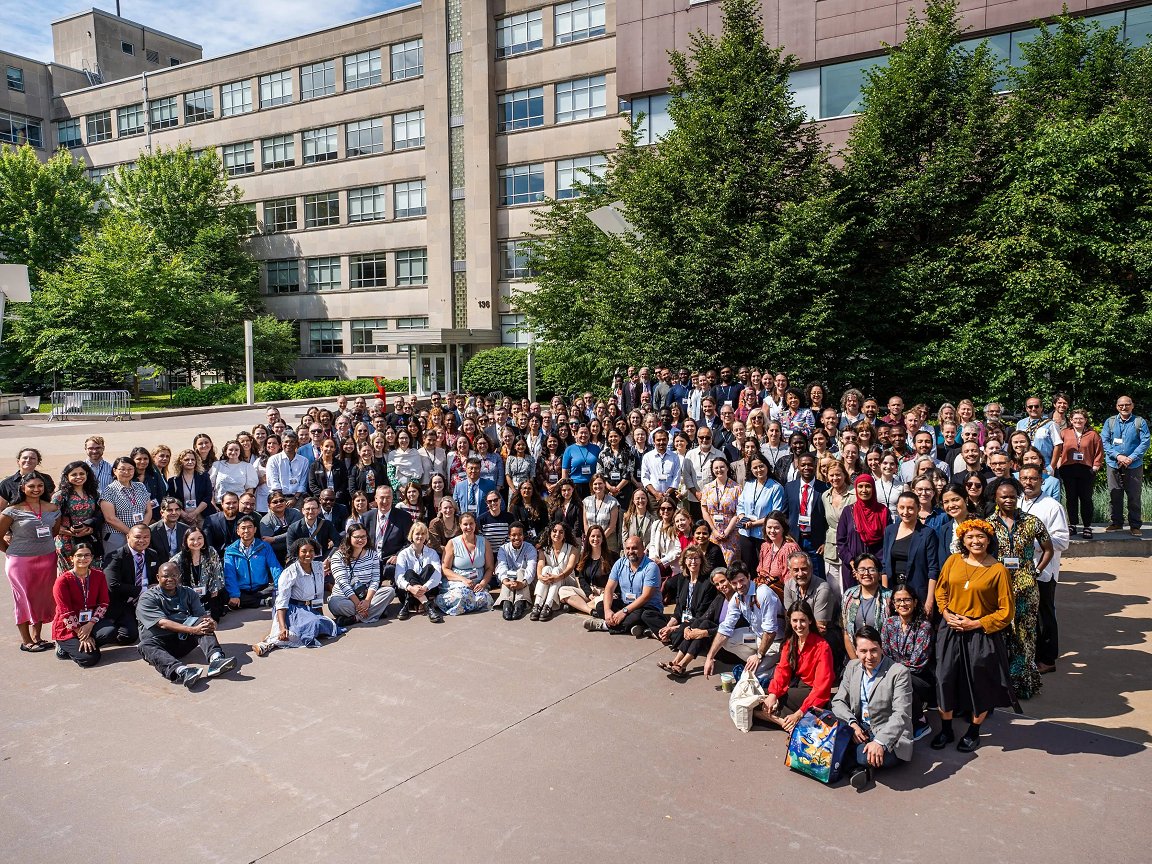
In June 2026, the CRC was part of a round-table discussion hosted by the Climate and Environment Charter for Humanitarian Organizations and the Climate Centre at the 4th International Conference on Environmental Peacebuilding in Ottawa (pictured).
The CRC shared experience alongside other humanitarian organizations and community representatives from South Sudan and Mauritius.
‘The Canadian Red Cross is engaging in dialogue on climate security to explore how humanitarian realities can better connect to environment and climate policies and programmes’
The following key messages from the discussion were captured by the Climate and Environment Charter.
Climate, conflict and displacement are all part of one lived reality. Participants working in conflict-affected and disaster-prone settings described these as simultaneous, recurring conditions rather than separate problems. Local partners and communities themselves already integrate these forms of work, and the silos are often imposed by donors and international organizations.
The interactions of resource scarcity, climate shocks and environmental degradation on peace and security are very visible in the work of humanitarians who are already addressing them. Humanitarians see their role in working with communities to adapt how they work, based on what the community needs. Approaches shared included:
*Community-based participatory multi-risk assessments translated into locally owned management plans.
*Conflict-sensitive anticipatory action that addresses climate, conflict and weapons contamination risks together.
*Planning for safe schools developed jointly with students and teachers.
*Work on social cohesion and advocacy for minority and displaced groups, including people with disabilities.
*Nature-based solutions linking adaptation, livelihoods and social cohesion.
*Investing in energy infrastructure to maintain health and water facilities in conflict contexts.
Climate insecurity is not limited to fragile and conflict-affected contexts. Climate pressures can also contribute to the slow erosion of societal structures and resilience, not just acute conflicts and violence.
In many contexts the central threat is the gradual breakdown of social cohesion under the economic, social and political pressure of climate-related crises. It is a quiet kind of climate insecurity that does not match standard definitions of conflict or crisis, making it easy to overlook while beyond the scope of many initiatives.
On the flip side, climate pressures can also pull communities together, linking to the environmental peacebuilding benefits of cooperative responses.
Structural barriers for partnerships and funding remain. Funding silos were named as a core structural obstacle: even where “nexus language” is used, donor categories for humanitarian, development and peace work stay separate. This creates difficulties for collaboration between humanitarians and peacebuilding actors under grants whose structures do not allow sharing of funding across sectors.
Participants noted that geopolitical priorities skew some funding flows toward high-profile crises while other contexts are neglected, and other funding – often for climate action – is less accessible in fragile and conflict-affected settings.
Counter-terrorism legislation in some donor countries has prevented funds from reaching areas governed by listed entities, and while humanitarian exemptions in some contexts are now emerging that can be an opportunity for environmental peacebuilding access gaps still remain.
International programming needs to reflect power dynamics, language and local knowledge. International actors largely frame the terminology and knowledge at the intersection of environment, climate and conflict which local organizations then adopt to access funding, even when it does not match realities on the ground.
Participants emphasized the importance of traditional and indigenous knowledge, including through locally led knowledge hubs, and urged international actors to engage in partnership models in which the flow of learning is from local actors rather than to them.
The 4th International Conference on Environmental Peacebuilding in Ottawa in June. (Photo: Environmental Peacebuilding Association)