
No relief in sight for Caribbean’s drought-hit farmers
By the Climate Centre
The Caribbean Institute for Meteorology and Hydrology last week again warned the region faces increasingly dry conditions ahead of the official dry season beginning in November, media reports said.
CIMH climatologist Cedric Van Meerbeeck recalled that El Niño – historically associated with severe drought in the Caribbean – strengthened rapidly between May and July 2026.
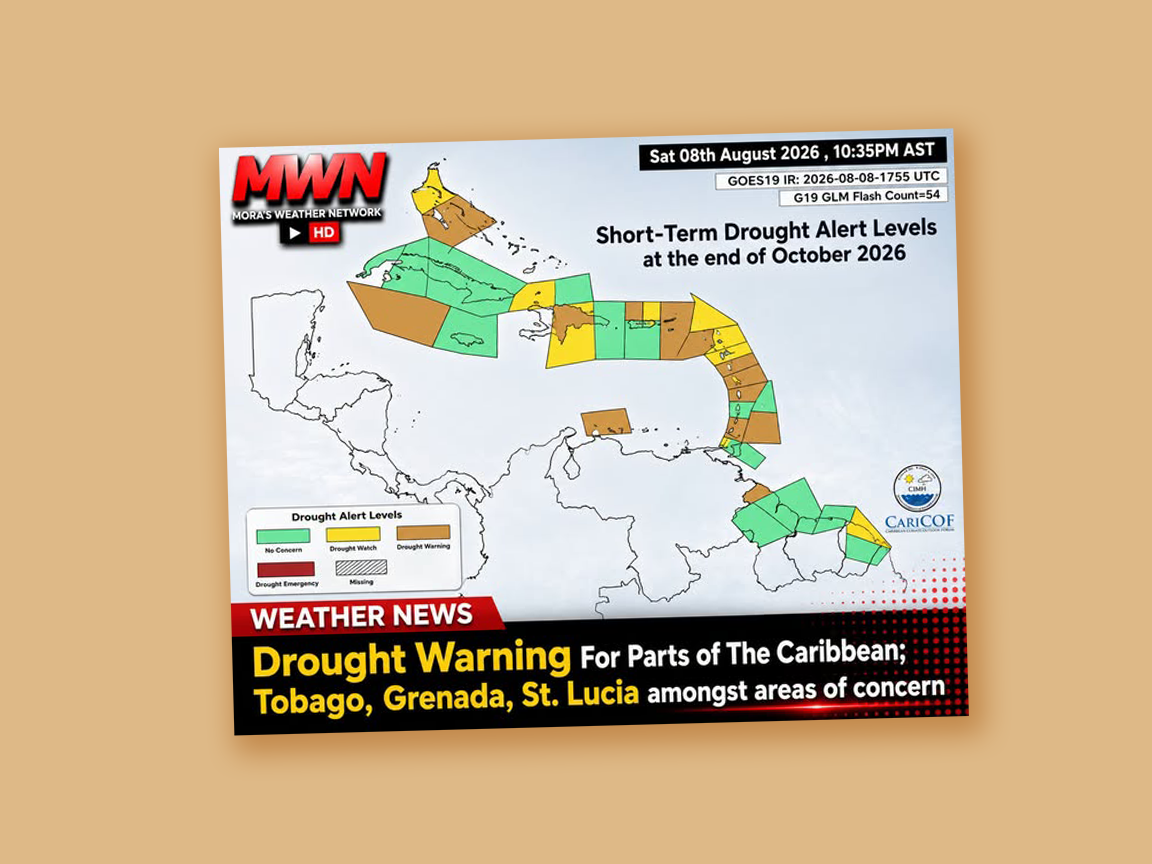
The outlook now indicates below-normal rainfall stretching almost across the entire Caribbean region, persisting into early 2027 and increasing the risk of water shortages and wildfires.
In April, CIMH and experts at the University of the West Indies together urged governments, businesses, farmers and households to prepare for potentially “severe climate extremes” centred on reduced rainfall and increased heat.
“Without adequate planning, the socio-economic impacts from cascading and compounding hazards will be significant,” a CIMH press release said.
‘Drought disaster’
Also last week, the US government announced a “drought disaster” for at least 24 cities and towns in Puerto Rico “as water woes deepen … with no relief in sight,” the AP reported.
More than 60 per cent of the island was under extreme or severe drought, while July was the driest month on record for San Juan in more than 120 years and the second hottest for the island’s capital.
A World Weather Attribution study published Friday, meanwhile, said climate change reduced early wet-season rainfall in Puerto Rico and Jamaica by 9 and 6 per cent respectively. It found a consistent drying trend across both islands driven by greenhouse gas emissions.
The conditions are also having severe impacts on agriculture, tourism and livelihoods, the scientists said.
El Niño was not yet the leading driver of the rainfall deficit, but there are fears it may lead to a continuation of dry conditions as it develops.
‘Strict water rationing’
Jhordanne Jones, an assistant professor at Pennsylvania State University who took part in the study, said Friday: “Across Puerto Rico, Jamaica, and the Virgin Islands, families and farmers are suffering through strict water rationing while watching major reservoirs dry up.
“Our islands have done little to contribute to this problem, yet our people are suffering from the impacts of the world’s addiction to fossil fuels.
“With this study demonstrating the risk of drought continuing to grow, it is vital that Caribbean islands have access to the funds they need to invest in updating water infrastructure.”
Under a 2.8°C global warming scenario, wet-season rainfall across the Caribbean is projected to drop by about another 10 per cent, increasing the likelihood of further droughts and underlining the need for investment in adaptation and infrastructure, the WWA study warns.
A Caribbean Climate Outlook Forum-MWN drought warning issued in early August and stretching across almost the entire region, with island nations yet to feel the full impact of El Niño. (Infographic from social media)