
UN urges faster action to set world on course for ‘overshoot, peak and decline’ on climate
By the Climate Centre
The international community has made progress on climate change but global action to cut greenhouse gas emissions has not been fast enough to avoid breaching the multi-decadal warming level of 1.5°C – the key threshold of the 2015 Paris Agreement; even an optimistic scenario from existing government pledges on emissions puts the expected peak temperature rise at 1.8°C.
This is the chief conclusion of a new report issued by the United Nations Environment Programme from Nairobi today. Limiting Overshoot: Navigating exceedance of 1.5°C and pathways towards return identifies an “overshoot, peak, and decline” pathway as humanity’s best option to get back below 1.5°C as soon as possible.
This would entail “immediate and sustained cuts to greenhouse gas emissions” combined with carbon storage as “an essential part of the mix”, as well as adaptation to reduce the vulnerability of communities and economies.
The report stresses such a pathway would reduce risks and impacts, make adaptation less difficult and expensive, and increase the chances of lowering temperatures, a UNEP press release says.
In May, the World Meteorological Organization said “it is likely (75% chance) that the 2026–2030 five-year mean will exceed 1.5°C above the 1850–1900 average.”
‘We can and must get on the right path’
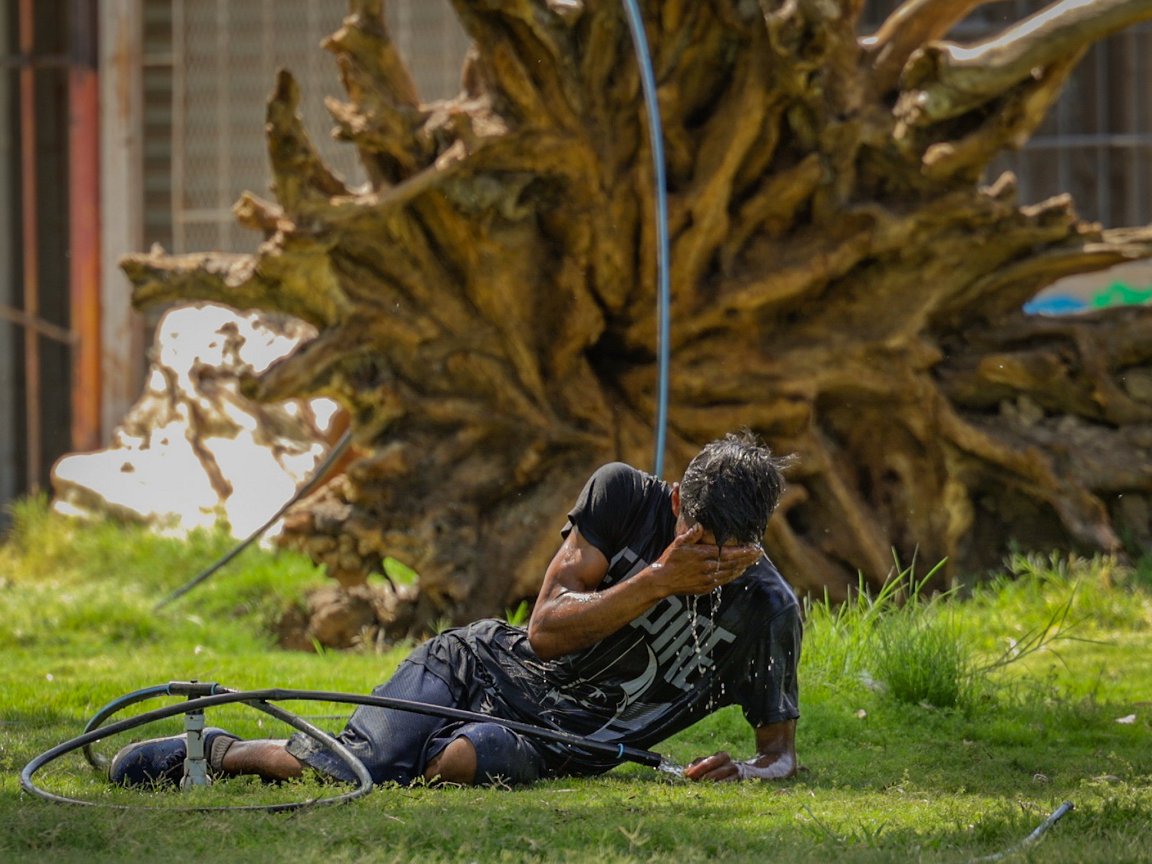
UNEP Executive Director Inger Andersen said today: “There are no good outcomes if we remain above 1.5°C. Across the globe, extreme heatwaves (picture) are already proving that climate impacts will strike faster, hit harder, and last longer – costing more lives and causing deeper disruption.
“Now is the time we must double down on climate action. We can and must get on the right path. By cutting greenhouse gas emissions, strengthening resilience and adaptation, and ensuring exceedance of 1.5°C is as small and short as possible.”
The UNEP report urges “accelerated, collective and global action to get on an overshoot, peak and decline pathway. How quickly and strongly this happens will define the shape and trajectory of the pathway.”
It argues that mitigation and adaptation reinforce each other and “must advance together while being responsive to emerging risks.” Interventions that achieve both mitigation and adaptation goals such as nature-based cooling should be prioritized, it adds.
Climate Centre Chair Debra Roberts, of the University of KwaZulu-Natal in South Africa and University of Twente in the Netherlands, coordinated work on the report’s Chapter 3, Limiting overshoot – mitigation pathways.
A chapter looking at the implications for human and environmental systems of overshoot quotes a study by the Climate Centre’s Andrew Kruczkiewicz and others as saying that socioeconomic conditions will continue to shape exposure, vulnerability and response capability – a major concern of the Red Cross Red Crescent – often amplifying climate‑related risks: “Without deeper assessment, policy and humanitarian responses risk overlooking the most vulnerable.”
A man douses himself with water in a public park in Mexicali city where summer temperatures can exceed 50°C and residents have to improvise to cool off. A new UN report says cities especially are at greater risk from stronger heatwaves and floods, even under optimistic scenarios for emissions. (File photo: Francisco Javier Chavez Gallegos/GHHIN-EJN extreme heat
photo contest)