
US scientists: 70 per cent chance of an historic El Niño
By the Climate Centre
El Niño is now firmly established and is expected to strengthen further, the World Meteorological Organization said today, with forecasts showing near certainty it will persist until this coming February.
It’s the first time that a WMO El Niño/La Niña update has been so unequivocal, reflecting the strong agreement within WMO’s network of national met services, the UN agency said.
WMO Secretary-General Celeste Saulo said today: “We are already seeing disruption and devastation from droughts and floods and we expect these impacts to increase as El Niño intensifies.
“This exceptional El Niño demands exceptional preparation and response. Never before in the 50-year history of the World Meteorological Organization have we launched such a major mobilization with national meteorological and hydrological services who are on the front line of delivering the forecasts and services to save lives and livelihoods.”
Sea-surface temperatures, for example, were seen to have strengthened markedly by July and even more exceptional warmth was present below the surface: in some areas, sub-surface ocean temperatures were more than 8°C above average during July and early August.
A positive phase of the Indian Ocean Dipole is also expected to develop, reaching a seasonal mean value of 0.9°C.
‘Disruption and devastation’
WMO today issued a complementary Global Seasonal Climate Update, which brings together information about El Niño and other major climate drivers. Locally applicable information is provided through WMO regional centres and the agency’s regional climate outlook forums as well as national services.
In their own most recent forecast last month, US scientists said El Niño would continue to strengthen through the end of the year, with just short of a 70 per cent chance of an “historic event that would exceed the strength of previous El Niño events dating back to 1950”.
They added: “With an event of this magnitude, the chances of experiencing impacts consistent with El Niño are larger, but are not guaranteed.” There was a 90 per cent chance of a very strong event during the Northern Hemisphere autumn and winter.
The Climate Centre’s Liz Stephens writes: The very latest forecasts from all around the world continue to grow in confidence that the end of this year will see an exceptional El Niño, which is already making its expected impact.
The ongoing Indian monsoon has seen less rainfall than normal and satellite data shows that parts of East Africa, Central America and South-East Asia are experiencing record dry conditions during what should be their rainy seasons.
El Niño impacts continue even once the event itself has peaked. The extra heat in the atmosphere is expected to lead to heatwaves across the Sahel in the next northern spring, while a failed rainy season in Southern Africa or Central America may mean that farming communities have to wait until the next one a year later for their livelihoods to recover.
Even more serious flooding?
El Niño rains which fall in East Africa can take many months to reach Lake Victoria and many more months to travel along the River Nile.
El Niños release a lot of heat from the ocean into the atmosphere, adding to the overall direction of travel of climate change, so 2027 is on course to be the warmest year on record.
During the large El Niño event of 1997–98 the associated flooding in Somalia killed over 2,000 people. With a still bigger El Niño on the way and global temperatures now 0.7°C higher and capable of holding even more moisture as a result of climate change, scientists are concerned that there is potential for even more severe flooding.
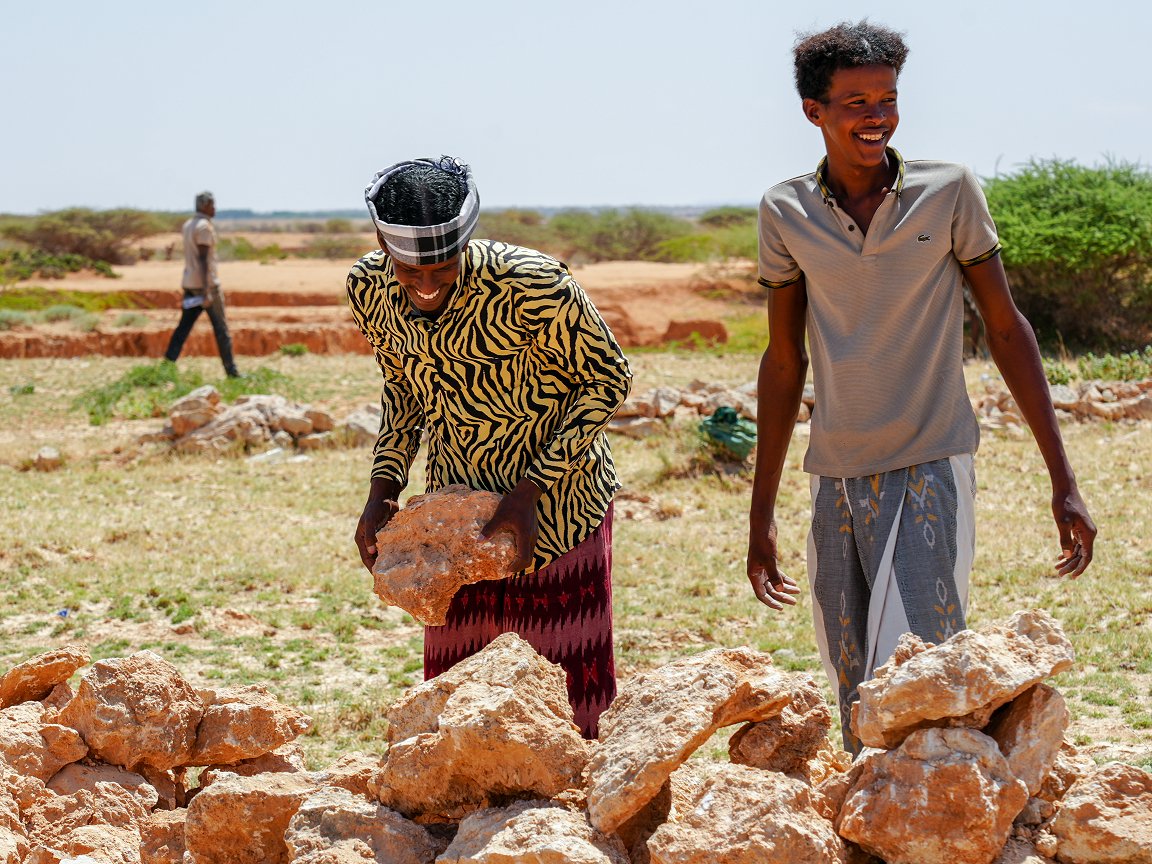
Climate action: A Somali Red Crescent Society programme in Nugaal region, Puntland where community volunteers are building gabions to protect against erosion caused by heavy rain and floods. Published research in July led by Cardiff University and including Climate Centre experts suggested Somalia faces a flood risk during the October to December rainy season comparable to the last El Niño flooding in 2023. The country’s anticipatory action systems are stronger, it added, but funding and operational constraints threaten the ability to translate forecasts into early action. (File photo: Timothy Maina/IFRC)