
Climate action blog: Women in South Sudan winning seats at the risk-reduction table
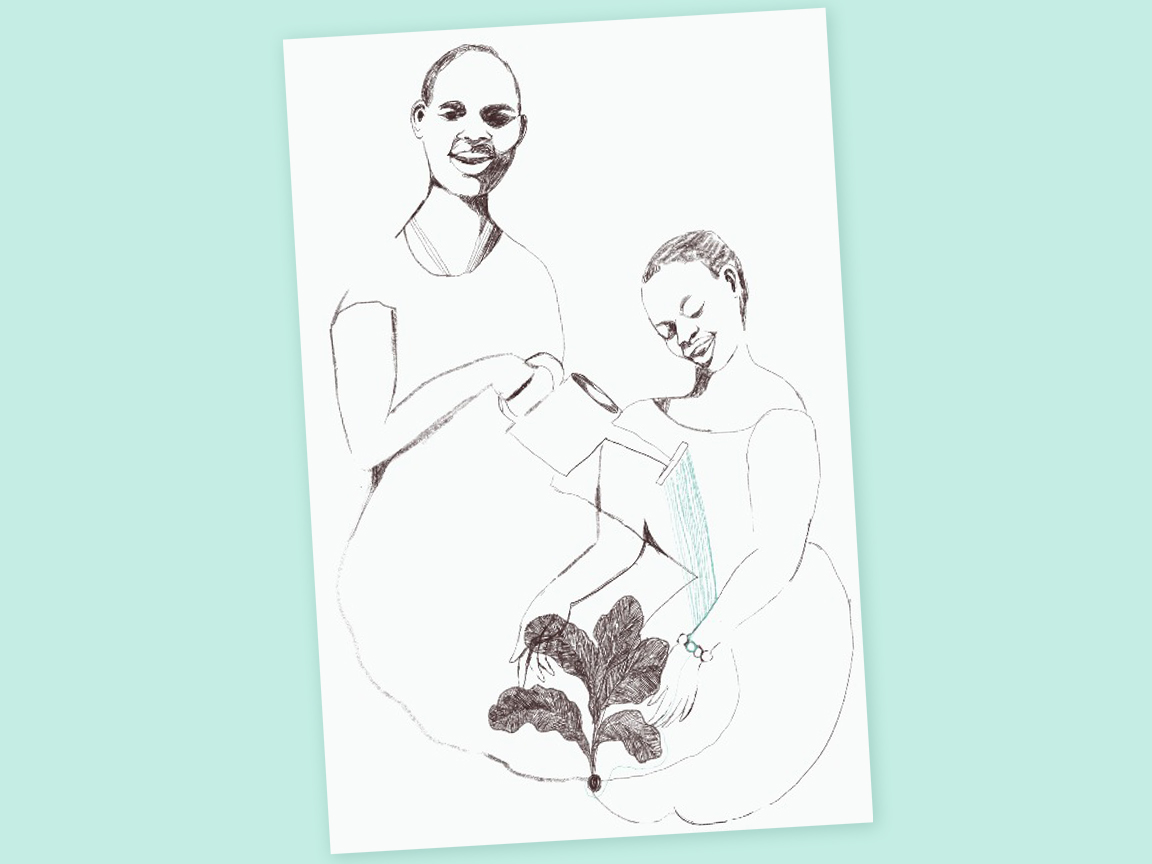
By Rebeka Ryvola, Climate Centre
(This is the third and final story in a series of three blogs by the Climate Centre in the run-to the Climate Action Summit tomorrow Wednesday 16 September.)
Bor South county, South Sudan – Abuk experiences floods every year. They’re a part of the landscape, a character in her region’s stories, and a force of both livelihood and crisis.
When Abuk’s plants started to be washed away before any meaningful harvest of cabbages, okra, ground nuts or other vegetables, she knew that her relationship to the flood needed to evolve.
Early warning and early action information had always reached Abuk through various channels. Like a game of telephone, the messages came either late, changed in the retelling, or both. Abuk was never sure she was getting the full, most accurate information.
Her experience connects to a documented pattern: across multiple disasters, researchers have found women’s access to risk information and agency to act on it lags behind men’s, with measurable consequences for livelihoods and survival.
Save the Children reports that in neighbouring Kenya, where seasonal flooding also displaces tens of thousands of people, women are often less likely to receive or trust official alerts.
What Abuk did to change is that she formed her own farm group. While concepts of gender and disability inclusion have been growing in and around Abuk’s community for many years, diversity and inclusion is not a case of simply raising awareness.
Workshops around these themes in her community feature debates and disagreements, and can increase already existing tensions.
As one of the first women to push for a seat when the Disaster Risk Management Committee began, Abuk was fighting for access to a space where not every man was comfortable with women speaking freely.
But she wanted to be part of the committee for the same reason she’d grown tired of second-hand warnings: she was living with flood risk first-hand, and she wanted to understand disaster risk reduction well enough to act differently and to grow more resilient.
The 21 branches of the South Sudan Red Cross are a part of a complex network spanning from very local organizations and groups like community and state ministries and going all the way up to the national level, and engaging with the advancement of gender and disability and inclusion in various ways.
It’s individuals like Abuk, though, who are critical for making Locally Led Adaptation (LLA) meaningful and robust.
Bringing back the analogy of the line of broken telephone messages, Angelina Thiep Malek from South Sudan’s Northern Bahr-El-Ghazal Women Union says, “When you have the information, that information is already a power; it can give you direction, what to do, and when to do it.” Thus with a seat on the committee, Abuk finally received the warnings as early as possible.
While the South Sudan Red Cross provides additional LLA support in the form of climate-resilient seeds, updated tools, and training in climate-smart agriculture, it was Abuk’s own fight for her place in the system that made her an LLA actor.
Now embedded in the system of preparedness, her group decided to relocate their gardens and vegetable fields to higher ground; to land they were able to collectively access because they now had cooperative power. Abuk and her fellow farm group members are facing annual floods from an entirely different vantage point than before.
(Artwork by Rebeka Ryvola.)