
Study: Nepal flash flood influenced by a range of climatic and geological factors
By the Climate Centre
The catastrophic rock and ice collapse on the northern Nepalese border that caused a flash flood that swept away entire communities was influenced by a range of climatic and geological factors, most of which are worsened by the impacts of climate change on the high altitude landscape, World Weather Attribution scientists said yesterday.
In a rapid study published yesterday, scientists found that the disaster happened as a compound crisis rather than a single extreme-weather event.
“Decades of atmospheric warming have melted the glacier and pushed the freezing threshold upward by around 100 metres of altitude per decade,” they said in a press release.
“This has resulted in glacier recession and thawing occurring in permafrost within rock fractures that historically hold high mountain walls together, rendering them unstable.
“The massive 2015 earthquake is likely to have also further preconditioned the slope for collapse.”
Last month and July were the warmest months on record locally, while heavy snowfall added large amounts of melt water in the intervening period.
‘Limits of climate adaptation’
Madhab Uprety, Senior Technical Advisor and Climate Centre Asia-Pacific focal point, said yesterday: “The tragic loss of more than 1,300 lives while thousands more are still missing is a devastating reminder that we are already hitting the limits of climate adaptation.
“To prevent future disasters from turning into human catastrophes, we need transformative action on every front.
“Aggressive global emissions cuts to slow warming, and real international support to address the unavoidable loss and damage faced by vulnerable frontline communities.”
The IFRC has launched an emergency appeal for 25 million Swiss francs to support the Nepal Red Cross Society’s response to the devastating flash flood. With the Nepal Red Cross, it’s providing emergency shelter, health care, clean water and sanitation, and mental health and psychosocial support.
In Nuwakot, for example, the IFRC and NRCS have installed water tanks and a pump, helping restore access to safe drinking water for around 2,000 people; water is also being trucked to affected communities while teams continue to assess longer-term solutions to repair and rehabilitate damaged systems.
In the same area, with IFRC support the NRCS has deployed a mobile primary health-care clinic that can reach 100 patients per day, helping to bring essential health services closer to affected communities and address gaps.
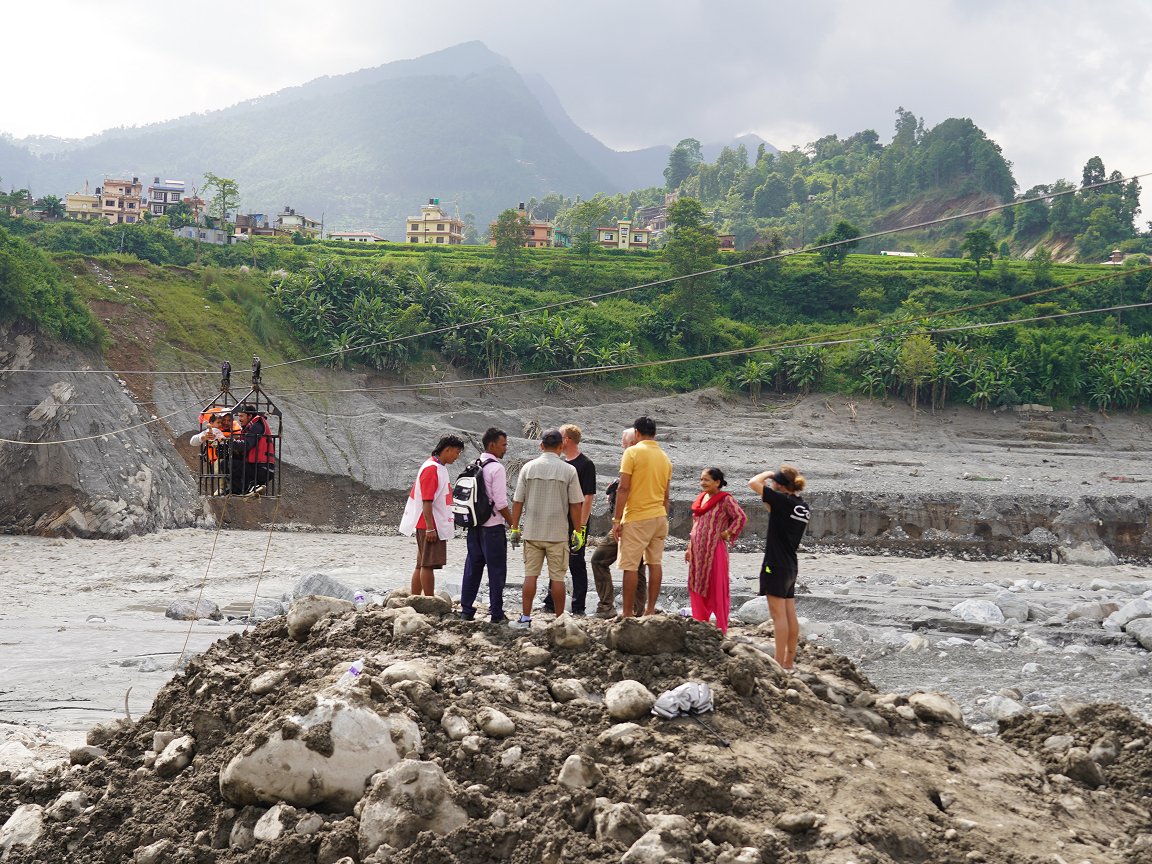
The Nepal Red Cross assist with a zip-wire crossing of the Trishuli river in Nuwakot. It replaces bridges washed away in the flash floods and can take two people at a time across. Red Cross volunteers provide the muscle power to pull them from one side to the other. (Nepal Red Cross via IFRC)