
National Societies in Africa prepare for El Niño impacts
By the Climate Centre
With the World Meteorological Organization predicting wetter-than-normal conditions in parts of East Africa and drier conditions in Southern Africa for the last quarter of the year, National Societies across the continent are working to translate risk information into practical action.
The latest WMO seasonal climate outlook, issued yesterday, “indicates that the current El Niño event could be unprecedented in strength – literally off the monitoring charts that we have used for the past four decades,” the UN agency’s Secretary-General, Celeste Saulo, told a press conference in Geneva together with the UN Emergency Relief Coordinator, Tom Fletcher. “El Niño will peak towards the end of 2026 but its impacts will be felt long after that,” she added.
Forecasts for the Horn of Africa point to an increased likelihood of heavy rainfall and flooding during the October–December rainy season, while rainfall deficits have already affected parts of the Sahel, Ethiopia, South Sudan and Uganda’s Karamoja region.
In Southern Africa, early action protocols for drought were activated last month in Lesotho and Eswatini, including cash, early warnings, community preparedness, water support and measures to protect livelihoods. In areas facing potential flooding, preparedness includes strengthening early warning systems, mobilizing volunteers, checking emergency supplies, planning evacuations, and ensuring teams are ready to support search and rescue.
‘Significant gaps’
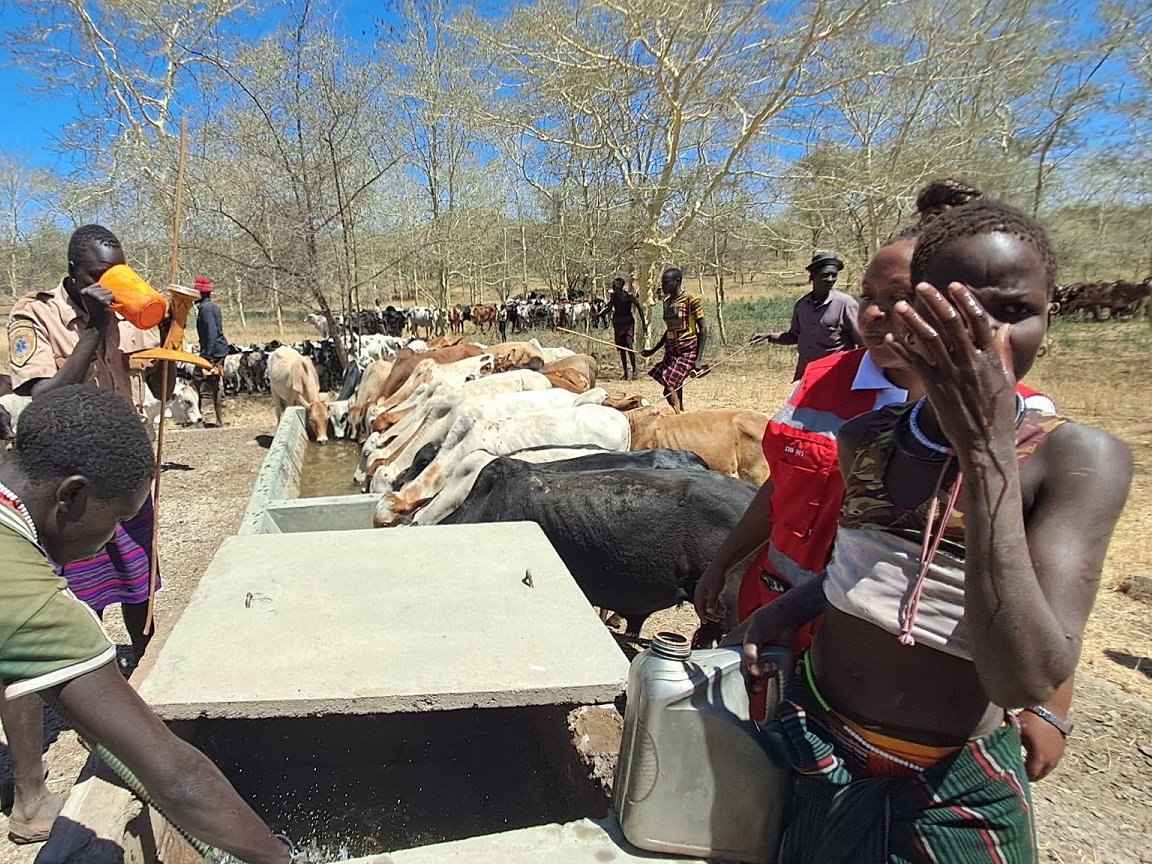
In parts of Karamoja region, the effects of prolonged drought are already visible, the IFRC reported this week.
“Water sources have dried up or fallen to very low levels. Families are travelling further to find water, while pasture continues to deteriorate, putting pressure on livelihoods that depend on livestock and crop production,” the International Federation says.
The Kobebe dam in Karamoja’s Moroto district, normally a critical source of water for communities and their livestock, for example, has dried up.
The Uganda Red Cross is providing cash assistance to more than 5,000 people affected by drought in Karamoja, as well as water for pastoralist communities and their animals. “Yet significant gaps remain,” the IFRC adds. “Communities need sustained support for water access, livestock, food security and the protection of livelihoods.
“Across Africa, the risks ahead are varied, and communities will not experience El Niño in the same way. What they share is the need for timely information, practical support and the opportunity to act before conditions deteriorate further.”
Seasonal outlooks
The IFRC Africa Regional Office is working with National Societies to strengthen coordination, identify gaps and improve operational preparedness, helping ensure volunteers, supplies, logistics and early action mechanisms are in place as risks evolve.
On the first day of the dialogue platform on anticipatory action in Berlin, meanwhile, Niccolò Lombardi, Emergency and Rehabilitation Officer (Anticipatory Action) at the UN Food and Agriculture Organization, said: “The El Niño in 2015–16 showed that we were not really well prepared to anticipate the shocks. Today, this has changed: we are seeing joint plans, joint triggers … and the joint appeal for US$ 202m million launched by FAO and the World Food Programme.”
This difference is being seen on the ground, added Jesse Mason, who leads on anticipatory action at the WFP. “We didn’t have to focus on the plans [this year]; we could focus on the outcomes and the impacts,” he told the conference, which concluded today.
In other parts of the world, the WMO seasonal outlook sees warmer conditions, rainfall deficits in South-East Asia and increased rainfall in the north-west US and south-west South America.
North America and the northern Caribbean are also expected to face above normal precipitation, while there is an increased drought risk in parts of Central America, the southern Caribbean and the Amazon.
The WMO stresses that these are seasonal outlooks, not predictions of individual events, adding that “regional and national forecasts are essential to identify where and when action is needed.”
The Uganda Red Cross Moroto branch marked the International Day for Disaster Risk Reduction on 13 October by trucking water to support communities suffering water scarcity. Across Karamoja, facing possibly severe imoacts from an El Niño that has yet to peak, the National Society is providing cash assistance to more than 5,000 people already affected by drought, as well as water for pastoralist communities and their animals. (Photo: Uganda Red Cross via X)