
Studies: Climate change pushed central Japan to three times normal seasonal rainfall
By the Climate Centre
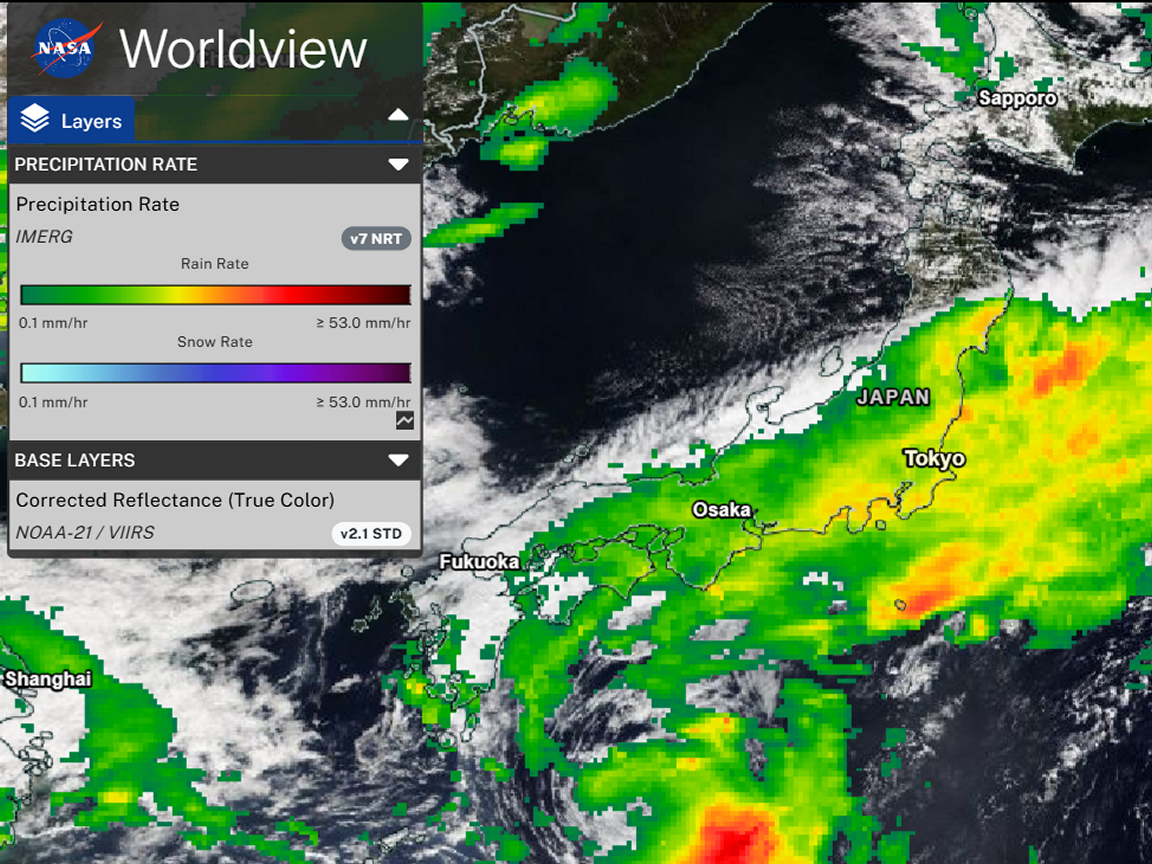
Tokyo saw 35 consecutive days of rain from the end of August through the end of September – three times the normal amount for this season, US scientists said earlier this month.
Some days experienced only minimal rainfall, but Typhoons Krovanh and Dujuan in September dumped substantial amounts, according to a report on NASA’s Goddard Earth Sciences Data and Information Services Center.
The previous record for consecutive days of precipitation in central Japan was set in June and July 2019, when rain fell on Tokyo for 33 consecutive days.
Climate change increased the moisture in the atmosphere and warmed the seas that fuelled the storms, according to a new report released yesterday by World Weather Attribution.
Dujuan brought torrential rain to Japan’s Kantō region, triggering widespread inland flooding, road collapses, and embankment breaches while leaving nearly 45,000 households without power.
‘Deadly landslides’
More precisely, climate change increased the amount of water vapour available in the atmosphere to fall as rain by 9 per cent, consistent with the physics of warmer air being able to hold more moisture, while sea surface temperatures over which Dujuan passed were up to 3°C warmer than they would have been in a pre-industrial climate. However, the researchers found no role for the current El Niño in intensifying the storms.
Yukiko Imada, of the Atmosphere and Ocean Research Institute at the University of Tokyo, said: “Typhoon Dujuan brought severe torrential rain to the Kantō region, triggering deadly landslides in Chiba prefecture and breaching embankments along Lake Inbanuma.
“Even in a country like Japan, with our extensive river defences and advanced forecasting, rainfall of this intensity can cause severe damage. It is one manifestation of how warmer oceans and higher atmospheric moisture can exacerbate the risks associated with storms we experience.”
NASA satellite imaging shows the record rainfall over Japan last month in millimetres per hour. (Image: NASA Worldview)