
IFRC to COP31: ‘We need people, places and partnerships to hit climate change head on’
By the Climate Centre
The COP31 climate talks opens Monday in the Turkish city of Antalya against “a backdrop of record-breaking temperatures, escalating climate impacts and growing energy insecurity, [providing] a critical opportunity for countries to accelerate climate action and strengthen cooperation,” the UN said.
The UN climate talks this year will see the launch of the second global stocktake – the 2015 Paris Agreement’s formal process for assessing collective progress towards its long-term goals.
Selwin Hart, the UN Special Adviser on Climate Action and Just Transition, said in a video message to the conference that overshoot – in which the world
temporarily exceeds the Paris Agreement’s 1.5°C warming threshold – “is not surrender [but] should really lead to a much greater degree of urgency.
“The good news in this horrible situation of overshoot is that the world has never been better equipped to solve this challenge,” he added, pointing to the rapid expansion of electric vehicles, solar energy and battery storage.
‘Top global challenge’
The UN says at least four major global issues remain unresolved: climate finance, just transition, adaptation, and emissions.
In its own call to action, the IFRC says it “sees the climate crisis as the top global challenge facing humanity and the planet. We need people, places and partnerships to work together to hit climate change head on.”
Its own operational focus is threefold: tackling extreme heat and build climate resilient cities and health systems; investing in locally led climate action, local leadership, local ownership driving local solutions; and timing to get ahead of disasters when community preparedness and anticipatory action saves lives, protects livelihoods, and minimizes loss and damage.
Charting progress on health and wellbeing after COP30 last year, the IFRC says global adaptation indicators were adopted, including on health as part of the UAE Framework for Global Climate Resilience.
But “[n]ow progress is needed to align and scale adaptation actions across climate and health. We all have a role to play.
“National Societies are at the forefront of local action and response to tackle rising heat risk in their communities. Each year we raise the alarm and strengthen preparedness across the world with our Heat Action Day!”
‘Local capacities, local actors’
The IFRC advocates investment in “multi-sector local action for cities and communities to reduce heat risk. From heat action plans, early warning early action, shock-responsive social protection systems to nature-based solutions to better adapt and reduce risks.”
On adaptation likewise, the IFRC calls for an expansion of “local capacities, local actors, and communities and support for devolved financing mechanisms”.
It wants to see “faster, more reliable, targeted support with pre-arranged finance to get ahead of disasters. Support the creation and scale up of innovative financing tools to reach most vulnerable people and communities, including in fragile contexts.”
On the role of the IFRC, the network is “scaling up locally led climate action through the Global Climate Resilience Platform and the GCRP pooled fund, supported by the IFRC Climate Action Journey.
It adds that as “leaders of the Climate and Environment Charter for Humanitarian Organizations we are committed and reducing our own environmental footprint of our operations and programmes.”
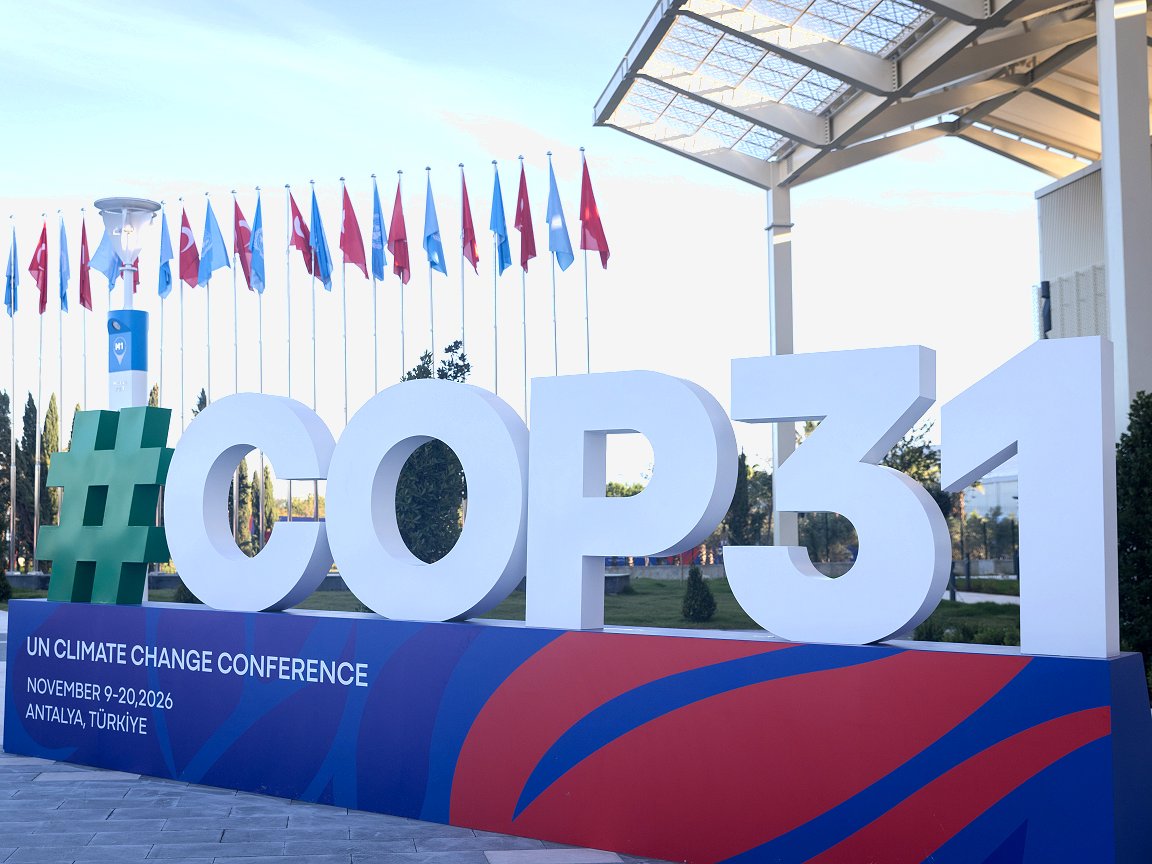
At COP31 host nation Türkiye is promoting initiatives on clean energy, food security, resilient cities, greener industries, oceans and waste reduction. (Photo: Kiara Worth/UN Climate Change)