
Water at the Heart of Climate Action helps communities to answers in Ethiopia’s Somali Region
By Sarah Whitlock, Netherlands Red Cross
(This story appeared first on the WHCA* website last month.)
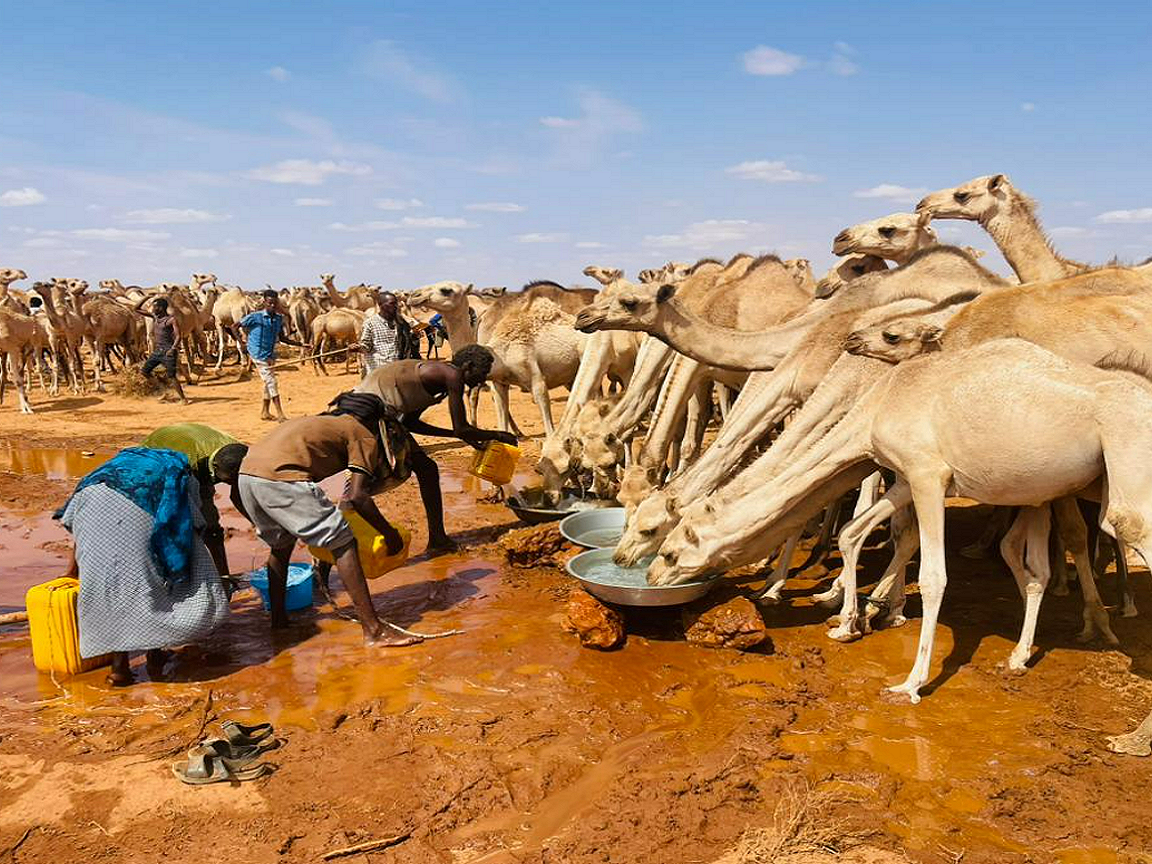
In Ethiopia’s Somali Region, water shapes daily life. When climate shocks disrupt the nearest reliable water source, families face difficult choices about where to find water for drinking, cooking and livestock.
As droughts and floods become more frequent and less predictable, the question becomes increasingly urgent: where can we find safe water?
To help answer it, communities worked with the Ethiopian Red Cross Society (ERCS) in Harshin and Kelafo districts to map water points and understand how vulnerable they are to climate hazards, supported by Water at the Heart of Climate Action (WHCA).
“Floods and droughts account for nearly 75 per cent of all hazards in Ethiopia, both driven by water-related risks. That’s why our work starts with communities: we help them understand the risks and own the actions needed to reduce impacts,” says Abraham Tesfaye, ERCS Anticipatory Action Focal Point.
By identifying where water points are located, whether they are functioning, and how exposed they are to climate hazards, communities and local authorities can make informed decisions about which water points should be prioritized for rehabilitation, upgrading, or protection, helping communities protect reliable water sources before climate shocks disrupt them.
The mapping of water points combined local knowledge with digital tools to create a clearer picture of water availability across the two districts.
Trained by the Netherlands Red Cross, ERCS volunteers travelled between communities to observe water points, assess their condition and vulnerability, and record the information on smartphones so it could be shared and accessed.
‘Stories like Afdup show that climate resilience is not created by infrastructure alone, but also local leadership and information for action’
Conversations with residents revealed which wells dry up first, which routes become inaccessible during floods, and which water sources communities rely on when conditions become extreme.
This work resulted in a comprehensive, digital overview of water infrastructure, showing where access is fragile and where support may be needed most when disaster strikes.
“By making reliable information readily available, we have strengthened our capacity to identify risks early, monitor interventions effectively, and facilitate timely actions that enhance community climate resilience,” explains Matebe Eshete, ERCS Emergency Operations Centre Coordinator.
The mapping exercise also uncovered stories of adaptation already taking place.
Afdup, a town in Kelafo far from the river, often faces water shortages. But residents came together to build their own water sources that support households and livelihoods, providing an important buffer during dry periods.
“Today, they not only meet their needs but also exchange crops for water, proving what communities can achieve when they organize around a common challenge,” says Jamal Idris, an ERCS local volunteer.
Stories like Afdup show that climate resilience is not created by infrastructure alone; it also depends on local leadership and access to information that supports effective action.
For many communities in Somali Region, resilience begins with knowing where water can be found and whether it will still be accessible when conditions change. The maps created through this initiative provide the information needed to help communities and local authorities make decisions before a crisis unfolds.
When water becomes uncertain, having answers matters, to protect livelihoods, strengthen communities and prepare for whatever comes next.
*The work in Somali Region was among the success stories presented at the third WHCA regional learning assembly in Nairobi this week. Water at the Heart of Climate Action strengthens early warning systems and water resilience across the Nile Basin. By linking data, forecasting, and community preparedness, WHCA helps turn early warnings into early action, and supports locally led solutions in Ethiopia, Rwanda, South Sudan, Sudan, and Uganda.
Helped by Water at the Heart of Climate Action, communities in Ethiopia’s Somali Region (pictured) have been finding locally generated answers to the problem or water scarcity, exacerbated by climate shocks. (File photo: ERCS)