
‘A family fleeing floods. A farmer losing their harvest. An older person facing dangerous heat.’ IFRC flags climate reality at COP31
By the Climate Centre
IFRC Secretary General Jagan Chapagain has reiterated that climate-induced disasters are increasing needs at the very moment when humanitarian funding has “gone down drastically”. He was speaking Wednesday at the COP31 two-day leaders’ summit that ended yesterday.
“At the IFRC we are advocating for investment at the local level in preparedness and anticipatory action, and for timely investment before crises happen, so that we can make sure the impacts of the climate crisis on people’s health and livelihoods and food insecurity are properly addressed” – a call he said would be heard at the high-level event in the voice of National Societies and volunteers.
“A family fleeing floods. A farmer losing their harvest. An older person facing dangerous heat. Behind every climate disaster are people whose health, homes and livelihoods are at risk,” the IFRC said on social media earlier. Its threefold call to action at COP31 included “timing to get ahead of disasters when community preparedness and anticipatory action saves lives, protects livelihoods, and minimizes loss and damage.”
‘Top global priority’
More countries than ever are reporting multi-hazard early warning systems, but major gaps remain in the countries and communities most vulnerable to disasters, according to a new report from the United Nations Office for Disaster Risk Reduction and the World Meteorological Organization.
Global Status of Multi-Hazard Early Warning Systems 2026, released Wednesday, finds the number of countries reporting some level of multi-hazard early warning system capacity has risen to 136, an increase of 17 from March 2025, bringing total global coverage to 70 per cent – a 143 per cent increase since reporting began in 2015.
Kamal Kishore, Special Representative of the UN Secretary-General for Disaster Risk Reduction and UNDRR chief, said: “Countries have made significant progress in strengthening their early warning systems, but too many people remain unprotected.
“If we are serious about reducing loss and damage, strengthening early warning and early action in the most vulnerable countries must be a top global priority.”
The IFRC is global lead of the fourth pillar of the UN’s Early Warnings For All initiative, centred on preparedness for warnings – a key element of Anticipatory Action.
The leaders’ summit in Antalya was held under the theme “Towards a Sustainable, Resilient and Equitable Future”.
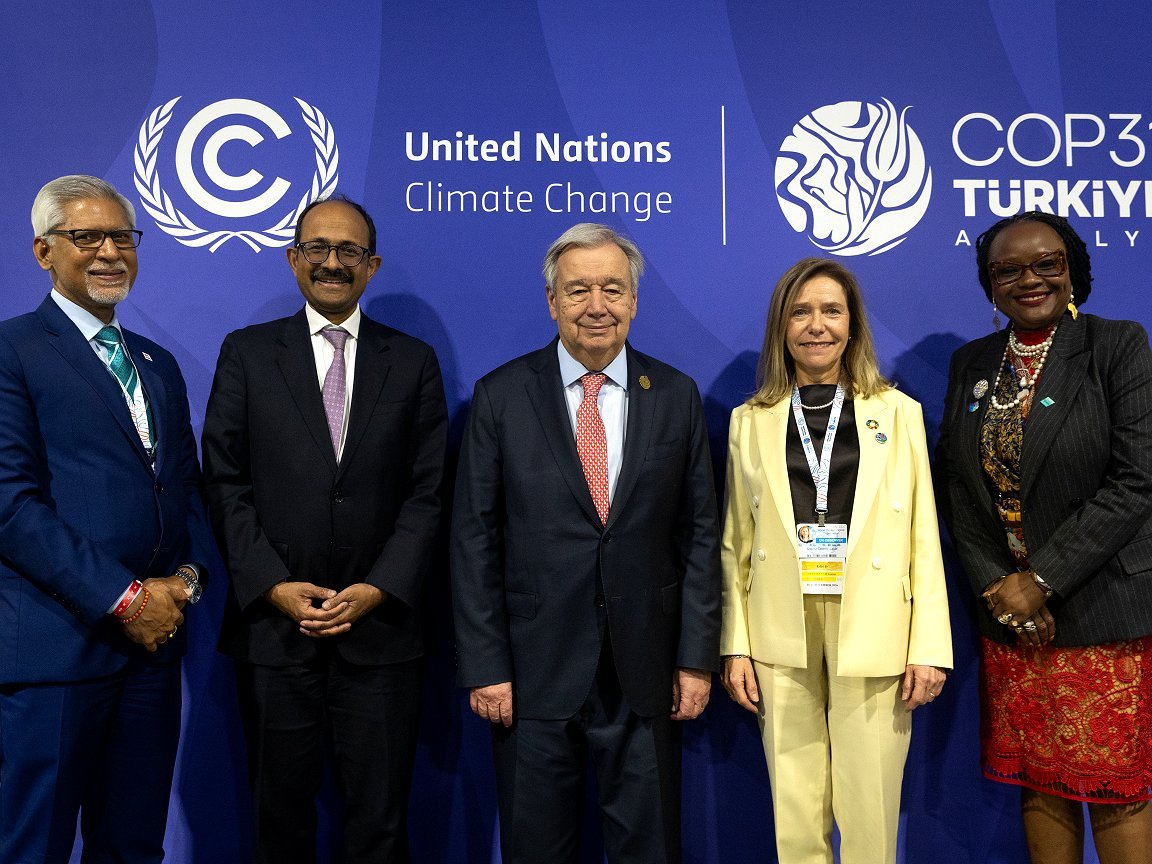
Jagan Chapagain (far left) at the COP31 high-level event on early warnings for all – part of the leaders’ summit. From right, Musonda Mumba, Secretary General of the Convention on Wetlands, who moderated; WMO Secretary-General Celeste Saulo; UN Secretary-General António Guterres; and Kamal Kishore. (Photo: Kiara Worth/UN Climate Change)