
IFRC/WWF partnership: a new report and ‘a significant increase in ambition’
By the Climate Center
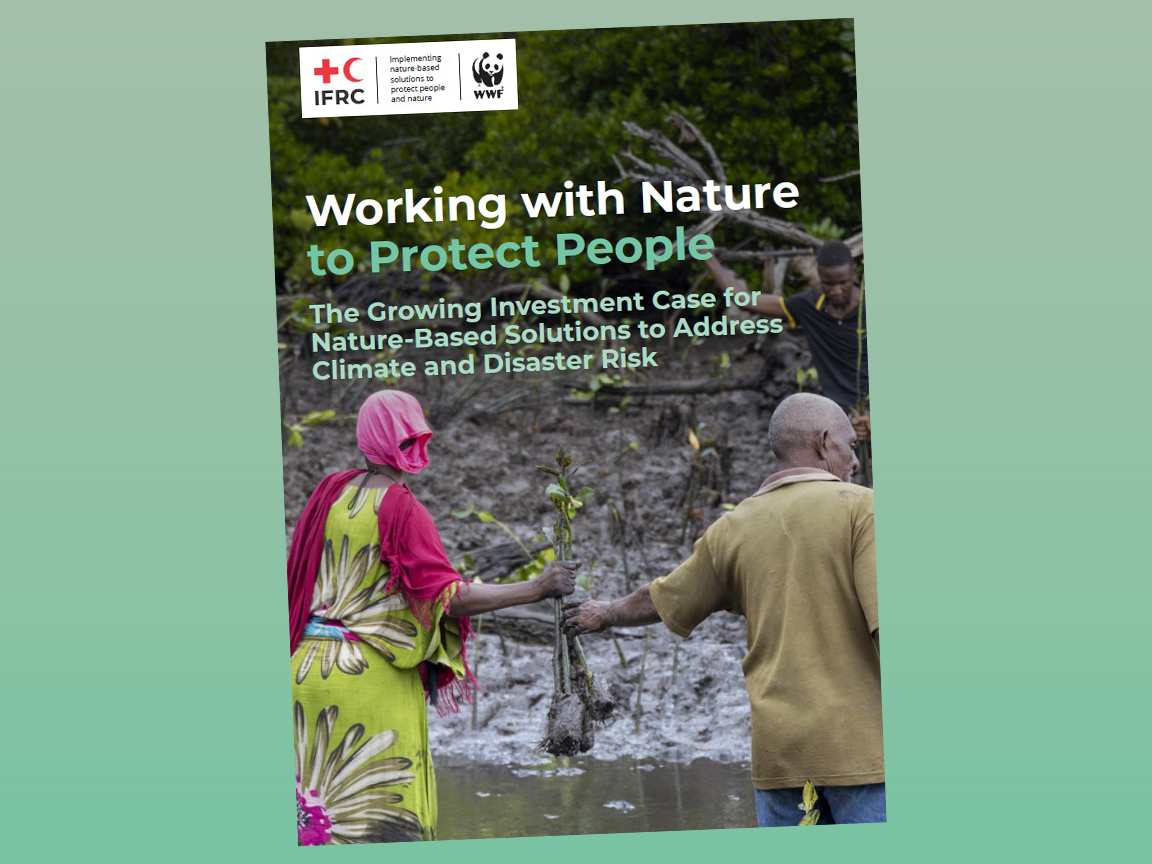
The IFRC and WWF this week published a second flagship report updating their landmark 2022 findings, highlighting how the power of nature to protect people continues to be overlooked and underfunded.
Working with Nature to Protect People, which was supported by Finland, demonstrates how nature-based solutions can reduce the intensity of climate- and weather-related hazards, save lives, and help vulnerable communities adapt to and withstand the dangers of a warming world.
During the first phase of the IFRC-WWF partnership, 26 WWF country offices and National Societies jointly implemented projects in 11 countries, mobilizing some US$ 22 million in the process.
The next five-year phase starting this year will raise US$ 250 million across at least 25 countries to strengthen the climate and disaster resilience of 20 million people living in a wide range of terrestrial, freshwater and coastal environments.
The new report (its subtitle is The Growing Investment Case for Nature-Based Solutions to Address Climate and Disaster Risk) finds that nature-based solutions could reduce the intensity of climate- and weather-related hazards by an average of just over 30 per cent, up from the 2022 estimate of 26 per cent.
‘Challenges ahead’
They could help developing countries avoid loss and damage of nearly US$ 150 billion a year in 2030, updating the 2022 figure of just over US$ 100 billion.
In a joint foreword, IFRC Secretary General Jagan Chapagain and WWF Director General Kirsten Schuijt said: “By bringing together our expertise in disaster risk reduction and conservation, the partnership has the potential to drastically scale up the development of nature-based solutions.
“But that will depend upon collaboration, support and resources from governments, the private sector, development institutions and philanthropic organizations.”
Three detailed case studies cover restoration work in Kenya’s coastal ecosystems to strengthen climate and disaster resilience, livelihoods and water security, reducing flood and erosion risks in western Nepal, and embedding nature-based solutions in planning for community resilience in three Philippine islands: Palawan, Leyte and Siargao.
Phase II of the IFRC-WWF partnership is described as “a significant increase in ambition”. Together, WWF and IFRC “will accelerate integration of nature-based solutions into climate adaptation and disaster risk management, helping communities become safer, more resilient, and better prepared for the challenges ahead.”