
Ethiopian Red Cross triggers last part of two-stage Early Action Protocol
By the Climate Centre
The Ethiopian Red Cross Society (ERCS) has now completed activation of both parts of its Early Action Protocol for drought after the trigger threshold that centres on expected crop-yields was reached in the neighbouring districts of Rayitu and Seweyna in Oromia Region in late October.
Over the next few weeks, it will support 35,000 people through anticipatory actions ahead of the forecast peak of the current drought through livestock vaccinations and cash for animal feed, WASH interventions, alternative foods, and paid work schemes, according to a report on the Anticipation Hub.
The latest actions are worth just over 140,000 Swiss francs and are supported by the anticipatory pillar of the IFRC’s Disaster Response Emergency Fund.
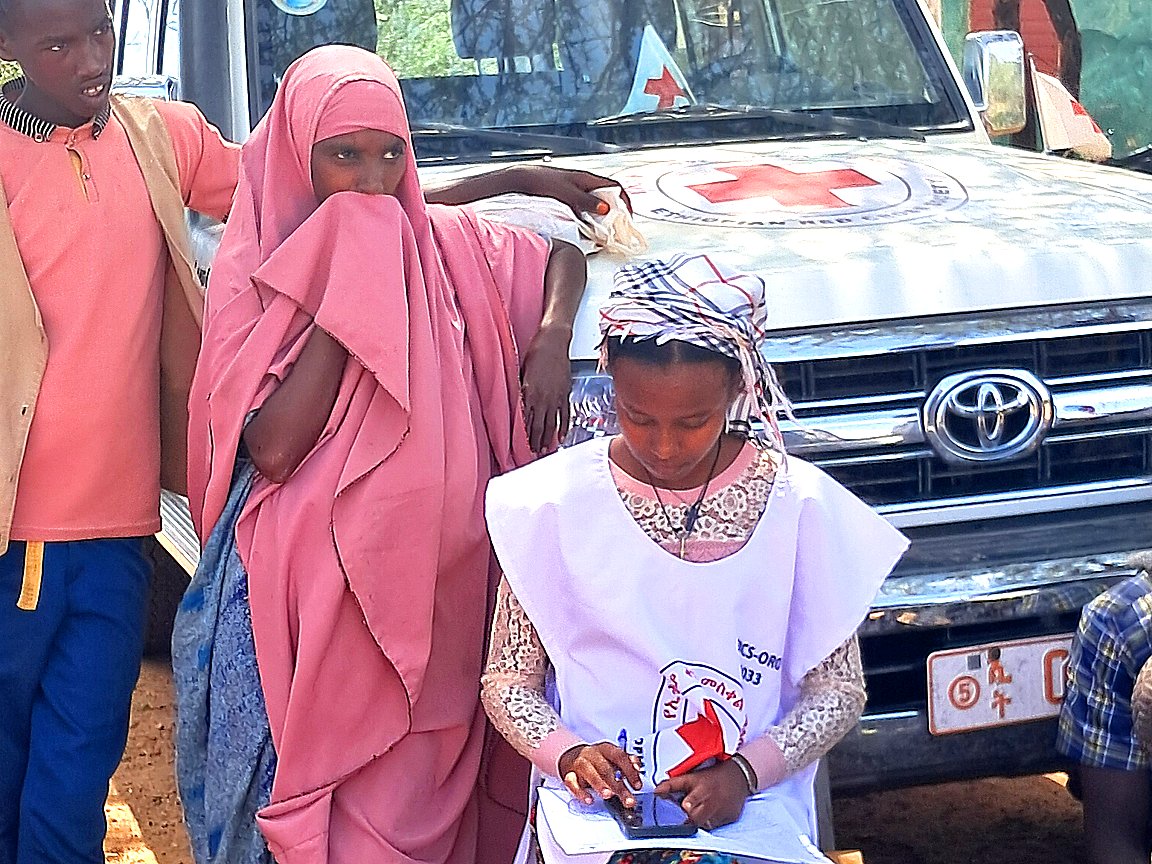
They come after the activation in September 2024 of the first stage of the EAP, centring on drought itself, released just over 200,000 Swiss francs for similar interventions benefitting 14,000 households, again in Oromia as well as Shebelle zone in Somali Region.
That work was paused after the second-stage threshold was not reached but is now being resumed through a consultative process that includes communities, the government and other stakeholders.
More than 30 staff and volunteers have mobilized to support the overall activation, which included 2,800 farmers receiving drought-resistant teff seeds.
In Rayitu, for example, four water points were serviced, benefitting more than 5,500 people in eight separate hamlets; 15 health workers were trained and deployed alongside other experts to raise community awareness on risks like cholera and waterborne diseases in drought conditions; other WASH activity benefitted some 28,000 community members over ten days.
‘Monitor conditions closely’
The Bega (October–December) season plays a crucial role in restoring rangelands grazed by livestock in southern and eastern Ethiopia, but by the end of October rainfall across these areas was below average.
The latest climate watch advisory from IGAD says south-eastern Ethiopia, eastern Kenya and southern Somalia face “worsening drought as La Niña and negative [Indian Ocean Dipole] conditions persist.
“Forecasts show a high likelihood of continued below-normal rainfall through January 2026 threatening agriculture, livestock, water resources and food security,” it adds, and urges agencies “to monitor conditions closely”.
Red Cross personnel register recipients for anticipatory cash in Ethiopia’s Somali Region last September after the first part of a two-stage Early Action Protocol was triggered. (Photo: ERCS via DRK)