
IFRC emergency fund’s ‘pivotal year’ driven by intensifying climate and complex emergencies
By the Climate Centre
The IFRC’s Disaster Response Emergency Fund described 2024 as a “pivotal year”, with a significant increase in grants to just under 100 National Societies “driven by the growing impact of climate change and complex emergencies worldwide.”
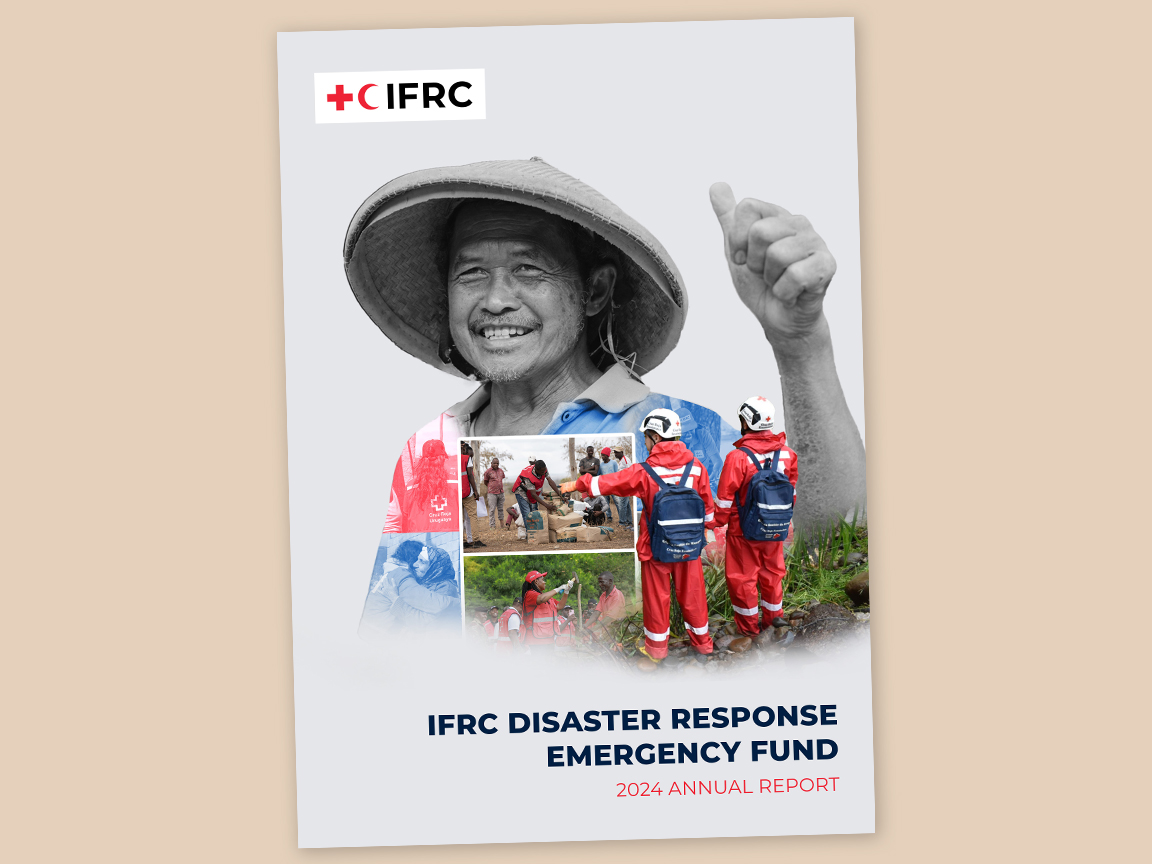
The IFRC-DREF annual report, published Monday (pictured), says the 85.3 million Swiss francs allocated across 167 operations helped the Red Cross Red Crescent reach more than 24 million people affected by crises; this compares to the 74.2m CHF allocated the previous year.
The year 2024 was marked by record fundraising that reached 91.6m CHF, of which 77m CHF came from voluntary contributions by at least 55 donors and partners, including 14.4m from a pioneering disaster insurance policy that was activated for the first time for Supertyphoon Yagi in Asia.
Saying IFRC-DREF lies at the heart of the IFRC’s response, Secretary General Jagan Chapagain described the potential of IFRC-DREF insurance as “immense, increasing our capacity to reach up to 6 million more people vulnerable to natural hazards.
The IFRC’s chief executive writes in a foreword: “IFRC-DREF stands out in its commitment to channelling support directly to local actors. While the global average of humanitarian funds directly allocated to local actors is around 4.5 per cent annually, a significant 76.5 per cent of IFRC-DREF’s allocations are directly transferred to National Societies.
“This approach ensures aid is efficient, effective, and empowers local actors best positioned to understand and meet community needs.”
The IFRC-DREF Anticipatory Pillar saw 29 submissions for early action protocols, including the first for epidemics – specifically dengue fever in Sri Lanka and cholera in Cameroon. (EAPs are first designed and officially accepted, but only activated, or triggered, once the relevant forecast thresholds are reached.)
The report adds: “Multiple connections have been established with the Climate Centre, as a pivotal member of the [anticipatory action] validation committee, contributing to the review of epidemics protocols, the level of expectations concerning the trigger statements in the protocols, and the conditions under which a [National Society] should or should not seek trigger alignment with other actors.”
The IFRC-DREF Response Pillar, meanwhile, “focused on improving the delivery of timely support for small and medium-scale emergencies.”
In Africa, responses focused on epidemics and floods; in Asia-Pacific, disaster readiness and response capacity saw significant advances; and Europe, MENA, and the Americas also recorded successful operations on a range of emergencies.
Globally, floods remained the hazard receiving most allocations, with CHF 32.1 million allocated in response, and four EAPs activated in Africa, Americas, and Asia Pacific.
“As climate change continues to drive extreme weather events, 10.4m CHF was allocated to address the humanitarian impact of droughts – the third most frequent hazard in 2024 – across Africa, the Americas, and Asia Pacific,” the report says.