
Study: Climate change fuels fire weather threatening the world’s oldest trees in Argentina and Chile
By the Climate Centre
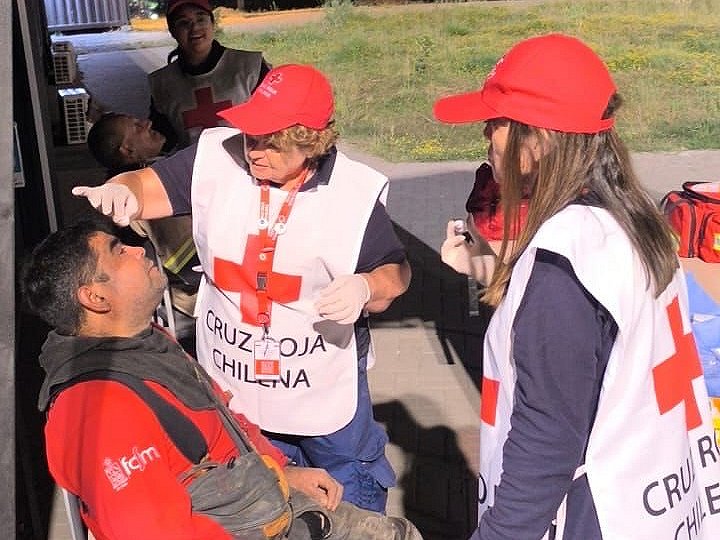
The IFRC last week allocated half a million Swiss francs from its Disaster Response Emergency Fund to reinforce the Chilean Red Cross response to the large-scale forest-fire emergency that began in January in the Ñuble and Biobío regions in the centre of the country.
“On 18 January, these fires went uncontrolled and rapidly spread due to adverse weather conditions and a sudden change of wind direction locally known as viento puelche, entering in a few hours in highly populated neighbourhoods,” IFRC-DREF said.
The fires evolved rapidly and the authorities declared a catastrophe the same day, deploying the full resources of the national response system.
“The emergency has had significant humanitarian impacts, including mass evacuations [of some 50,000 people], loss of life, damage to homes, disruption to livelihoods, and significant alterations in access to basic services and critical infrastructure,” IFRC-DREF added.
The Chilean Red Cross earlier activated its simplified early action protocol for wildfire, the first of its kind in the world, releasing 95,000 CHF to assist 2,000 people.
Human-induced climate change has made the fire weather that accompanied the recent blazes in both Chile and Argentina up to three times more likely, a new analysis by World Weather Attribution published today has found; La Niña is also shown to have played a lesser role in promoting the dry conditions.
‘Massive impact in multiple areas’
The scientists say these regions are getting up to 25 per cent less rainfall than they would have in a world without the burning of fossil fuels, while the fires were also driven by temperatures approaching 40°C and winds of some 40kph.
The province mainly affected in Argentina, Chubut, includes the Los Alerces National Park in Patagonia that borders Chile and is listed as a World Heritage Site by UNESCO.
Argentine scientist Juan Antonio Rivera of the Scientific and Technological Center in the central city of Mendoza and a WWA study author said: “These fires are striking at the heart of our communities and natural heritage. In Patagonia, we are seeing blazes threaten the Alerce trees – ancient giants that have stood undisturbed for thousands of years.
“The combination of human-induced warming and natural cycles like La Niña has created an aridity that fires thrive on. For Chile and Argentina, the drying of our landscapes is no longer a projection but a crisis that needs an urgent response to protect our unique biodiversity and the people of our region.”
The WWA statement today said that “iconic landscapes, glacial lakes, mountain towns, and peak summer tourism hubs, quickly became evacuation zones as fires advanced along the eastern slopes of the Andes.”
The Climate Centre’s senior urban specialist Aynur Kadihasanoglu adds: “In Chile, the proximity of flammable pine plantations and human settlements puts lives and livelihoods at risk … To save lives, we must address not only the emissions driving rising temperatures, but also the local exposure that leaves communities so vulnerable.”
The Chilean Red Cross has been involved in wildfire emergencies at the national level in 2012, 2014, 2017, 2022–23, and 2024, assisting thousands of affected people, but “the increase in the frequency and intensity of these threats due to climate change and population flows to areas of urbanization not regulated by the state have transformed these scenarios into events with massive impact in multiple areas,” IFRC-DREF says.
All Chilean Red Cross branches in two provinces affected by new forest fires have been engaged in the response, including first aid for displaced residents and fire-fighters. (Photo: Chilean Red Cross)