
Study: Record downpours that caused lethal landslides in Brazil will worsen with further warming
By the Climate Centre
(This is an adapted version of a press release issued by World Weather Attribution earlier today.)
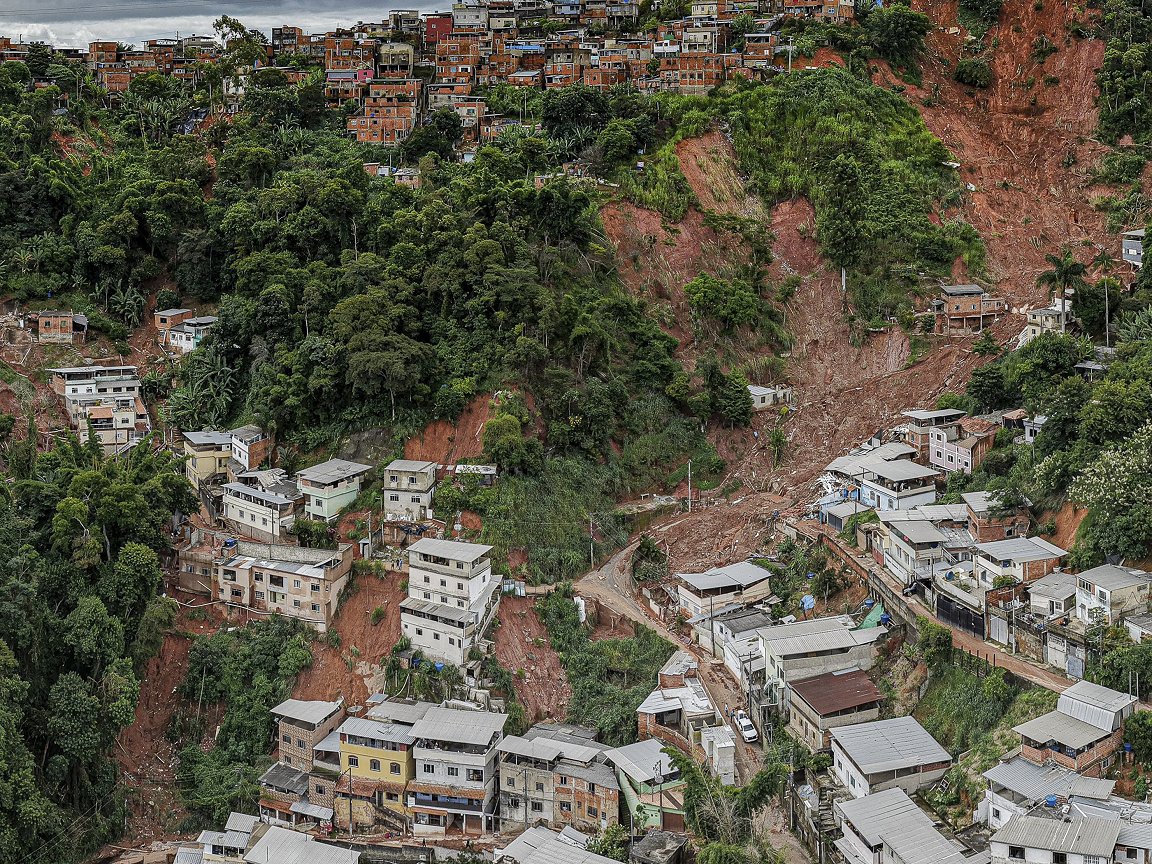
The landslides that struck the state of Minas Gerais in south-east Brazil last month (pictured) have laid bare the vulnerability of the country’s cities and its coffee industry to an increasingly volatile climate, World Weather Attribution scientists said today.
The WWA team warn in a new study that this event is a preview of the heavier rainfall expected as global temperatures rise further.
It was the wettest month on record in the worst-affected city of Juiz de Fora: 65 people were killed there and over 6,400 were forced from their homes after particularly intense rainfall fell between 22 and 24 February; seven other people more were killed in Uba.
Minas Gerais is the heart of Brazil’s coffee industry and the leading producer of arabica beans. After years of extreme weather caused as much as a 20 per cent reduction in output and global spikes in prices, there were hopes for a better harvest this year, but the above-average rainfall is now fuelling disease across plantations.
While the scientists didn’t find definitive evidence that climate change increased the intensity of rainfall in this event, models do show the strength of these downpours worsening by an estimated 7 per cent as global temperatures rise, but the true number could be higher.
Rapid urban growth on steep slopes and floodplains has seen natural vegetation replaced by paved surfaces, reducing water drainage and increasing runoff, they add.
‘Early warning systems are the
decisive instrument for saving lives’
Pedro Camarinha, Deputy Director at the Brazilian National Center for Monitoring and Early Warning of Natural Disasters, said: “This disaster made clear how extreme rainfall can trigger the consequences of risk that was already known, but insufficiently addressed through preventive public policies.
“Where land-use planning, risk reduction measures, and the protection of exposed communities remain inadequate, early warning systems become the decisive instrument for saving lives.”
“Their effectiveness, however, depends on disaster risk being communicated clearly to the population through coordinated action among institutions and with society as a central actor in the system.
“Early warning systems must therefore be better valued and continuously improved, while risk awareness is strengthened among exposed communities and urgent action is taken to reduce exposure and vulnerability.”
Regina R. Rodrigues, a professor at the Federal University of Santa Catarina in Florianopolis, added: “Looking to the future, there are clear implications for Brazil’s leaders to ensure people aren’t living in harm’s way as we see more of these events unfold.
“Minas Gerais is the heartbeat of Brazil’s coffee production and this rainfall is another example of the extreme weather it is having to deal with. It’s a reminder that our changing climate is already pushing up prices and disrupting supplies for products people around the world take for granted.”
Coffee growers in Brazil’s Minas Gerais state are battling an increasingly volatile climate that threatens more record-breaking downpours like last month’s: this picture was taken during a visit to Juiz de Fora by President Lula. (Photo: Ricardo Stuckert/Brazil presidential photographer)