
IFRC: Scope, scale and impact of Yemen floods disaster is huge
By the Climate Centre
Rainfall in Yemen is expected to intensify over the next few weeks, the UN Food and Agriculture organization said at the end of last month, potentially worsening a flood disaster whose scope, scale and impact the IFRC describes as huge.
IFRC-DREF last week published details of an emergency humanitarian grant of just under half a million Swiss francs to enable the Yemen Red Crescent to assist 24,500 affected people in ten governorates.
The rainy season in Yemen, which has also been impacted by drought, had already begun early and intensified from 27 March.
The Red Crescent reported “widespread humanitarian impacts” affecting nearly 84,000 people, many in IDP sites and flood-prone areas, and causing 30 deaths.
“While assessments are ongoing, critical infrastructure, including electricity networks, water supply systems, communications, transport, and mobility networks, have sustained significant damage,” the IFRC-DREF report said.
It continued: “Temporary shelters for IDPs, as well as crops and livestock, have been destroyed. In parallel, the risk of waterborne diseases is increasing due to contamination of water sources and damage to WASH facilities.
“Many of the affected areas are located near front lines, further elevating risks associated with landmines and unexploded ordnance.”
‘Protracted conflict, economic collapse, climate-related shocks’
An estimated 21 million people remain in need of humanitarian assistance across Yemen, the UN says, a crisis driven by a combination of conflict, economic deterioration, disease outbreaks including recurring waves of cholera, and increasing exposure to climate-related hazards.
Flood-prone and coastal areas remain particularly vulnerable, where extreme weather events continue to threaten lives, damage homes, and destroy critical infrastructure.
On top of this, humanitarian operations in Yemen – one of the world’s most severe and protracted humanitarian crises – are facing unprecedented funding constraints and humanitarian actors have been forced to scale down or suspend life-saving interventions.
In its appeal for Yemen published last month, the United Nations children’s agency says that provisional figures now show one in every 25 Yemeni children dies before age five.
“Yemen is facing a deepening crisis marked by protracted conflict, economic collapse and climate-related shocks, prompting significant humanitarian needs … The nutrition situation is projected to deteriorate, with 18.1 million people expected to face crisis levels of food insecurity (IPC Phase 3 or greater) by early 2026,” says UNICEF.
The Climate Centre’s guide to anticipatory action with IDPs and refugees published in December draws on case studies derived from the Istibak (“anticipate” in Arabic) project aimed at strengthening the climate resilience of displaced people and host communities in Iraq and Yemen through forecast-based early action.
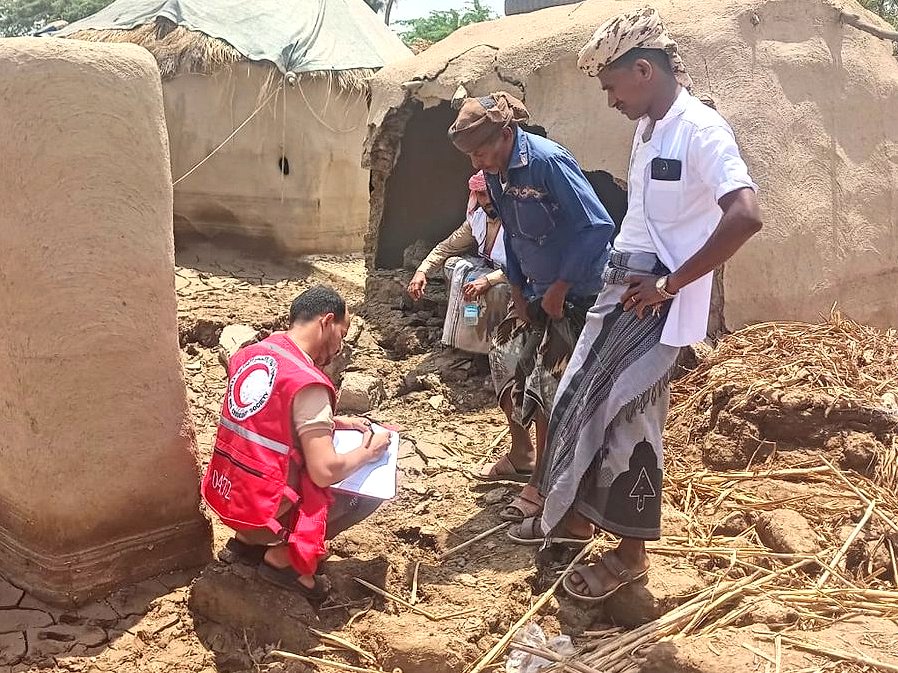
The scene last week in one of many villages and IDP sites in Yemen damaged or even destroyed completely by the latest flood disaster to hit the country. Assessments are also underway of electricity networks, water supply systems, communications and transport. (Photo: Yemen Red Crescent via IFRC)