
New Zealand floods illustrate ‘compounding and cascading climate risk’
By the Climate Centre
After what has reportedly been the heaviest rain on record in the capital Wellington, New Zealand Red Cross Disaster Welfare and Support Teams have been working in Ohura town, another badly affected area of the country’s North Island, alongside civil defence personnel at evacuation centres, carrying out welfare checks and supporting those in need.
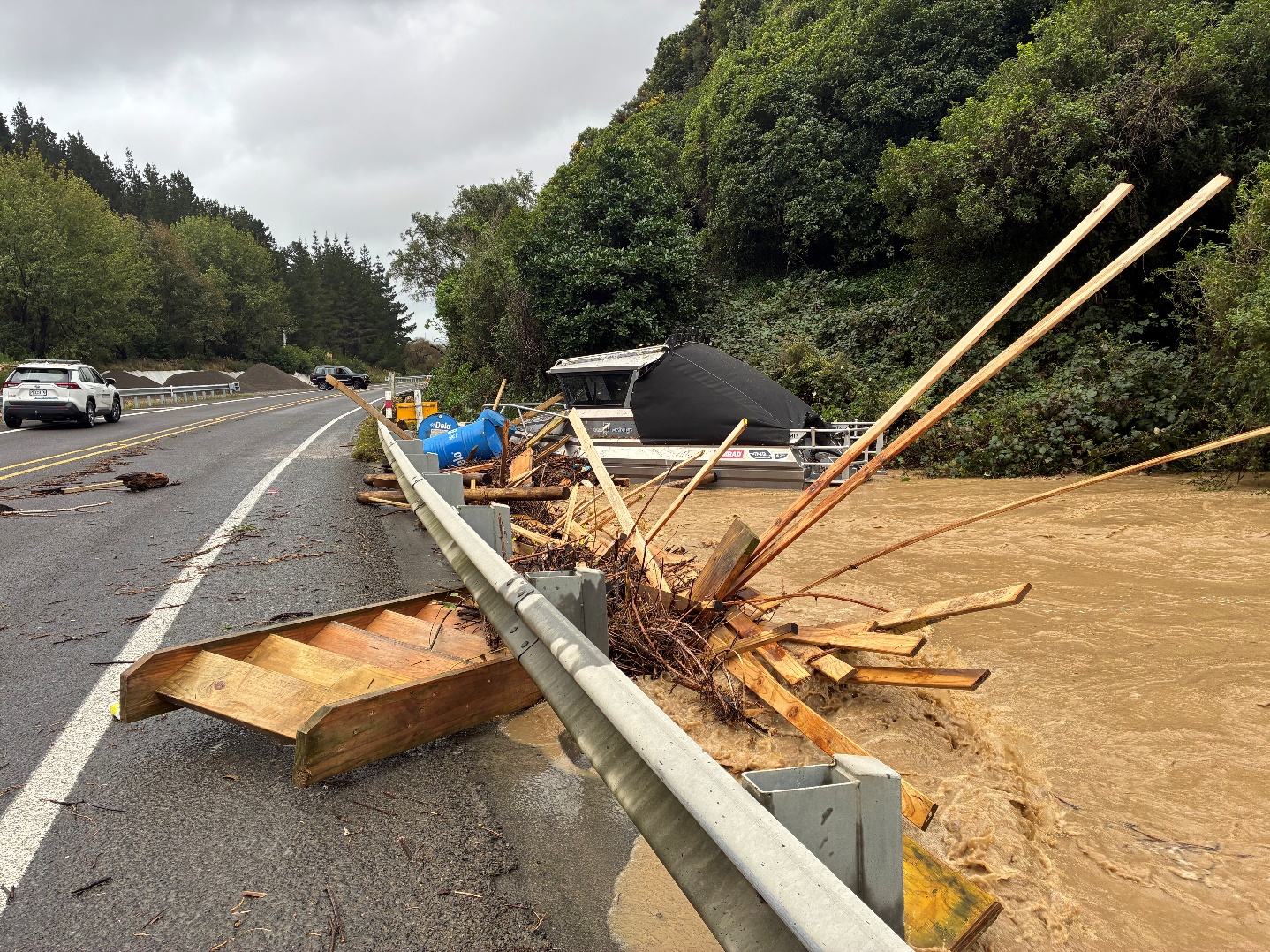
Mayor Andrew Little said on Radio New Zealand that Wellington itself had received 77mm of rain in less than an hour – the heaviest downpours ever recorded, Reuters reported Monday; a state of emergency was declared in the city.
The NZRC has been calling on the public continue to check the latest warnings and updates from the MetService and the National Emergency Management Agency.
The National Society was already working to assist people affected by Cyclone Vaianu that swept across the North Island on Sunday 12 April, “bringing damaging winds, heavy rain and coastal inundation, and causing widespread disruption across multiple regions,” it said on its website.
“Hundreds of people had to evacuate their homes, and thousands experienced power outages. Flooding, slips and fallen trees blocked many roads, making travel hazardous and limiting access to some communities.”
Between 11 and 13 April, 33 Red Cross Disaster Welfare and Support Team members and emergency volunteers from four branches were helping communities in Auckland, Hawke’s Bay, Tauranga and Waikato.
‘Our team members have shown remarkable resilience and dedication, supporting affected communities many are part of’
Sean Stewart, NZRC General Manager, Emergency Management and International, said last week: “Across these regions, our teams were supporting voluntary evacuations ahead of the cyclone’s arrival, setting up and assisting at civil defence centres and community information hubs, and providing emotional and practical support to people affected by the cyclone.
“Our team members have shown remarkable resilience and dedication, stepping up to support affected communities, especially as many are part of those communities and were also dealing with the impacts of the cyclone themselves.”
Climate Centre science lead Chris Jack said yesterday: “As the frequency and intensity of climate extremes shifts under a changing climate, we are becoming increasingly aware of the need to manage the risks of compounding events.
“In New Zealand’s North Island, Cyclone Vaianu brought intense rainfall but was followed within a week by a system that also produced heavy rainfall.
“Compounding and cascading climate risk is gaining increasing attention within the Red Cross Red Crescent Movement including in the design of Anticipatory Action.”
The Climate Centre’s Liz Stephens, who is based at the University of Reading, adds: “Evidence from events like the European floods of 2021 and the Valencia floods of 2024 shows that when rainfall is truly unprecedented, people often struggle to anticipate the scale of impacts.
“New Zealand has some of the most advanced, high-resolution weather-forecasting models in the world, but even they cannot pinpoint exactly where the worst rainfall will hit. This uncertainty makes it challenging to issue highly targeted, timely warnings for the communities at risk.”
The New Zealand Red Cross has at least 350 emergency management volunteers trained and ready to go at short notice, as well as 20 Disaster Welfare and Support Teams located who are also supported by many other emergency volunteers.
These teams focus on providing support in civil defence centres, needs assessments, distributing household goods and services, and psychosocial support.
Rivers on New Zealand’s North Island have been bursting their banks after the combined impacts of first a cyclone and then what may be the heaviest rain ever reported in the capital, Wellington. (Photo: Porirua city via Facebook)