
‘Before the rain came without warning. Now the message arrives before the clouds’
By Cheikh Kane, Climate Centre, Kigali
(This story appeared first on the website of Water at the Heart of Climate Action – it has been edited here for length. WHCA is a partnership of six global organizations from the humanitarian, disaster preparedness, and hydrometeorological sectors: the IFRC and the Netherlands Red Cross, the Climate Centre and three UN agencies.)
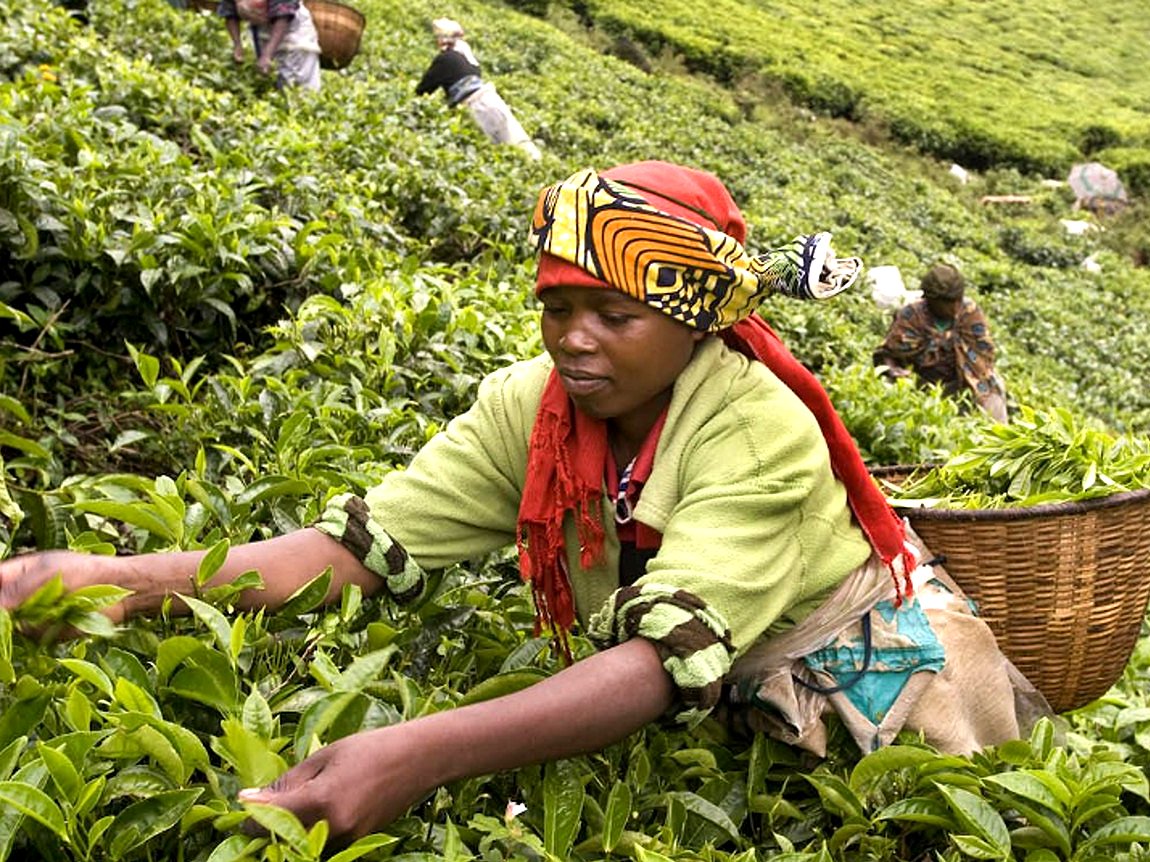
On a misty morning in Rwanda’s Karongi district, a tea farmer walks the edge of her terraced hillside. Below her, rows of bright green tea bushes cascade toward the valley. The air is cool, heavy with the scent of damp soil. She pauses, looking up at the dark clouds forming over the ridges.
“Before, the rain came without warning,” she says softly. “Now the message comes before the clouds.”
The farmer’s phone had vibrated just an hour earlier – a community alert of heavy rainfall expected within 48 hours. These messages now arrive regularly, allowing her and her daughters time to reinforce the terrace edges, clear water channels, and store dried leaves in raised huts before the downpour begins.
For families like hers, this small shift – from reacting to anticipating – is reshaping life in Rwanda’s fragile hills.
The steep slopes of Karongi are as beautiful as they are dangerous. Rain can turn from blessing to hazard in minutes. Flooding occurs when the Mukungwa, as the Nile basin is referred to locally, and Sebeya rivers overflow, or when sudden flash floods tear through villages.
The combination of saturated soil, deforestation, and dense settlement makes the region one of the most landslide-prone in the country.
In 2023, a series of heavy storms triggered landslides that swept through several villages, burying homes and tea gardens. Crops were lost and families displaced.
“We used to plant and pray,” says the farmer, adjusting her headscarf. “We didn’t know when the danger would come.”
‘The message tells us what the sky is planning’
That uncertainty began to change in Karongi when the Rwandan Red Cross, working under Water at the Heart of Climate Action (WHCA), partnered with Meteo Rwanda and local authorities to pilot community-based early warning and anticipatory action systems there.
Every week, trained volunteers in Karongi receive updates on the risk of rainfall and landslides directly from Meteo Rwanda. These are translated into the local language, Kinyarwanda, and shared through multiple channels: SMS messages, women’s cooperatives, local radio, and even loudspeakers.
“The messages tell us what the sky is planning,” explains a local Rwandan Red Cross volunteer. “Before, people waited for the rain to start. Now they move before it does.”
When an alert arrives, communities take immediate action to protect their homes and farmlands. A district committee monitors these efforts and provides technical support.
Early warning only works if everyone can receive it. But in Karongi, where fewer than half of women in the district owned mobile phones, a gender gap in technology access once kept many in the dark. In some areas, cultural norms discouraged women from handling phones or joining local information groups.
“Men received the alerts but they were often away when the rain started,” says a member of the local women’s cooperative. “The women working the fields were left guessing.”
To change this, the Rwandan Red Cross and district authorities designed gender-sensitive communication strategies. Women’s cooperatives were given priority access to alerts and trained to interpret forecasts. Group leaders were equipped with shared phones and solar chargers.
The results were immediate. The same women who once relied on second-hand news now lead the community’s response. When an alert comes, they knock on doors, spread the word through radio talk shows, and coordinate with local officials.
“It is not just a message,” one volunteer says. “It is a warning carried by women’s voices.”
The shift to anticipation is already showing tangible results. During the last rainy season, fewer homes were damaged, and no lives were lost in the pilot zone. Farmers saved crops that would have otherwise be washed away.
‘The land listens to us again’
The farmer and her daughters have changed their planting patterns – choosing crop varieties better suited to wetter soils, building raised seedling beds to avoid rot, and installing small rainwater tanks to reduce erosion along the terraces.
Neighbours are adopting similar practices, and there is hope that the hills will soon begin to show the impact – fewer landslides, clearer drainage channels, and fields that hold steady even during heavy storms. “The land listens to us again,” says the farmer, smiling as she brushes soil from her hands.
Behind the scenes, the collaboration between the Ministry in Charge of Emergency Management, Meteo Rwanda, the Rwanda Water Resources Board and the Rwandan Red Cross is critical.
MINEMA oversees disaster risk management, coordinating the work of preparedness and response, from central to the very local level: “We capacitate people to conduct assessments to understand who’s at risk, where the risk is, and what we can do.
“Recently, we identified 522 disaster hotspots across the country, and deployed Rwandan Red Cross volunteers staying in the communities who already know from the history what’s happening, to monitor them and see the changes,” says Fred Tumwebaze, technical adviser at MINEMA.
Scientists and volunteers meet regularly to refine the early warning system – identifying which messages communities understand best, and how thresholds can be adjusted to match local conditions.
Meteo Rwanda’s forecasts are now broken down into impact-based alerts that explain not only how the weather will be but what it might do – which slopes are likely to give way, which districts are most at risk, and the actions communities should take to protect themselves.
A water board engineer explains: “The forecast means nothing if people can’t act on it. Now, when we say, ‘rainfall above 80 millimetres,’ communities know exactly what that means for them.”
The most remarkable transformation is cultural. In a region where women were once excluded from decision-making about land and technology, they are now key actors in climate resilience.
The farmer’s daughters, both in secondary school, are part of a youth group that helps interpret weather messages for neighbours without literacy. They share updates on WhatsApp and encourage other young people to join environmental activities.
“My daughters explain the messages better than I can,” the farmer laughs. “They speak both languages – the one of the phones and the one of the hills.”
Rwanda’s tea farmers like this one work the country’s fragile, verdant slopes where their precious crop grows, but those same slopes can turn into lethal hazards after heavy rainfall. Now Water at the Heart of Climate Action is supporting communities in Karongi district of Western Province to make use of messages warning of downpours that give them time to reinforce terraces, clear drainage channels and store dried leaves in raised huts. (Photo: Rwanda Development Board)