Study: Extreme heat ‘a pervasive and escalating risk’ in South Asia
By the Climate Centre
The trend in more intense heatwaves – and with them potentially an increase in heat-related deaths and demand for energy for cooling – can only increase, according to a report based on survey data generated by more than 2,000 respondents in five cities in Bangladesh and Nepal and published by the Climate Centre today, on the eve of Heat Action Day 2026.
The region’s large outdoor workforce is particularly exposed to conditions that are already dangerous and getting more so without more far-reaching interventions.
Women interviewees reported facing difficult choices between protecting their health during periods of extreme heat and working or carrying out domestic tasks or providing care.
“I live in a tiny tin house … which makes it incredibly hot inside,” said one woman respondent in the ward of the Bangladesh capital Dhaka that was studied.
“There are five people in my family living in this cramped space. We have only a small fan which means only one or two of us can find relief from the heat at a time, while the others suffer.
“We struggle to sleep night after night and our children often cry from the discomfort. Life is painful for us during the peak hot days.”
The survey confirmed that extreme heat is a “pervasive and escalating risk, significantly degrading public health, livelihoods and well-being. Nearly all respondents reported experiencing dangerous heat and an overwhelming majority perceived themselves as vulnerable,” it adds.
Extreme heat pushes people into vicious circles, disrupting sleep and making it more difficult to work which then reduces incomes or leads to them taking out high-interest loans; it also affects mental health and the provision of healthcare generally.
“Perhaps the most important finding from this research is that there was a strong, positive and statistically significant effect of heat programmes on behaviour,” the study says.
Respondents with exposure to heat interventions in Bangladesh, for example, were over twice as likely to have changed their behaviour as survey participants from control wards, but only 14 per cent of respondents felt enough was being done, with just 21 per cent feeling that decision-makers understood their needs.
A representative from a mothers’ group in the Nepalese city of Siddharthanagar that was also a focus of the study said: “Public miking [loudspeaker announcements on the heat hazard] is happening, but information should also be shared through community meetings, clear announcements and group discussions … Messages should be timed and targeted better.”
Policy-makers should deliver support
directly into people’s daily routines
and the spaces they already occupy
The report was a collaboration of the Nepal and American Red Cross, the Bangladesh Red Crescent and the Climate Centre, and was supported by the Rockefeller Foundation.
Also out today is a condensed policy brief version of the report summarizing its conclusions in the form of seven key lessons.
The research in Bangladesh and Nepal also found people largely preferred receiving information about forecast extreme heat and the protective actions available to them “through channels such as television, social media, emergency alerts and word-of-mouth”.
The Red Cross and Red Crescent, with international support, have been stepping up their heat-related public-health interventions in both countries in recent years, as well as many others worldwide.
An outdoor worker who took part in a focus group for the new report in the Bangladesh city of Rajshahi said: “Since last year, representatives from the Bangladesh Red Crescent have been meeting with us to explain the dangers of heatwaves and how to protect ourselves [and] we now carry drinking water with us when we go out for work and drink saline water to stay hydrated.”
Two years ago the Red Crescent for the first time activated its early action protocol for a heatwave, enabling anticipatory actions in Dhaka before the worst impacts of the extreme heat the city was enduring at that point were felt by people at great risk.
A few weeks later, with most of Nepal in the grip of a punishing heatwave, IFRC Secretary General Jagan Chapagain, himself Nepalese, wrote that his country “is famous for Everest, cold and ice. It might yet get a reputation as a case study in how to beat the heat.” Heat actions plans have now been prepared by the Red Cross for several Nepalese cities.
The report published today – The lived experiences of vulnerable populations in the context of extreme heat – calls on governments generally to prioritize financial protection during heatwaves.
They should expand shaded public spaces, water points and cooling centres in markets, schools and transport hubs; step up low-literacy communications through community ambassadors and local networks; incorporate planning for heat
in housing, health systems and livelihoods programmes; and reach the most vulnerable by delivering support directly into people’s daily routines and the spaces they already occupy.
It concludes: “While the evidence indicates that interventions are effective, there is also an opportunity to improve them for vulnerable populations, requiring practitioners and policy-makers to listen to and act on the lived experience of vulnerable people.”
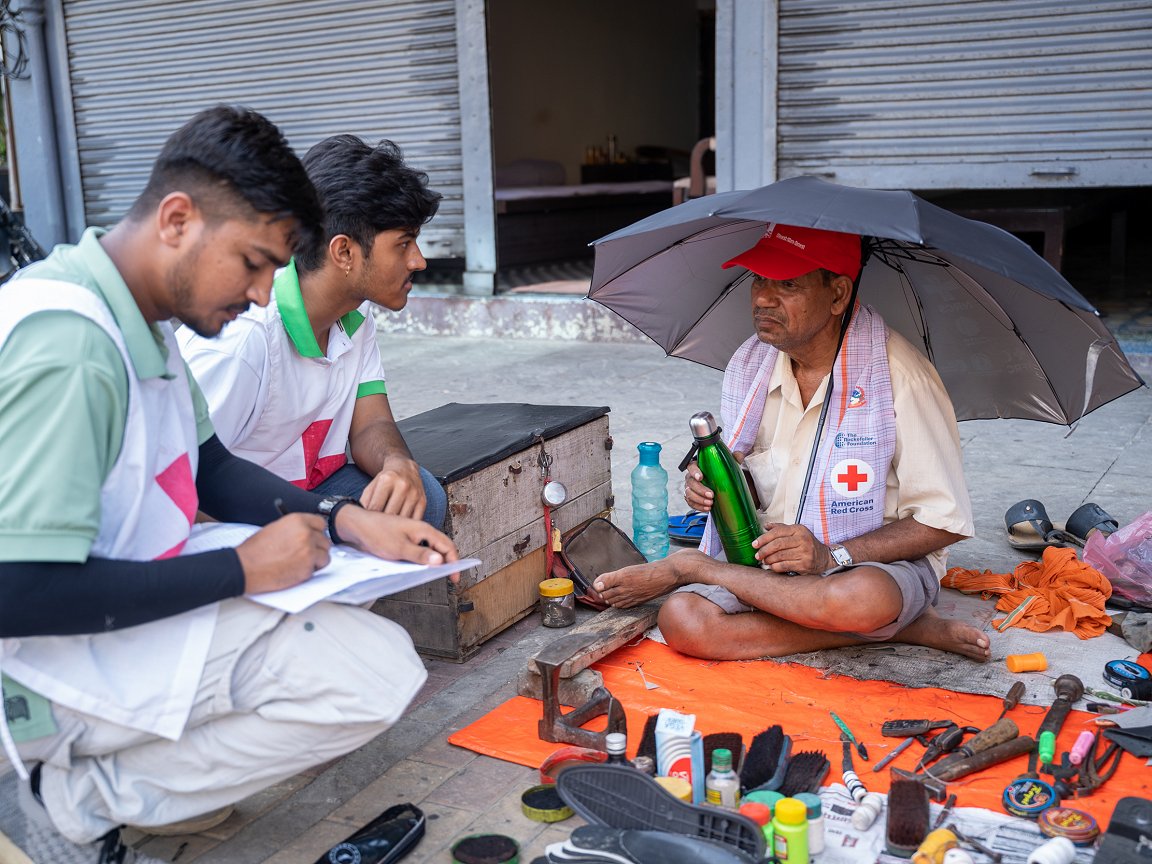
Pictured are Nepal Red Cross volunteers out and about raising public awareness of the dangers of extreme heat and how to stay safe during heatwaves – work supported by the American Red Cross and the IFRC. (Photos: Nepal Red Cross via IFRC)