
Heat Action Day 2026 worldwide
By the Climate Centre
National Societies all over the world took part in the fifth annual Heat Action Day yesterday (gallery), first created by the IFRC to encourage people and communities to take concrete action to prevent illness and death from extreme heat, now widely seen as the silent killer.
Through its Global Climate Resilience Platform, the IFRC now aims to protect 100 million people in 100 cities, with the goal of mobilizing 500 million Swiss by 2030 francs to address extreme heat where it’s felt worst.
Having grown steadily since inception in 2022, this day drew 109 registrations from within the Red Cross Red Crescent Movement and 213 from external organizations from all over the world.
The special day’s theme this year was indoor heat, putting the spotlight on the health risks people face inside their homes, schools, workplaces, and care facilities.
‘Simple, life-saving steps’
“This Heat Action Day we are reminded that simple actions can save lives,” the IFRC Africa region office said on social media.
“When temperatures rise, staying hydrated, finding cooler spaces, and checking on those most at risk can help prevent heat-related illness. Red Cross and Red Crescent volunteers across Africa continue to support communities with practical steps to stay safe.”
Secretary General and CEO Jagan Chapagain said yesterday: “Led by the IFRC network and partners, Heat Action Day mobilizes cities, communities, and organizations worldwide to take simple yet life-saving steps to protect people from heat-related illness.
“This year, our teams and partners led creative, community-driven initiatives across the globe. For example, in Geneva, Switzerland, the iconic Jet d’Eau was lit up in orange to mark the day.”
‘Silent killer dance’
The activities organized for National Society participants fell into three categories: light, medium and advanced, ranging from disseminating key messages or, in cities, lighting up a local landmark in orange to mapping out actual heat risks for particular locations or staging a flash mob, performance, or art installation.
They included:
*The Sudan Urban Development Think Tank SUDTT and its partners released a booklet documenting traditional practices and tools to combat indoor heat.
*The Colombia Red Cross organized “heat hunt” educational activities in Neiva, Sincelejo and Barranquilla in which students saw how heat affects their school environments.
*The Resilient Cities Network held a community workshop to apply heat-reflective paint at a public housing complex in Melaka, Malaysia.
*The Turkish Red Crescent distributed cooling house-plants to vulnerable communities.
*The Kenya Red Cross collaborated with the University of Copenhagen to implement a community-based workshop on informal settlements.
*Rotterdam authorities laid on ten Heat Action Day shows, including a performance of a “silent killer dance” in a square in a densely populated area.
A survey published by the Climate Centre on Monday 1 June of more than 2,000 respondents in five cities in Bangladesh and Nepal, meanwhile, found that women in particular faced difficult choices between protecting their health during periods of extreme heat and working or carrying out domestic tasks or providing care.
The survey confirmed that extreme heat is a “pervasive and escalating risk, significantly degrading public health, livelihoods and well-being. Nearly all respondents reported experiencing dangerous heat and an overwhelming majority perceived themselves as vulnerable.”
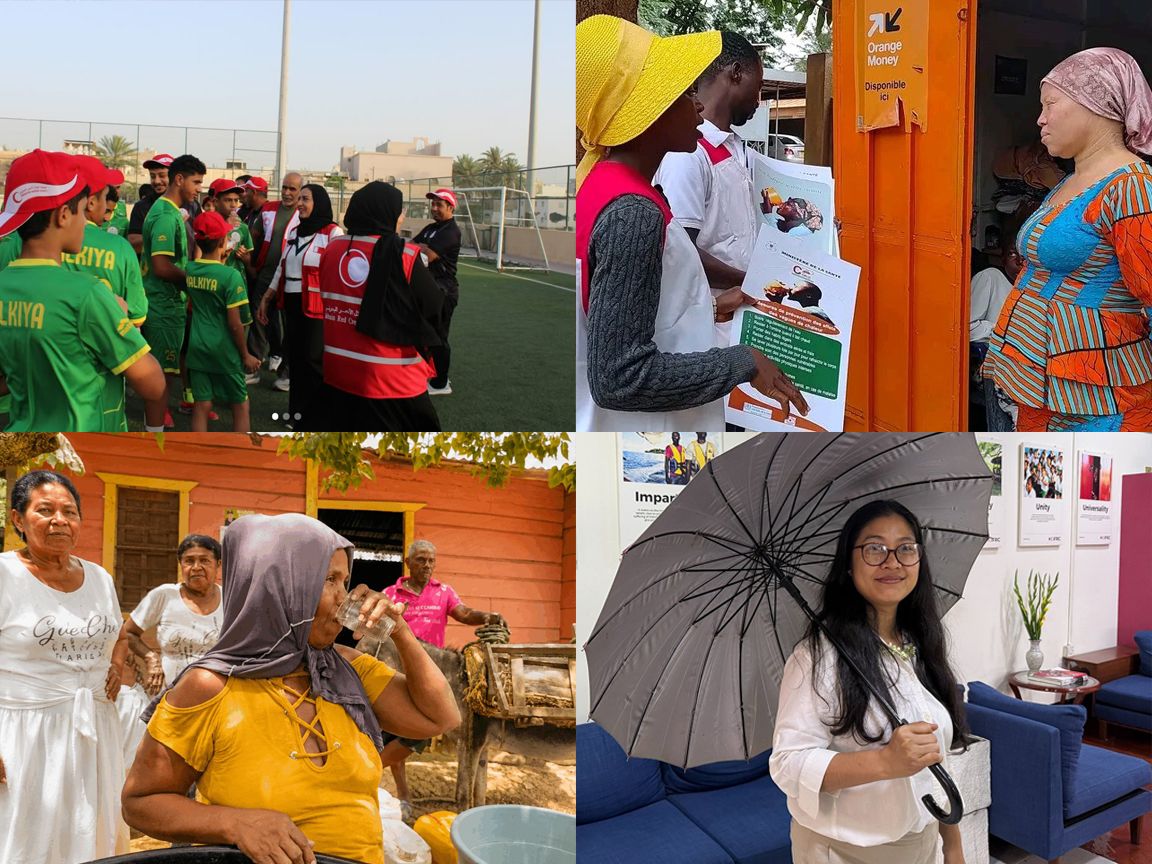
Heat Action Day in (clockwise from top left) Bahrain, Burkina Faso, Myanmar, Colombia. (Photos: IFRC-GDPC)