
Climate Centre joins new research network ‘to strengthen decision-making before and after crises’
By the Climate Centre
The Climate Centre is joining a new UK-supported partnership led by the Institute of Development Studies and announced last week “to strengthen decision-making before, during and after crises”.
“Hazards are becoming more interconnected, spanning extreme weather, climate-related shocks and infectious disease outbreaks, and their impacts can cascade rapidly through health systems, economies and communities,” a news story on the IDS website said.
The Multi-Hazard Research Network (MHRN) is designed to facilitate access to “research, tools and expertise, combining natural, social and behavioural science research with rapid response capacity to deliver improved forecasting and tools,” it added.
The Climate Centre’s contribution will focus on cascading and compounding impacts, on how these are experienced and responded to and on how to adapt early warning tools and ways of working to reflect the reality people face. It will include lessons from more than a decade of engagement with anticipatory action.
Professor Hayley MacGregor, MHRN Director and an IDS researcher, said: “This is an exciting opportunity to help improve people’s engagement in responses to health emergencies and natural hazards and strengthen interdisciplinary perspectives in research and rapid response related to these key emergency areas.”
Referring to the the current Ebola outbreak in the Democratic Republic of the Congo and Uganda, Jenny Chapman, UK Minister for Africa and International Development, said: “I’ve recently returned from Kinshasa and the wider region, meeting and hearing from our partners on the ground, and the government of DRC. They are operating in incredibly difficult circumstances.
“The situation is deeply concerning. It demands urgent, coordinated action, in support of the African-led response. We are working with partners across the region and beyond for a faster, more effective response.”
‘This is an exciting opportunity to help improve people’s engagement with health emergencies and natural hazards’
The MHRN focus will be infectious diseases of epidemic potential and on natural hazards, specifically flooding and atmospheric hazards. The response to floods, for example, can build on improvements in the understanding of local impacts, including landslides.
Significant improvements have also been made in understanding how forecast information is perceived and acted upon at local levels, how it can be combined with local understanding and knowledge, and how best to mobilize communities.
A core pillar of delivery will be a dedicated rapid response unit that will act as the network’s front line, translating complex science into timely, actionable advice and tools for FCDO and other partners involved in emergency response.
The MHRN consortium brings together academic, operational and network partners, including universities and specialist institutions across the UK and internationally, alongside organizations with on-the-ground reach such as humanitarian and communications partners.
The network also connects to UK government science capability, including the Met Office, the Health Security Agency, the Animal and Plant Health Agency and the British Geological Survey.
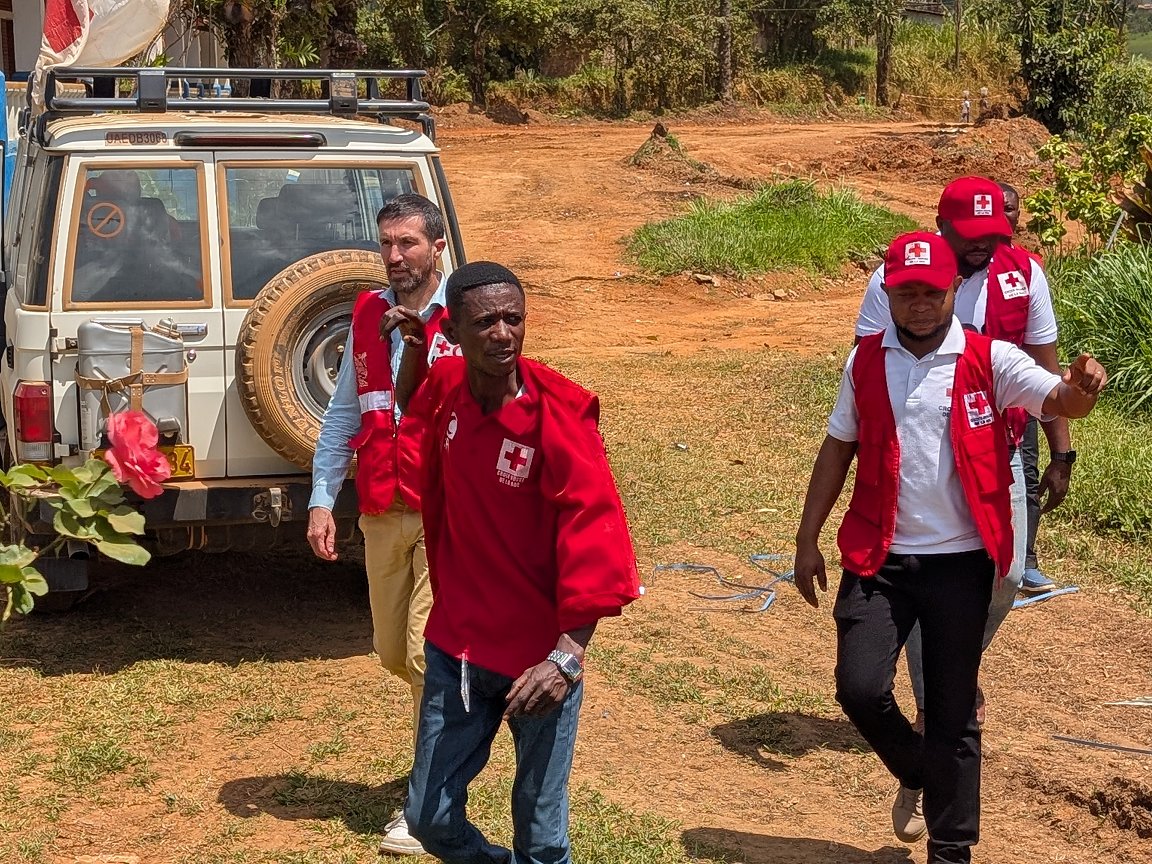
A mixed team comprising the Red Cross of the Democratic Republic of the Congo, the ICRC and the IFRC arrive in the north-east town of Mongbwalu last week, highlighting “the collaborative presence and coordination of the Red Cross and Red Crescent Movement at the epicentre of the Ebola response,” the IFRC said. The new MHRN is aimed at prevention, preparedness and response to emerging infectious disease outbreaks and other crises, including the current Ebola outbreak in the DRC and Uganda. (Photo: IFRC)