
Nepal flash flood: ‘An unexpected thunderbolt of a disaster’
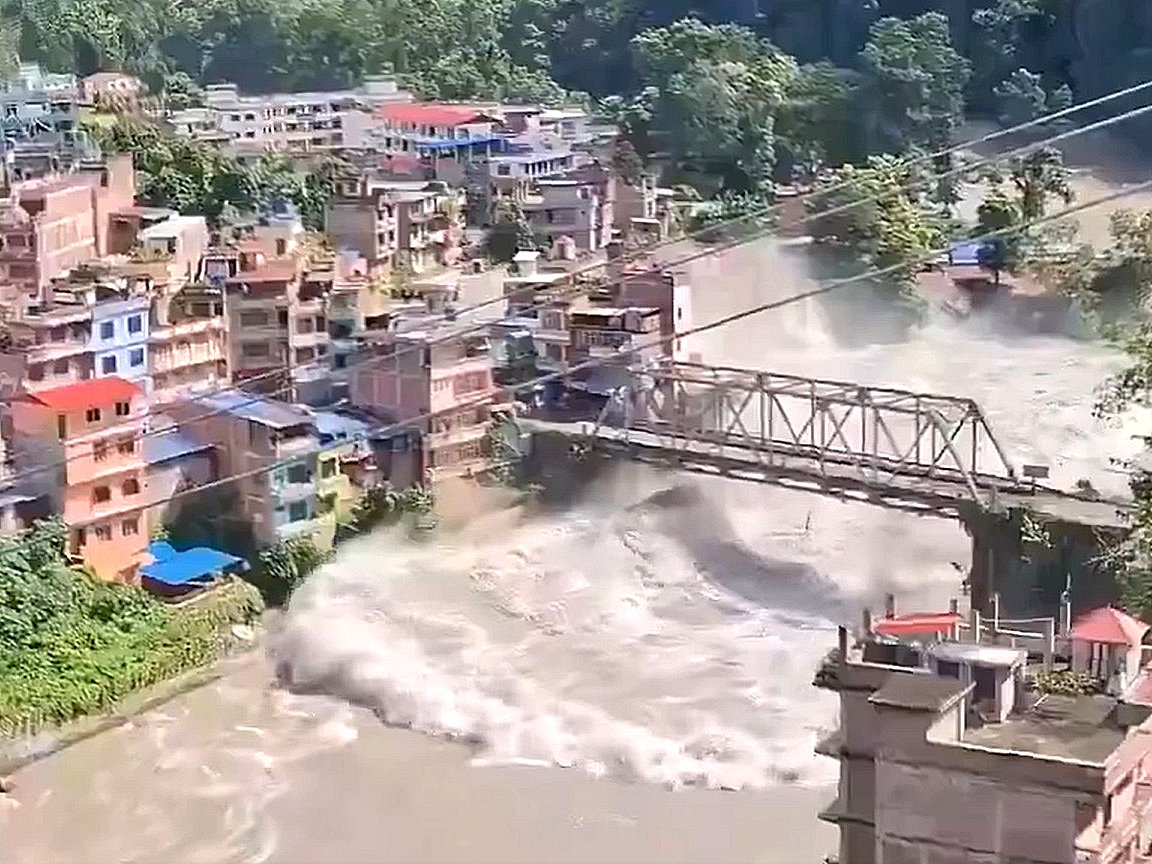
By Liz Stephens, Climate Centre-Reading University
The IFRC’s Disaster Response Emergency Fund yesterday released nearly one million Swiss francs in emergency support for the Nepal Red Cross response to Wednesday’s catastrophic flash flood in the north of the country. It will help the Nepal Red Cross respond to urgent needs while teams assess the destruction.
Red Cross teams have now deployed towards affected areas and emergency workers and volunteers are being mobilized to support local branches with limited capacity to respond to what Nepal’s Prime Minister Balendra Shah has described as an “unexpected thunderbolt of a natural disaster”.
Media reports Thursday quote the Nepalese police as saying 359 people are confirmed to have died; hundreds more are missing, including many foreign nationals and tourists.
Some of the worst impacts have been reported in Rasuwa and Nuwakot districts: homes, roads, bridges, hydroelectric facilities and other critical infrastructure have been badly damaged.
Rapid assessments are being prepared to determine the scale of needs and inform the next phase of the response, including direct cash assistance to people; initial help includes drinking water, tarpaulins, blankets, sleeping mats, first aid kits, stretchers and body bags.
‘Entire villages and market areas have been wiped out’
“The priority now is to reach affected communities and get assistance to people who have lost their homes, suffered injuries or have been cut off,” IFRC Nepal Head of Delegation David Fisher said yesterday.
“The release of emergency funding means the Nepal Red Cross can act immediately while assessments continue. We are closely monitoring the situation and are ready to provide additional support.
“We will not forget long-term recovery either, since entire villages and market areas have been wiped out.”
The exact sequence of events that caused this disaster is not clear and may not be for some time – what can be seen from satellites, for example, is now hampered by monsoon clouds – but careful analysis of before and after images suggests part of a glacier collapsed high up in the Himalayas in a border area.
A giant ice-rock avalanche then appears to have blocked the Lhende Khola river, but this natural dam of debris quickly failed and led to the catastrophic and extremely sudden flooding downstream; the avalanche will have picked up more material as it travelled down the mountain, including massive boulders as graphic social media clips illustrate (Nepal police video).
A very unstable landscape
People tend to think of flash floods as caused by heavy rainfall, but in Nepal and other mountainous regions they can also result from complex chains of hazards, including landslides, avalanches and – although not thought to be the cause of this event – glacial lake outbursts.
The complexity makes early warning especially difficult.
In Nepal this week, the flood is likely to have caused considerable erosion, undercutting slopes as it travelled downstream, leaving behind a very unstable landscape.
Scientists in the region will be concerned that the initial avalanche-flood could lead to more dangerous landslides and unstable debris-dams in the coming days.
Quoting the most recent IPCC assessment of the global climate, the IFRC-Climate Centre Future Fit report published earlier this year says that in mountainous environments, there is high confidence that as climate change leads to more heatwaves, glacial retreat and melting permafrost, it will drive hazards such as landslides and glacial lake outbursts, increasing the potential for complex cascading events.
This week’s flash flood crashes through a town in Nepal’s Nuwakot district. It took people almost entirely by surprise and has left hundreds dead or missing. (Photo: Nepal Red Cross via social media)