
Climate Action Journey 2.0 out now
By the Climate Centre
An updated version of the Climate Action Journey, first published in full two years ago, “provides a strategic pathway to strengthen capacities, catalyses meaningful community engagement from the outset, and places community ownership at its core.”
Some 40 National Societies have been on at least part of the first version of the journey, which now incorporates more flexibility to allow some steps to be taken in any order, includes deeper involvement of communities, and highlights some of the overarching enabling factors more prominently.
Climate Action Journey 2.0 unfolds through six interconnected steps at national and local level, each carrying forward the institutional buy-in and knowledge already established with CAJ 1.0.
National Societies with existing capacity may enter at a later step, revisiting earlier ones as risks and needs evolve, or advance several steps in parallel – particularly where seed funding, even if limited, is available.
Enabling conditions
Step 1, to “engage, empower, position, lead”, builds the strategic foundation and shapes the process, giving the National Society ownership from the start. Step 2, “understanding climate risk”, lays the groundwork for an understanding of changing climate risks that is needed to work towards climate resilient communities and to avoid the wrong sort of adaptation.
Step 3 centres on community planning; Step 4 on mainstreaming climate change into plans and operations; Step 5 defines strategic priorities, implements climate action and facilitates learning; and Step 6 scales up the experience or locally led adaptation through further programming, finance, and advocacy. Steps 3 to 6 can follow one another or run in parallel at the National Society’ s discretion.
Experience has shown that the journey is most effective when the various enabling conditions are in place: leadership buy-in; strong collaborations and partnerships; flexible funding and application; the trust of communities; and integration with existing National Society systems.
The Climate Centre’s Fleur Monasso, who has overseen the rolling out of both versions of the CAJ, said today: “The Climate Action Journey is the Red Cross Red Crescent network’s commitment to realizing local potential at scale, with quality and with communities leading the way.
“It offers a flexible methodology that can be inspiring and informative for other humanitarian actors at a time of increasingly complex and unprecedented risks amounting to a polycrisis.”
Through the IFRC Global Climate and Resilience Pooled Fund, nine National Societies across Africa, Asia Pacific and Latin America currently receive financial support to facilitate LLA through the Climate Action Journey.
Tangible resilience
Many National Societies across Central Asia, Europe, Latin America, the Caribbean and Africa concluded the first version last year while others added journey components to existing projects, such as the Water at the Heart of Climate Action project.
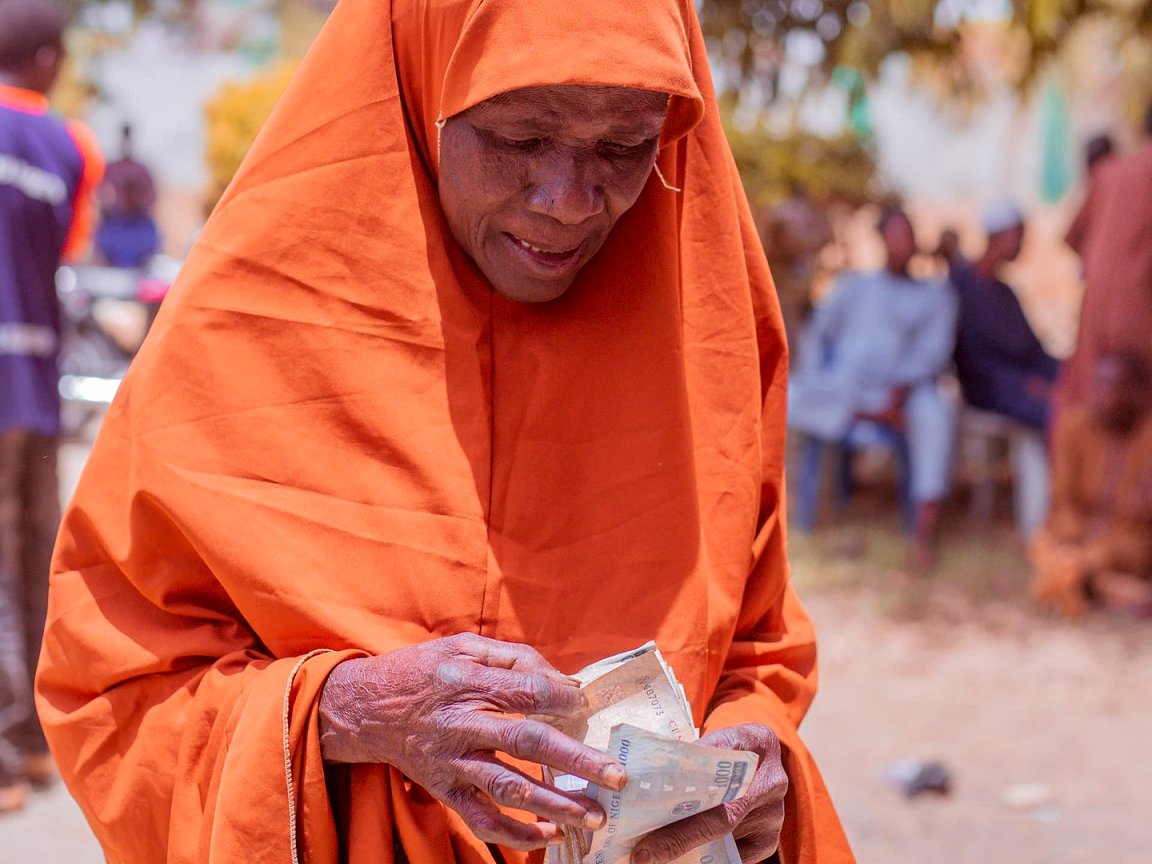
The CAJ in Nigeria, for example, included four communities in Jigawa State (pictured) and demonstrated that locally led approaches can translate climate awareness into tangible resilience.
Through a community-driven assessment, households identified drought, desertification, and erratic rainfall as their most pressing risks, and prioritized actions to strengthen livelihoods, environmental management, and preparedness.
One of the most significant changes has been in women’s financial inclusion and household resilience: through mothers’ clubs and village savings and loans associations, women are now saving, accessing small loans, and investing in alternative income sources.
(For further information and resources to roll out the Climate Action Journey, please email ninni.ikkala-nyman@ifrc.org or monasso@climatecentre.org.)
Thanks to progress with the first version of the Climate Action Journey, women in communities in Nigeria’s northern Jigawa state have been taking the lead on financial issues and boosting household resilience. In this 2025 picture, flood-affected Jigawa residents get cash aid from the Nigerian Red Cross in partnership with the IFRC. (Photo: Nigerian Red Cross via social media)