‘We know what’s coming’: Netherlands Red Cross calls for immediate action on El Niño
By the Netherlands Red Cross
(This story is a press release issued today in Dutch by the Netherlands Red Cross. It has been translated here by the Climate Centre.)
The world has only a few months left to avert a humanitarian disaster, yet investment is lagging. The anticipated consequences of this extreme El Niño are alarming. Across large parts of Africa, Asia and Latin America, the risk of extreme drought, flooding, and food shortages is rising sharply.
Existing issues – such as conflict, food insecurity, disease outbreaks, and economic problems – threaten to get worse as a result.
In sub-Saharan Africa alone, at least 70 million people are at risk, and recent research warns of as many as half a million deaths worldwide over the next six months.
Netherlands Red Cross Director Harm Goossens said today: “A village that floods but sees no fatalities because residents were warned in time rarely makes the front page. Neither does a family that avoids losing their home to a typhoon because it was reinforced beforehand, or a farmer who saves their crop from drought thanks to measures taken well in advance.
“Yet these are precisely the stories that should be making headlines now. The world needs to invest in preparedness today, not tomorrow. We know what is coming: growing food crises, water shortages, and floods.
“Now is the time to save lives, because behind every averted disaster are people who can go on living their lives.”
The fact that nearly 40 countries in Africa alone are at risk from El Niño impacts underscores the enormous scale of this threat.
The difference is made before disaster strikes. Spending money on preventive measures not only saves lives but also averts immense damage. Recent research suggests that the current El Niño could result in nearly €400 billion in economic losses worldwide.
But if governments and businesses invest in preparedness now, we can not only save lives but also avoid the high costs that societies would otherwise incur later.
‘Now is the time to save lives, because behind every averted disaster are people who can go on living their lives’
The Red Cross is already helping people in dozens of countries prepare for the impact of El Niño – in Ethiopia, for example, where preparations for a worst-case scenario have been underway for months.
The Ethiopian Red Cross has stockpiled relief supplies in warehouses across the country to ensure aid remains available even if floods render roads impassable.
Emergency plans are in place, and local volunteer teams have undergone refresher training so they know exactly what to do when severe weather strikes.
The Red Cross is also investing in measures in other countries to help people prepare for the effects of El Niño and for a future of increasingly frequent extreme weather.
In the Philippines, for instance, mangrove forests that protect coastal areas from storms and floods are being restored while in Zambia work is underway on water storage systems to better manage periods of acute drought.
“When El Niño increases the risk of drought, you have two options: wait until people run out of water and food, or invest now in measures that make communities more resilient. This may not be the kind of aid that is immediately visible but it is often what makes the biggest difference,” Goossens adds
“Ensuring families do not lose everything – that is what the Red Cross works towards. We cannot control the weather, but we can act based on what we already know. By preparing in advance, people are less likely to have to leave their homes or lose their income, and children can continue attending school.
“Especially now that extreme weather is becoming more frequent and severe, such preparation can save lives and prevent immense human suffering.”
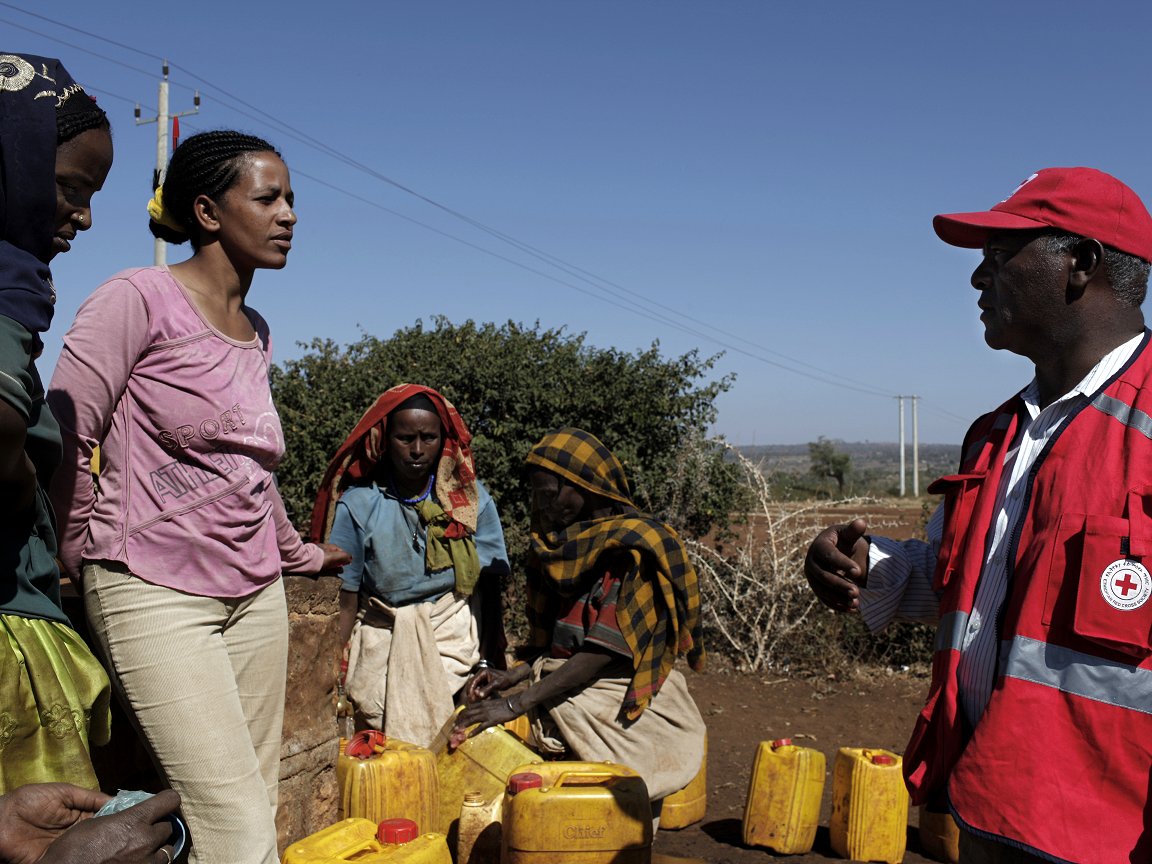
The Ethiopian Red Cross in action in Kebra village, East Hararge, no stranger to drought, but again the villagers’ situation this year is likely to be exacerbated by another El Niño. The head of the Netherlands Red Cross is calling for “preparedness today, not tomorrow”. (Library photo: Jose Cendon/IFRC)