
Blog: Why investing in social protection matters in a changing climate
By Sayanti Sengupta
(This is an edited version of an article jointly authored with Jana Bischler and others that appeared on socialprotection.org last month.)
The world is currently preparing for what the media are calling a “super El Niño” with severe consequences predicted across the globe – from drought and water shortages in Central America to heavy rainfall and flooding in southern Brazil, Uruguay and northern Argentina, along with increased heat, wildfire and drought risks across parts of Africa and Asia.
Ultimately, an El Niño supercharged by climate change translates into impacts on people – and where social protection is lacking, the costs can be high.
With 930 million people already spending at least 10 per cent of their household budget on health care, climate-related illness can mean both health and financial hardship, according to the World Health Organization.
Climate shocks can disrupt entire sectors. In Peru, for example, El Niño could result in as many as 78,000 fisheries jobs being lost, the International Labour Organization says. Without unemployment protection and other forms of income support, temporary job losses can prolong income insecurity.
More than 2 billion workers are exposed to excessive heat, associated with more than 22 million occupational injuries and nearly 19,000 deaths each year. Climate change could push an additional 132 million people into extreme poverty by 2030 without adequate policy action, according to the World Bank, while crop failure and livestock losses undermine food security.
A powerful tool
These impacts are not isolated but cumulative, with El Niño arriving in a context where many people and communities are already struggling to cope with the impacts of successive climate shocks along with wider economic and conflict-related disruptions.
That is why scaling up support to address the immediate consequences as well as long-term interventions to support climate adaptation remain so critical. As ever, it is the poorest and most vulnerable who are both the least responsible for the climate crisis and the least able to access the support they need.
For this, social protection can be a powerful tool. Embedded in national systems, social protection programmes are a critical instrument for reaching precisely those people and communities, addressing underlying vulnerability while strengthening the capacity to cope and adapt.
Before a crisis occurs, regular social protection schemes like child and family benefits, pensions, unemployment protection, employment injury benefits and access to health care, provide a basic level of income and health security. This can help prevent poverty, protect nutrition and education, and enable households to avoid selling productive assets or taking on unsustainable debt.
When combined with complementary measures such as skills training, agricultural extension and livelihoods support, social protection can also help people diversify and invest in less climate-sensitive sources of income.
However, none of this potential can be realized without closing existing gaps. Only just over half the global population are covered by at least one social protection benefit, leaving nearly 4 billion people without coverage.
Among the 50 countries considered most vulnerable to climate change, the corresponding coverage rate was only 25 per cent. Meanwhile, low- and middle-income countries face an estimated annual financing gap of 1.4 trillion US dollars to guarantee at least a basic social protection floor, including essential health care, the International Labour Organization says.
Policy coherence
Ad hoc tweaks to social protection systems cannot compensate for coverage that reaches too few people or provides inadequate benefits. To minimize the costs of events like El Niño, countries need to urgently invest in universal systems.
If investment in social protection is essential, how can countries turn this recognition into concrete commitments? One practical starting point is to integrate social protection into national climate strategies, particularly Nationally Determined Contributions and National Adaptation Plans that recognize social protection as an instrument for climate action.
Integration should mean more than a passing reference to social protection, as these examples show.
*The Philippines NAP acknowledges that it is a priority of the government to accelerate poverty eradication and activate support for workers who experience job losses due to climate impacts, building on strategies that have been sustained over several years, including cash transfers.
*Peru’s NAP seeks to strengthen the health insurance system to respond to growing climate-related health risks.
*Somalia’s NDC commits to strengthening adaptation planning by integrating social protection measures that safeguard livelihoods and well-being in the face of climate shocks.
*Sri Lanka’s NDC would enhance social protection for communities and workers affected by economic restructuring linked to climate transitions.
These examples of policy coherence between social protection and climate are not ends in themselves. Their value lies in whether they result in expanded coverage, adequate and predictable benefits, stronger delivery systems, and financing that reduces risks for communities.
Momentum is building on this agenda within both climate and social protection policy and programming. A review of social protection in the third round of NDCs released last year found that 64 per cent mentioned social protection, up from just 15 per cent in NDCs 2.0. Two of the three indicators on poverty and livelihoods under the Global Goal on Adaptation agreed at COP30 in Belém focus on social protection.
And the Belém Declaration on Hunger, Poverty and Human-Centred Climate Action – now signed by over 50 countries and the EU – has social protection at its centre as a foundation of resilience.
Crucially, its goals include a call to mobilize “more climate finance from all sources for strengthening national social protection systems, increasing their adaptability to climate risks and their ability to contribute to inclusive climate action and just transition pathways.”
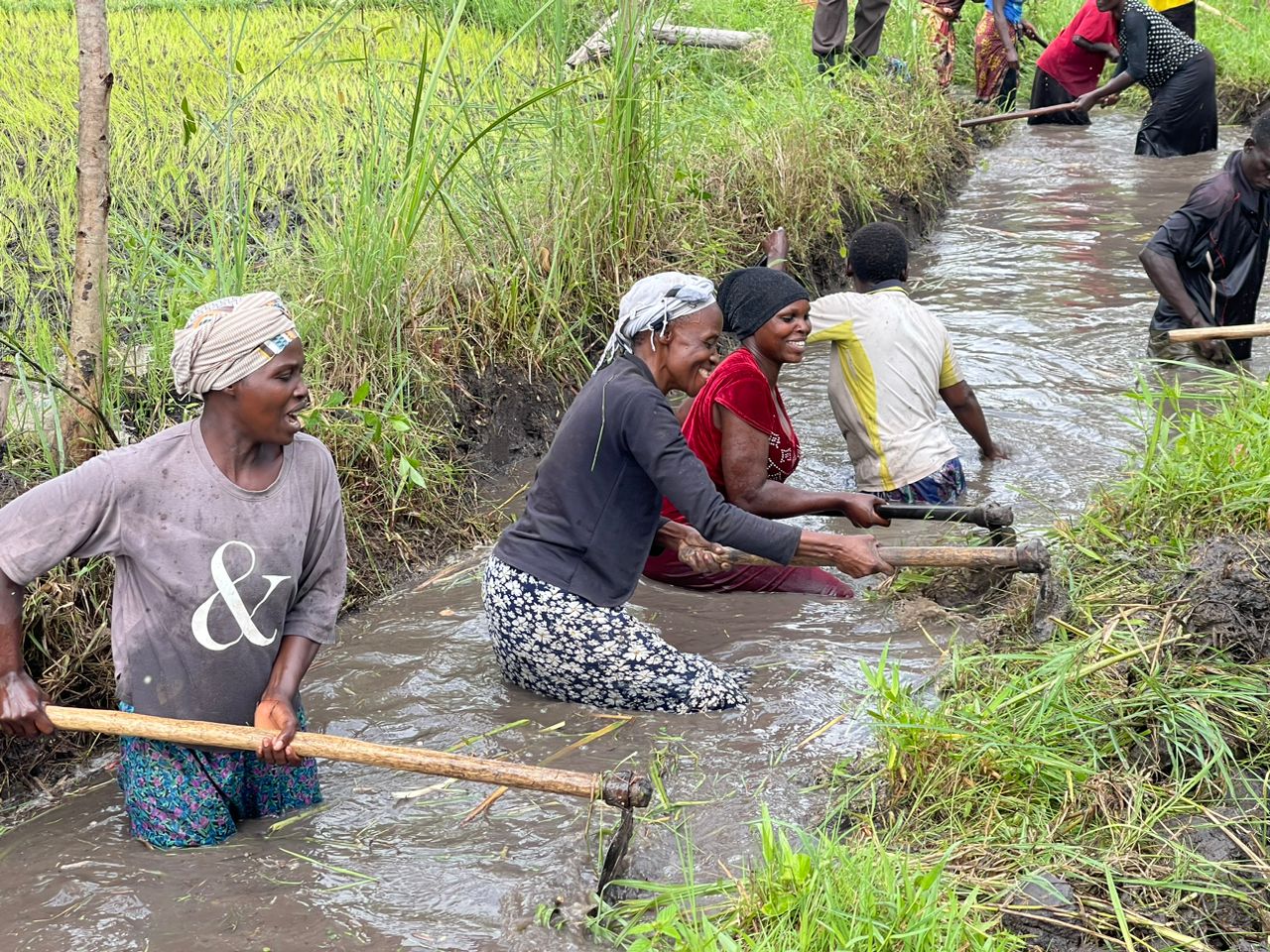
Ugandan Red Cross actions in November 2023 as part of its early action protocol for floods likely to have been exacerbated by El Niño included cleaning water sources and dredging channels (photo) and mapping evacuation routes. The photo accompanies a new blog on socalprotection.org – the fourth in the series The Cost of Not Investing in Social Protection. (Library photo: Uganda Red Cross via social media)