
ICRC sounds alarm over potential for devastating El Niño-related floods in Somalia
By the Climate Centre
(This is a version of an ICRC release including video that appeared yesterday.)
Millions of people in Somalia face an intensifying El Niño that threatens to turn the October–December rainy season into a disaster.
“We are terrified of the upcoming rains,” 59-year-old Kamillo Muse told the ICRC. Muse lives in Ceeynu Nasri IDP camp in Hirshabelle state, which includes the River Shabelle and is already prone to seasonal flooding. “After three years of not having good rainfall, it feels like it will return with a vengeance,” she said.
“If it pours, forget those living in displacement camps. Even people in proper houses will be forced to flee. So what do you expect will happen to us in the camps?” she adds.
The October to December projection of the Integrated Food Security Phase Classification says the population in Phase 3 or above is expected to increase to 5.4 million people “driven largely by El Niño and Indian Ocean Dipole-related flooding”.
‘Sticks, scraps of cloth, iron sheets’
The ICRC adds: “For the 3.3 million people living in informal displacement settlements, the impending rains could mean further devastating hardship.
“In many camps, families displaced by conflict live in cramped shelters constructed from sticks, scraps of cloth and iron sheets. Limited access to clean water and lack of proper sanitation are common.”
Farmers face an agonizing choice in Bayahaaw village, for example, on the outskirts of Jowhar town, the Hirshabelle capital: plant and risk losing everything to floodwaters or leave the fields fallow and face hunger in the coming year.
Nuh Adan, a local farmer and community leader in Bayahaaw, fears that if the riverbanks burst, the impact on local agriculture will last for months. “If the river breaks and the floods hit us, the effects will last until the next rainy season in March.”
Aid agencies are on high alert, rolling out anticipatory action and leveraging lessons learned from the strong 2023–24 El Niño to prepare for floods.
“Better preparation and better data. That’s the good news compared to 2023,” says Antoine Grand, ICRC Head of Delegation in Somalia. “The bad news is that humanitarian funding and capacity in general have seriously decreased.”
‘A cycle that has persisted for years’
In a final report in July on its May 2024 humanitarian cash grant to the Somali Red Crescent, the IFRC said floods that year demonstrated the vulnerability of the country to flooding and its growing impact leading to “a worsening flood crisis over the past four years.
“The Gu rainy season, which typically brings life-giving rain, has become increasingly destructive. Recurring floods in Somaliland and Puntland have become a devastating burden.”
Then IFRC quoted OCHA as saying the Gu floods (from April to June, and the country’s primary rainy season) in 2021 affected 166,000 people – a number that rose dramatically in 2023 with an estimated 460,000 people affected.
The situation worsened further in October–December 2023 amid the 2023–24 El Niño, with devastating floods affecting more than 2 million people, the Red Crescent said.
“These floods, exacerbated by unregulated development on floodplains, poverty, and limited government intervention, inflicted immense damage on communities. Crops and livestock were destroyed, homes and roads ruined, and families displaced – a cycle that has persisted for years,” the IFRC report adds.
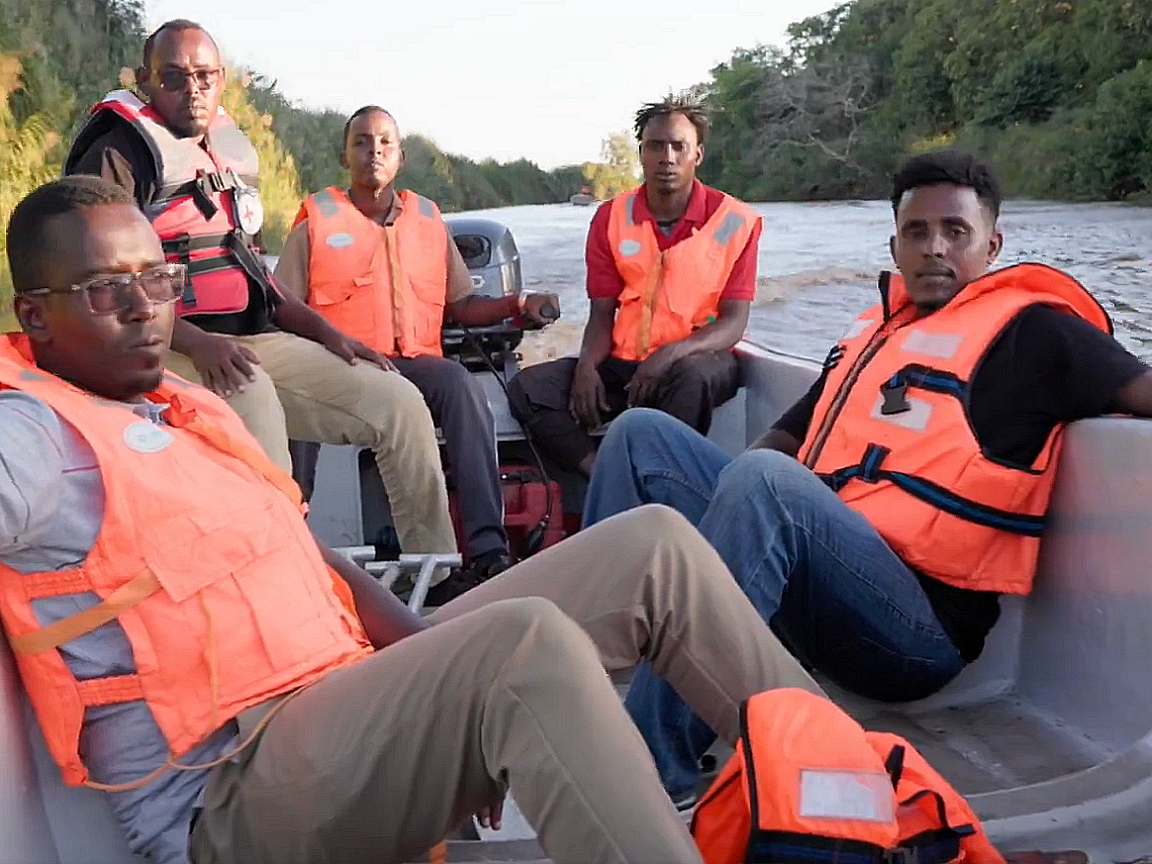
The ICRC is this month helping the Somali Red Crescent distribute sandbags and preposition essential supplies like tarpaulins, mosquito nets and hygiene items in flood-prone areas, and stock supported health facilities. Pictured, volunteers in Kismayo, Bardere, Jowhar and Beletweyne receive aquatic rescue training. (Video grab: ICRC Africa)