
WMO: El Niño and the global climate give new meaning to phrase ‘off the charts’
By the Climate Centre
The year 2026 continues to see exceptional global temperatures, greenhouse gas emissions, melting ice and rising sea levels, with a potentially historic El Niño set to unleash extreme weather well into 2027, according to a new report from the World Meteorological Organization released to coincide with the first day of COP31 in Antalya, Türkiye.
The WMO State of the Climate Update 2026 says the global average surface temperature for January–September 2026 was 1.47°C above the pre-industrial average.
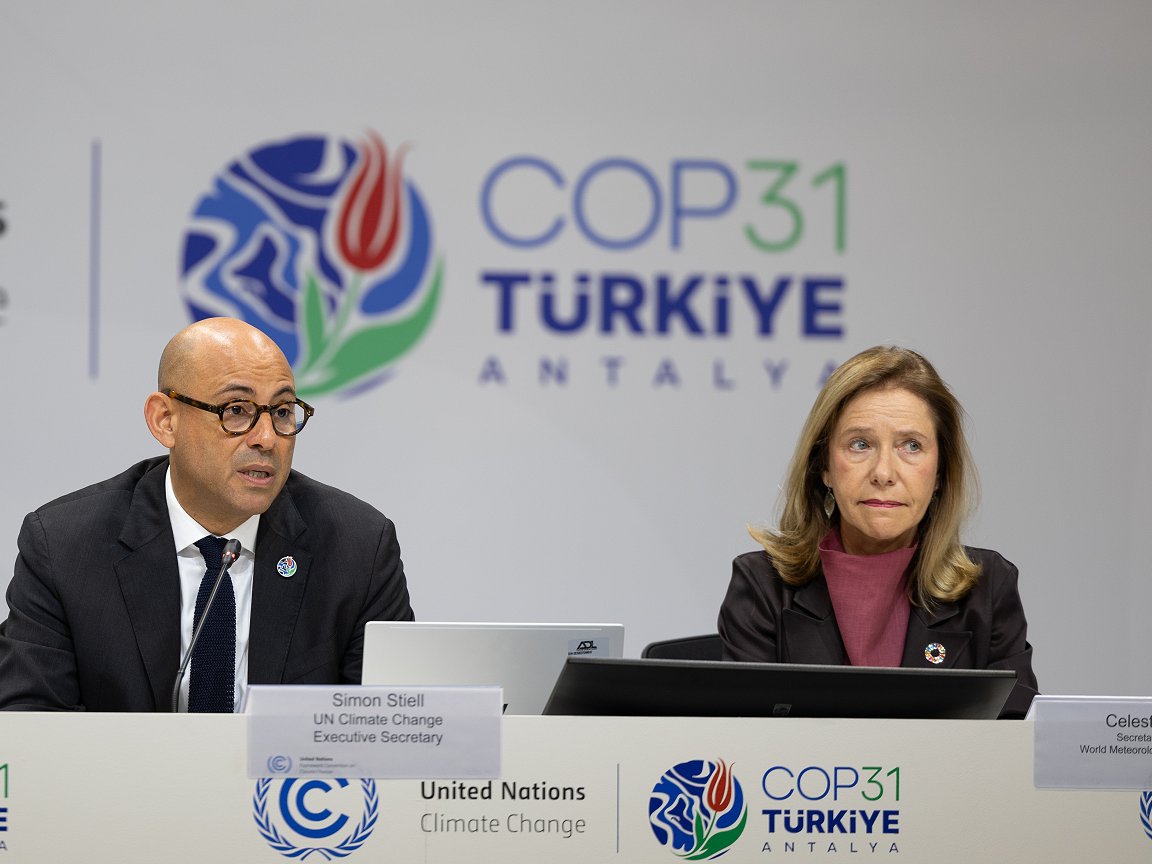
WMO Secretary-General Celeste Saulo said in a press conference at the UN climate talks: “El Niño and indeed the state of the global climate in 2026 gives new meaning to the phrase off the charts. El Niño doesn’t add new heat to the planet. It releases heat from the ocean, which is the warmest ever measured. There is simply more heat available to release.
“We are supercharging our weather, and El Niño will be a risk multiplier. Heatwaves, tropical cyclones, and rainstorms are intensifying faster than our historical baselines prepared us for. Hundreds of millions of people this year have been exposed to unbearable extreme heat, whilst the catastrophic ice and rock collapse and flash floods in Nepal highlighted the compound risks facing communities in fragile, warming high-mountain terrain.”
The report includes data up to September and does not reflect the most recent impacts of El Niño, which is likely to have its greatest effect on global temperatures the year after its development,
It says sea levels are the highest on record while sea-surface temperatures hit monthly records during 2026. The ice lost in 2025 would have filled five Olympic pools every second of the year; freshwater storage has been dwindling since 2014.
‘The question is not what we do as a UN system but collectively as humanity’
The final State of the Global Climate 2026 report will be issued in next March, incorporating contributions from dozens of national met services, regional climate centres, UN partners and other experts.
Extreme events have had an impact on lives and livelihoods, undermined food security, deepened poverty and contributed to displacement across multiple regions, the WMO says.
The European heatwaves, drought and wildfires led to more than 30,000 excess deaths, according to preliminary estimates the report quotes, with national temperature records in at least eight countries, and major impacts on agriculture, energy and transport.
“As COP31 convenes, there are devastating floods in parts of South America and Africa, and drought in countries in Asia and the Pacific and Central America,” Ms Saulo added, but the number of countries reporting the existence of multi-hazard early warning systems has now increased from 56 in 2015 to 136 in 2025. Presenting a message of hope, she said “the question is not what we are going to do as a UN system, but what we do collectively as humanity.”
UN Climate Change Executive Secretary Simon Stiell and Celeste Saulo at today’s press conference in Antalya, where the WMO presented its State of the Climate Update 2026. (Photo: Kiara Worth/UN)