
African National Societies help roll back El Niño impacts
By the Climate Centre
Across the African continent, contrasting but characteristic impacts of El Nino are once again being experienced during what is now regarded by scientists as a potentially historic event.
Flash floods whose severity is being widely attributed to El Niño affected more than 16,000 households in the northern Somali city of Galkacyo, prompting the local Red Crescent branch to provide US$ 100 in cash assistance to 275 households, helping families meet urgent needs and begin restoring their livelihoods.
In its latest country brief earlier this week, the World Food Programme said flood risk remained high across the country, with further humanitarian impacts expected until the end of the year.
Deyr seasonal floods displaced more than 50,000 people in October, WFP said, estimating nearly 900,000 could be displaced between October and December, largely due to flooding.
Drip-irrigation
In Zimbabwe, meanwhile, with El Niño increasing the likelihood of below-normal rainfall, scarce water can mean less food and a higher risk of diseases such as cholera, the IFRC says.
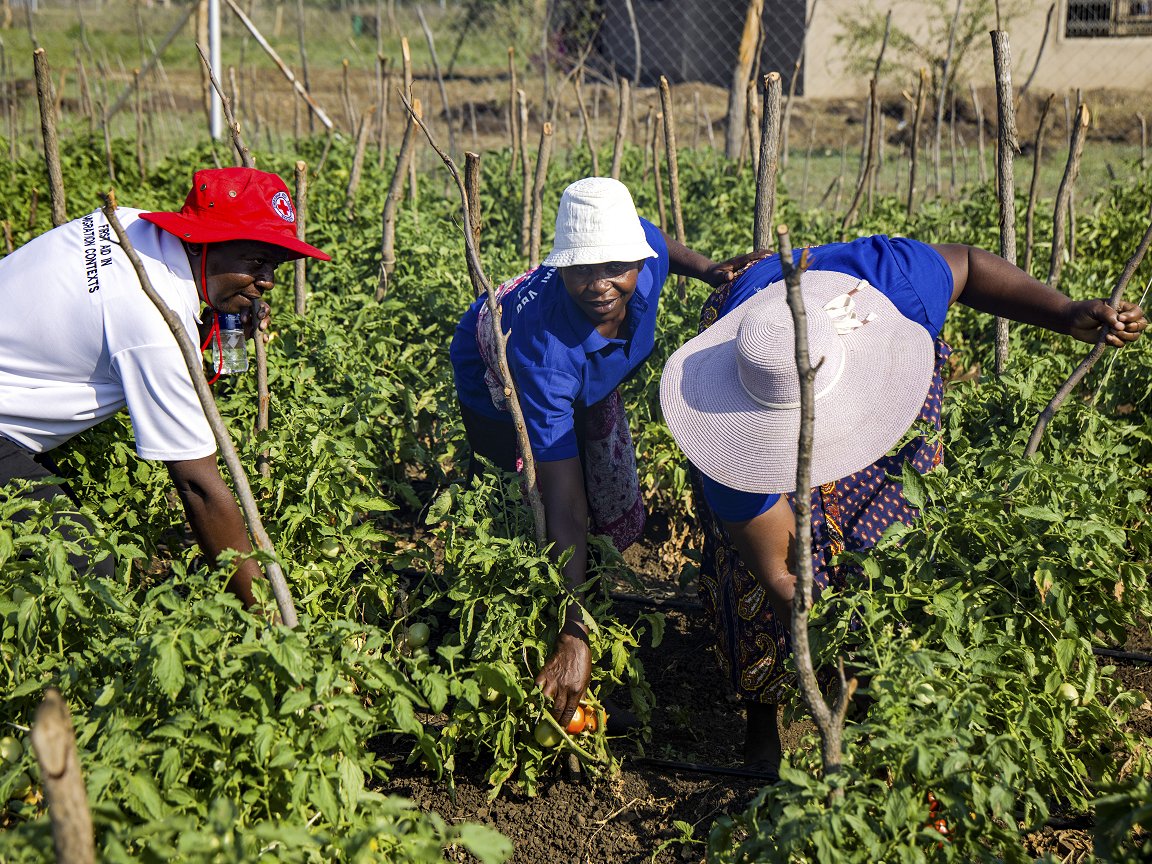
In Chipinge District, the Zimbabwe Red Cross with IFRC and Netherlands Red Cross support is acting on both through the Southern Africa Compounded Crisis project (pictured).
Five boreholes now run on solar power and ten have been rehabilitated, while ten community health clubs promote hygiene. The same water helps drip-irrigate crops for five villages so families can keep growing food and protect their health through dry conditions. With the distribution of drought-tolerant seeds, the Red Cross work benefits 3,000 households.
In a joint press release at the end of last month, the WFP and the UN Food and Agriculture Organization said El Niño has now pushed Southern Africa and the Central American dry corridor onto their list of hunger hotspots “where acute food insecurity is projected to worsen significantly between December 2026 and May 2027”.
The Climate Centre’s Liz Stephens writes: The timing of rainy seasons varies considerably across Africa and shifts in global weather patterns associated with El Niño can have very contrasting effects across the continent.
This year, with a potentially historic El Niño developing in the Pacific, we are seeing some of these characteristic patterns play out.
South Sudan has experienced record-low rainfall during its June to September rainy season, while parts of East Africa are now experiencing heavy rainfall and flooding. Across much of Southern Africa, El Niño increases the risk of drought as the main rainy season gets underway.
The same global climate phenomenon can therefore drive very different humanitarian crises across the continent, at different times of the year.
Members of a village business unit with a Zimbabwe Red Cross volunteer check ripening tomatoes fed by drip irrigation in Chipinge district, as part of the SACC project it’s implementing. (Photo: Rumbidzai Nenzou/IFRC)