
‘Anticipatory action closes the gap between “we knew” and “we acted”’
By the Climate Centre
IFRC Secretary Jagan Chapagain has said anticipatory action remains a top priority for the Red Cross Red Crescent and closes the gap between “we knew” and “we acted”.
He was speaking at last week’s 13th Global Dialogue Platform on Anticipatory Action in Berlin where he said he “shared a simple truth: most of the deadliest disasters were forecast, yet people still suffered.
“Early warnings only save lives when communities can understand them, trust them and act on them.”
The decisions, he added, must be grounded in reality. The IFRC was working to “build a global system that is local, everywhere. And we know it works. The response to Hurricane Melissa showed us what is possible.”
The first day of the dialogue platform, on its tenth anniversary, was opened by the Climate Centre’s Kampala-based Head of Anticipatory Action, Irene Amuron, who said that “seeing governments such as Bangladesh and the Philippines, among others, institutionalize anticipatory action within their disaster-risk-management frameworks is something to celebrate.”
Forecast-based financing – anticipatory action’s precursor – was launched in Uganda ten years ago when in response to a scientific forecast of flood risk the Uganda Red Cross Society distributed relief items to flood-prone communities in Kapelebyong sub-county, 300km north-east of Kampala.
‘It’s an example of what can be achieved
when people have a vision’
Christof Johnen, Head of International Cooperation at the German Red Cross, told the Berlin meeting: “I have been at most of the global dialogue platforms. I like the audacity and the courage to call it a ‘global’ platform, right from the beginning.
“Also, at the start, it was a bunch of nerdy people meeting, but today it is an example of what can be achieved when people have a vision.”
The IFRC’s 2025 flagship report, Strengthening National Disaster Risk Management Systems through the Integration of Anticipatory Action, explores how the methodology is being integrated into government disaster systems, drawing on global trends and including in-depth case studies from Madagascar and Nepal.
It also identifies entry points “within existing, legal, operational and financial, and forecasting capacities … and provides practical recommendations to government and humanitarian actors to do so.”
The Climate Centre’s regional lead for Latin America, Juan Bazo, argued at the dialogue platform in Berlin that the priority for the next ten years “should be to invest in stronger systems for data on impact, to better integrate local knowledge with forecast science, and to ensure that anticipatory action becomes a standard component of … national systems at all levels.”
The dialogue platform, which was initially held twice a year, is supported by the German Federal Foreign Office and hosted by the Anticipation Hub; it is jointly organized with the Danish Refugee Council, FAO, GREDO, the Start Network, UN OCHA, Welthungerhilfe and WFP.
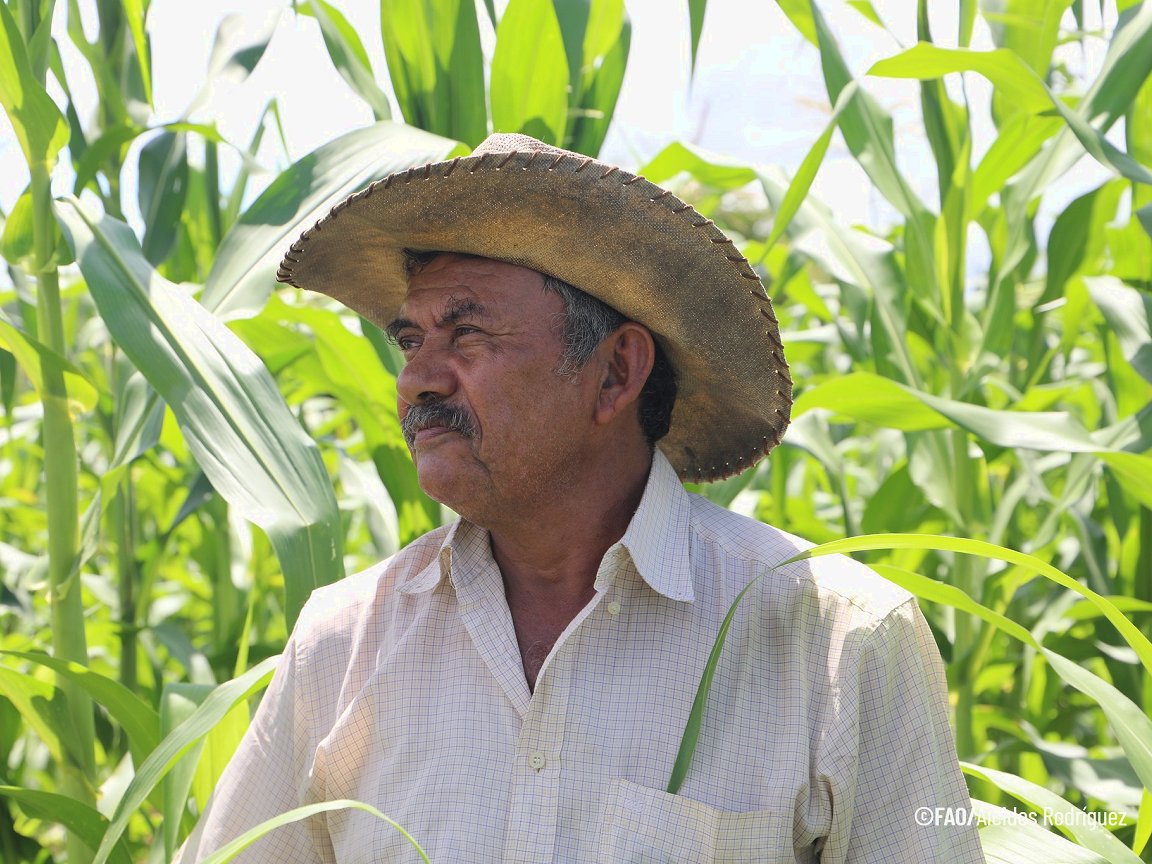
For Sergio and his Honduran family, implementing new anticipatory methods has made a significant difference to their harvest. “We used to plant without following any particular technique, but now with the furrows and the support we received, the plants are growing well.” The picture is by FAO’s Alexis Vallejo, who won a special anniversary photo competition at the dialogue platform with another image from Bolivia.