Deteriorating food crisis in Cameroon affecting millions gets scant international attention
By the Climate Centre
(This story is based on an IFRC press release issued in Yaounde, Nairobi and Geneva earlier today.)
The complex emergency in Cameroon that’s being fuelled by what the IFRC’s 9.6m Swiss franc appeal late last month called “a multitude of drivers”, including recurring climate-related shocks, is getting worse.
A new assessment conducted by the Cameroon Red Cross with support from the IFRC of nearly 6,000 households found that hunger is increasing rapidly.
At least 3.3 million people are struggling to find enough food, with families in the country’s Far North, North and East regions skipping meals, selling livestock or borrowing money just to survive.
The assessment showed at least 60 per cent of households are relying on “extreme coping strategies”, including selling livestock, tools and other productive assets.
It found eight in ten children are not getting enough of the right food, putting them at risk of acute malnutrition and developmental harm.
‘We no longer talk about eating well –
we talk about staying alive’
Adesh Tripathee, IFRC Head of Country Cluster Delegation in Yaounde, says: “Cameroon is facing a silent hunger crisis. Families are doing all they can to simply to stay alive.
“This crisis is not making headlines, but for millions of people it is already an everyday reality.”
The Red Cross team quote a father from Logone-et-Chari in Cameroon’s Far North region saying: “We no longer talk about eating well; we talk about staying alive.
“First, we sold our goats to buy maize. Then I had to sell my plough so we could eat that evening. Now my wife and I skip food for two days so our children can have a handful of grain.”
Cécile Akama Mfoumou, President of the Cameroon Red Cross, says: “The situation is deteriorating rapidly. Families are exhausting the coping mechanisms available to them. Immediate support is critical to prevent further suffering.”
“There is an observed sharp increase in the occurrence and intensity of floods in the region generally,” said Burkina Faso-based Climate Centre scientist Kiswendsida Guigma, “particularly in the eastern Sahel that includes Cameroon.
“This is likely to have been a relatively more significant humanitarian factor than drought.
“With seasonal totals increasing generally, it will be important now to keep an eye on the official outlook for northern Cameroon due late next month.”
UN OCHA has said 45 per cent of recent displacement is estimated to be linked to climate‑related shocks as the Lake Chad basin “continues to bear the brunt of accelerating climate change impacts. Armed violence, insecurity, climate shocks and epidemics remain the primary hazards anticipated for 2026.”
The World Health Organization classifies several areas of Cameroon as “very high priority” for cholera, and last year – for that disease and alongside dengue fever in Sri Lanka – it became one of the first two countries in the world to submit early action protocols for epidemics under IFRC-DREF.
The IFRC will now support the Cameroon Red Cross in scaling up cash assistance, food support, livelihoods recovery, nutrition, clean water and sanitation, and protection, but it says “existing resources are insufficient relative to the scale of needs” and is calling on partners and donors to mobilize resources to protect the most vulnerable communities.
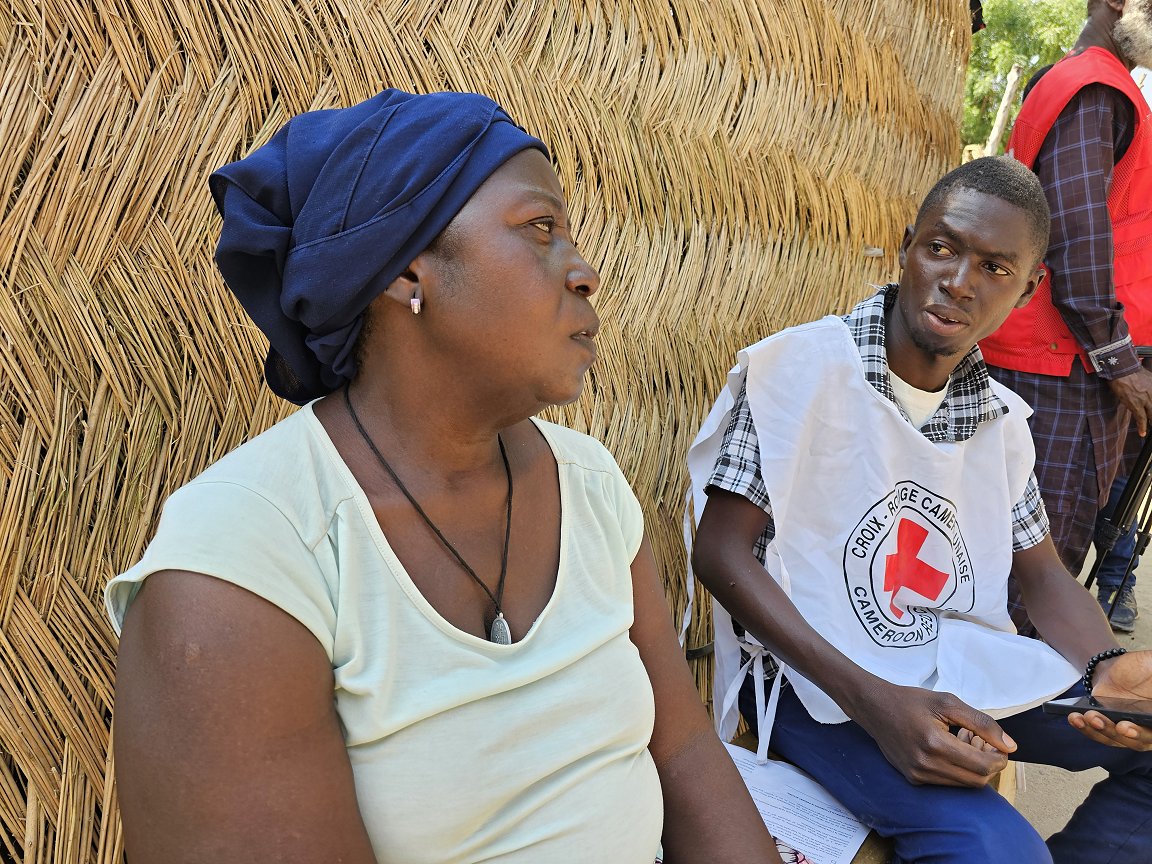
A Cameroon Red Cross volunteer conducting assessment on food security last month in Pitoa town Cameroon’s North Region. (Photo: Cameroon Red Cross visa IFRC)