
El Niño continues to intensify, threatening to expand global hunger
By the Climate Centre
The current developing El Niño could push nearly 50 million more people an into “acute food insecurity” in some of the world’s most vulnerable regions by the end of next year, the World Food Programme said today.
The UN agency said this represented a 22 per cent increase over a baseline population already in at least crisis-level food insecurity, with Central America and Southern Africa potentially among the hardest-hit regions.
El Niño continues to intensify steadily and is expected to dominate global climate patterns in the August–October 2026 season, increasing the likelihood of above-normal temperatures globally and driving significant changes in rainfall, the World Meteorological Organization said earlier.
The WMO’s monthly seasonal climate update says sea-surface temperatures are expected to be nearly 3.0°C above the seasonal average in key monitoring regions, while a positive Indian Ocean Dipole (IOD) is also forecast.
“Together, these oceanic drivers can amplify regional climate impacts, including drought, floods and wildfire risk, particularly around the Indian ocean basin, the WMO says. “Tropical Atlantic sea surface temperatures are also expected to remain warmer than average.”
UN Secretary-General António Guterres said Friday in remarks to coincide with the seasonal update: “El Niño is not just on our doorstep – it is inside the house and turning up the heat. And this is only a warm-up act.
“El Niño is strengthening, adding fuel to a planet already on fire with scorching heat domes, apocalyptic wildfires and record hot seas. Fossil fuels are fanning the flames of this crisis.”
‘This is only a warm-up act’
WMO Secretary-General Celeste Saulo said: “El Niño is one of the most closely monitored climate phenomena in the world. But forecasts in themselves do not prevent hazards, people do.
“This El Niño developing against the backdrop of unprecedented ocean heat and rising temperatures, provides governments and communities with a window of opportunity to anticipate risks and act before impacts unfold. The decisions we make today will shape the impacts we experience tomorrow.”
The WMO’s full El Niño/La Niña Update is due to be issued early next month, also incorporating the influence of multiple climate drivers including the IOD and Atlantic Ocean conditions.
The WMO update predicts an “overwhelming likelihood of above average temperatures across most land areas” – much of Africa, southern Europe, the Arabian peninsula, the Indian Subcontinent, eastern Asia, Central America, the Caribbean, Southern Africa, much of South America and New Zealand.
Wetter-than-normal conditions are expected across the Horn of Africa, parts of Central Asia, Southern Europe, Western North America (south of 45°N), and south-east South America.
In contrast, drier-than-normal conditions are more likely over the Indian Subcontinent, south and east Australia, southern Central America and parts of the Caribbean, north-western South America, and Northern Europe.
Australia’s Bureau of Meteorology said Friday that while the Indian Ocean Dipole is currently neutral, models suggest a positive IOD may develop later this year.
During the Australian bushfire disaster that triggered a major humanitarian response by the Red Cross and others in the 2019–20 Southern Hemisphere summer, BOM Head of Long-Range Forecasts Andrew Watkins said the “key culprit for our current and expected conditions is one of the strongest positive Indian Ocean Dipole events on record.”
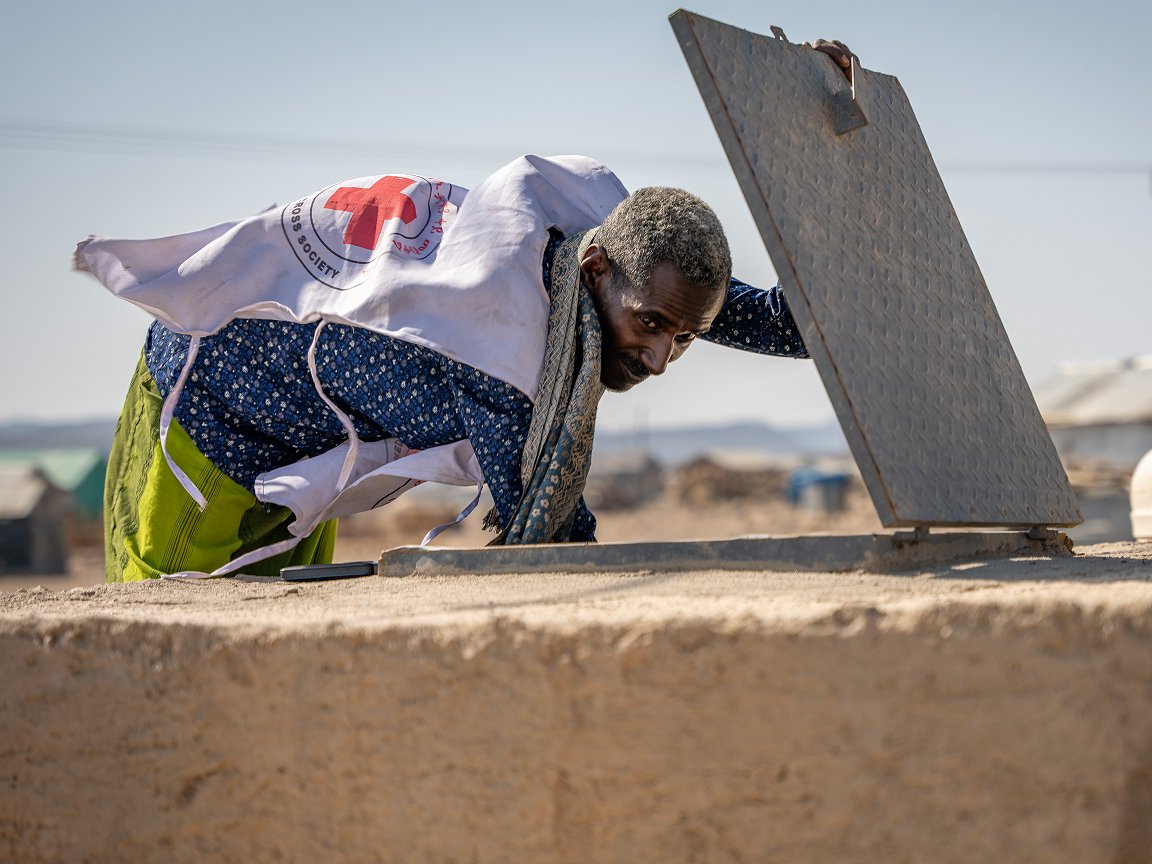
There are concerns about likely below-normal June–September 2026 rainfall over Sudan, South Sudan, Ethiopia, western Kenya and Karamoja in Uganda associated with developing El Niño conditions, FEWS NET has recently said. Pictured, in the Kori district of Ethiopia’s Afar region in 2024, water shortages forced the closure of both its local school and health post: Ethiopian Red Cross volunteer Kedo Mei checks the status of a local tank installed that year with Finnish Red Cross support along with rainwater harvesting hardware. (File photo: Aki Kolehmainen/Finnish Red Cross)