
Heat Action Day 2026 on 2 June
By the Climate Centre
On 2 June the 5th edition of Heat Action Day will bring communities together worldwide to tackle the growing threat of extreme heat. This year’s theme – indoor heat – puts the spotlight on the health risks people face in their homes, schools, workplaces, and care facilities, a preview on the website of the Global Disaster Preparedness Center says.
“Whether you’re sharing life-saving tips on social media or organizing a community event, there are many ways to get involved and help #BeatTheHeat,” it adds.
Two virtual sessions for inspiration and guidance on how to participate will be held next Tuesday 5 May at 09:00 Central Europe Time and at 09:00 US Eastern Time.
The GDPC website carries full details about how to register and participate (at various levels of engagement), as well as a wide range of communications and advocacy resources, including for social media platforms.
Launched by the IFRC in 2022, the special day centres on raising awareness and action on extreme heat – an increasingly deadly threat worldwide.
Urban heat-islands
Led by National Societies and partners, Heat Action Day mobilizes cities, communities, and organizations around the world to take simple life-saving steps to protect people from heat-related illnesses.
Due to climate change, a growing number of people around the world are facing serious health risks from exposure to heat inside their own homes, or in public and privately managed facilities such as schools, health facilities, prisons, and care homes. Without respite and access to cooling, extreme heat by night or day poses significant health risks.
Indoor heat disproportionately affects older adults, people with pre-existing health conditions, those living in informal settlements, and people in energy poverty who cannot afford cooling.
Building materials, design characteristics, and the effects of urban heat-islands all play a role in determining indoor temperatures.
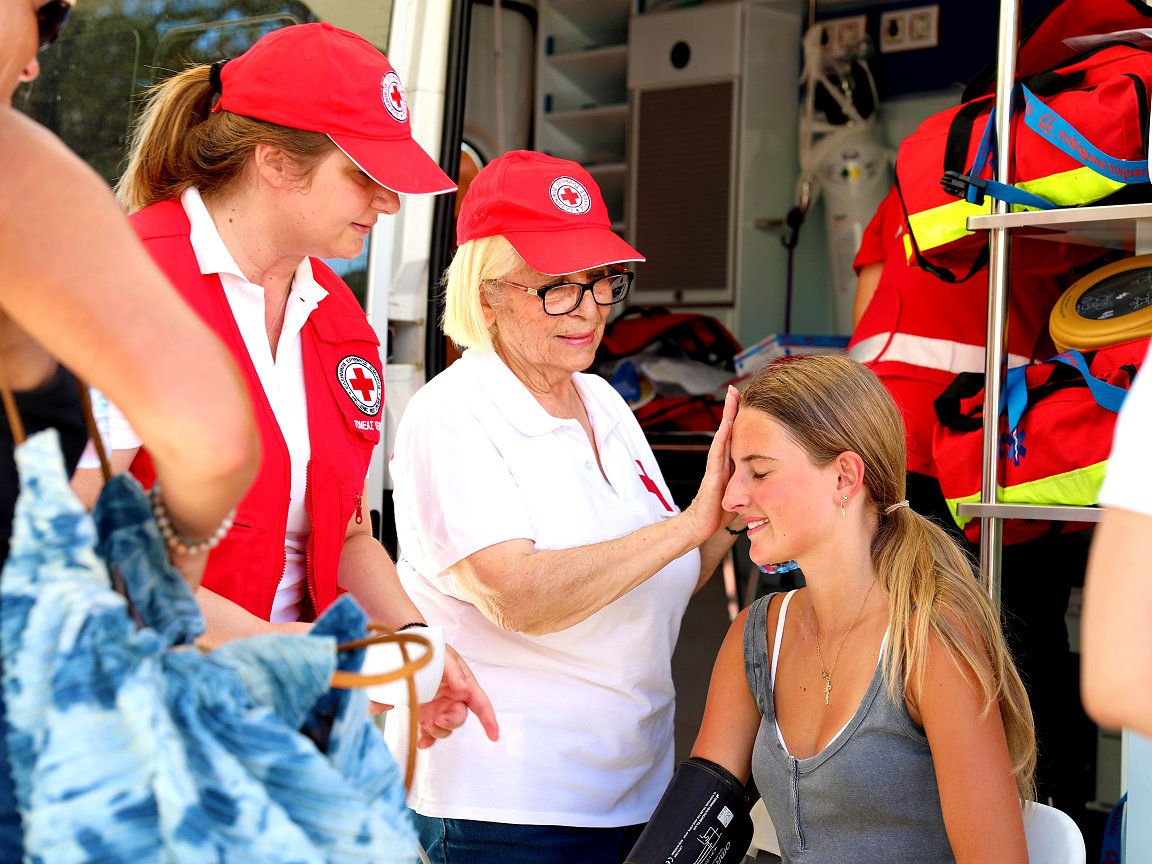
In summer 2024 the Hellenic Red Cross activated its simplified early action protocol for extreme heat, triggered by a National Observatory of Athens forecast of scorching temperatures. Red Cross teams carried out anticipatory actions to help some 2,000 people cope, including bottled water, isotonic drinks, food and sun cream for the homeless other vulnerable groups, people working outdoors and tourists. (Photo: HRC)