Menu

When local action drives global solutions

Climate disasters are accelerating but the most effective solutions are often driven at the local level. Organized by the IFRC and the Climate Centre, the Climate Action Summit on 16 September 2026 will bring together global leaders, community voices, and climate actors to explore how locally driven action can help the world better prepare for climate disasters. As the world’s largest humanitarian network, the IFRC works every day in communities facing the impacts of climate change. This summit will highlight solutions already emerging at the local level and the partnerships needed to scale them up globally.

The world is at a critical juncture

Climate disasters are increasing and communities everywhere are suffering the consequences. At the same time, international cooperation is under pressure, making strong leadership and concrete solutions more necessary than ever.

Around the world, people are already taking action within their communities. But these local solutions often lack the support and funding needed to scale up. Currently, only a small portion of global climate finance reaches the local level.

The Climate Action Summit will bring together global leaders, community voices and innovators to move beyond talk and focus on action, sharing concrete solutions, strengthening partnerships and amplifying locally driven climate action where it is most needed.

Join global leaders and community actors shaping the future of climate action.

Climate-smart agriculture
Case study

Climate-smart agriculture

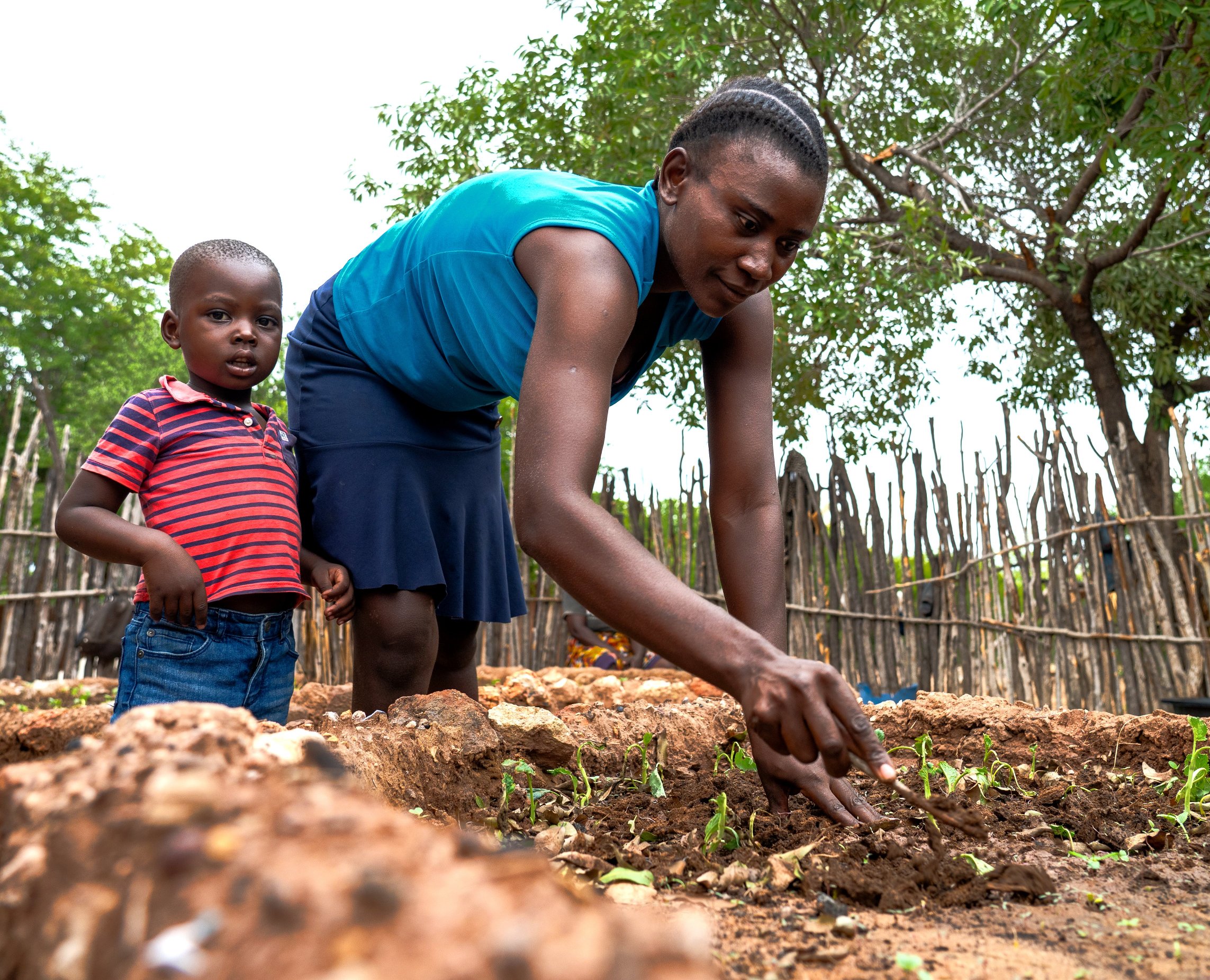
Vivian (pictured with her 3-year old son Akil) is one of the 30 drought-affected farmers chosen by the Zimbabwe Red Cross – supported by the Finnish and Danish Red Cross – to pioneer climate-smart agricultural techniques in northern Matabeleland. She had focused on pearl millet but has now diversified into vegetables such as okra, carrots and tomatoes. “I didn’t get a chance to go to school,” says Vivian, 36, but she has “dreams of becoming an independent farmer … I hope that Akil has access to education. He wants to become a pilot, and I want to see that to happen.”

Read more

Climate Action Summit themes

The Climate Action Summit will cover four themes: how communities can better anticipate, prepare for and reduce climate risks; transforming local leadership into large-scale actions for adaptation and resilience; mobilizing funding that reaches the communities that need it most; and new approaches to help communities anticipate climate-related disasters and strengthen their resilience.

Climate in the IFRC Global Plan 2026

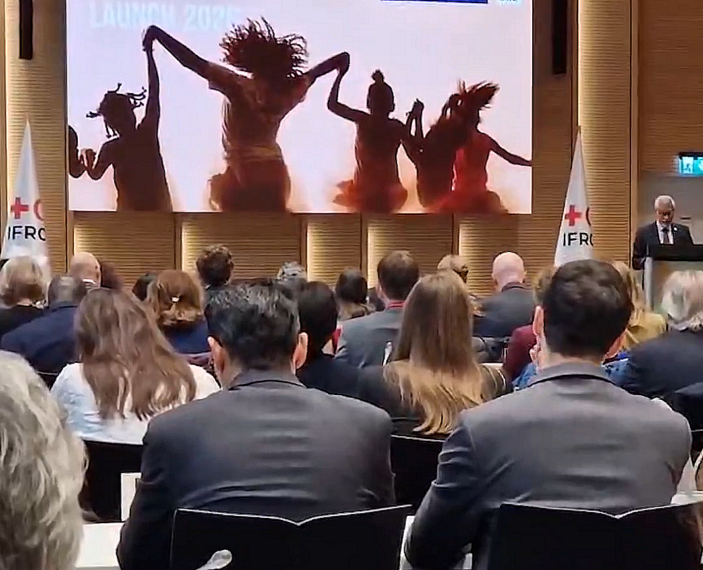
Jagan Chapagain launching an executive summary of the IFRC Global Plan 2026 in Geneva last December, and behind him the image used to illustrate it. “The plan highlights the urgent challenges facing communities worldwide, from more frequent climate-related disasters to protracted conflicts, rising displacement, health emergencies and growing vulnerabilities,” the summary says.

Feature story

Lessons in climate resilience from Mexico

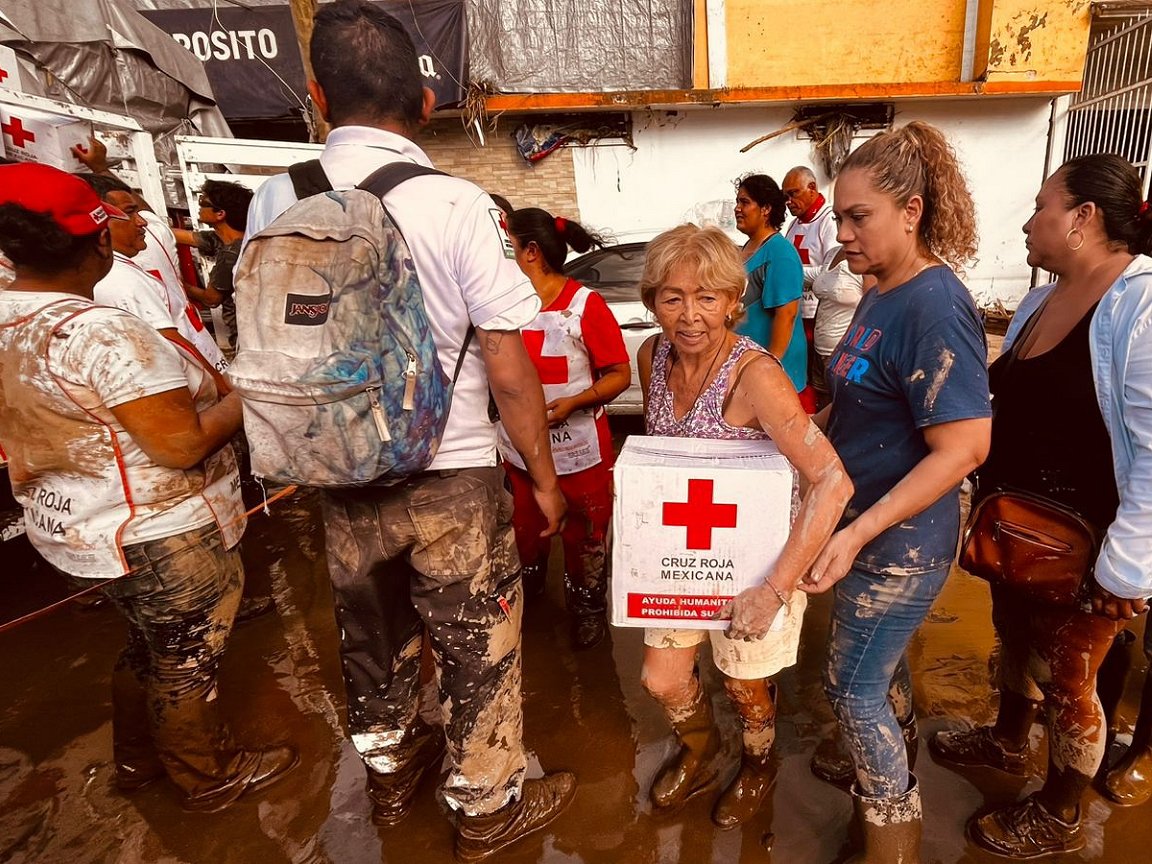
Mexican Red Cross volunteers pictured delivering tons of humanitarian aid to the most severely affected areas of Veracruz state in 2024 floods. The National Society is using a methodology developed by the Zurich Climate Resilience Alliance to guide a holistic and participatory process for flood resilience in the state, as well as health issues raised by heat-related vector-borne diseases in Mexicali, as four of its experts on resilience detailed in an article reproduced by the IFRC and the Climate Centre.

Read the article
Lessons in climate resilience from Mexico
Video

Climate migration in Bangladesh

Every year, millions of people in the Asia-Pacific region face stronger storms, rising waters, and growing uncertainty. Some are forced to leave their homes. Others are trapped, unable to move without support. This five-minute documentary explores the lives of fishing communities as climate change reshapes their livelihoods and forces displacement.

In Bangladesh alone, extreme weather has triggered more than 20 million internal displacements between 2008 and 2024. In 2023, with the support of the IFRC, the Bangladesh Red Crescent reached 3.4 million people through disaster response and early recovery and 926,000 through long-term programmes.

Watch the documentary