‘El Niño conditions will pour fuel on the fire of a warming world’
By the Climate Centre
UN Secretary General António Guterres today added his voice to calls for the highest levels of preparedness and “informed decision-making” ahead of what is now widely forecast to be a revived El Niño over the next few months – possibly reaching officially strong status by around the end of the year
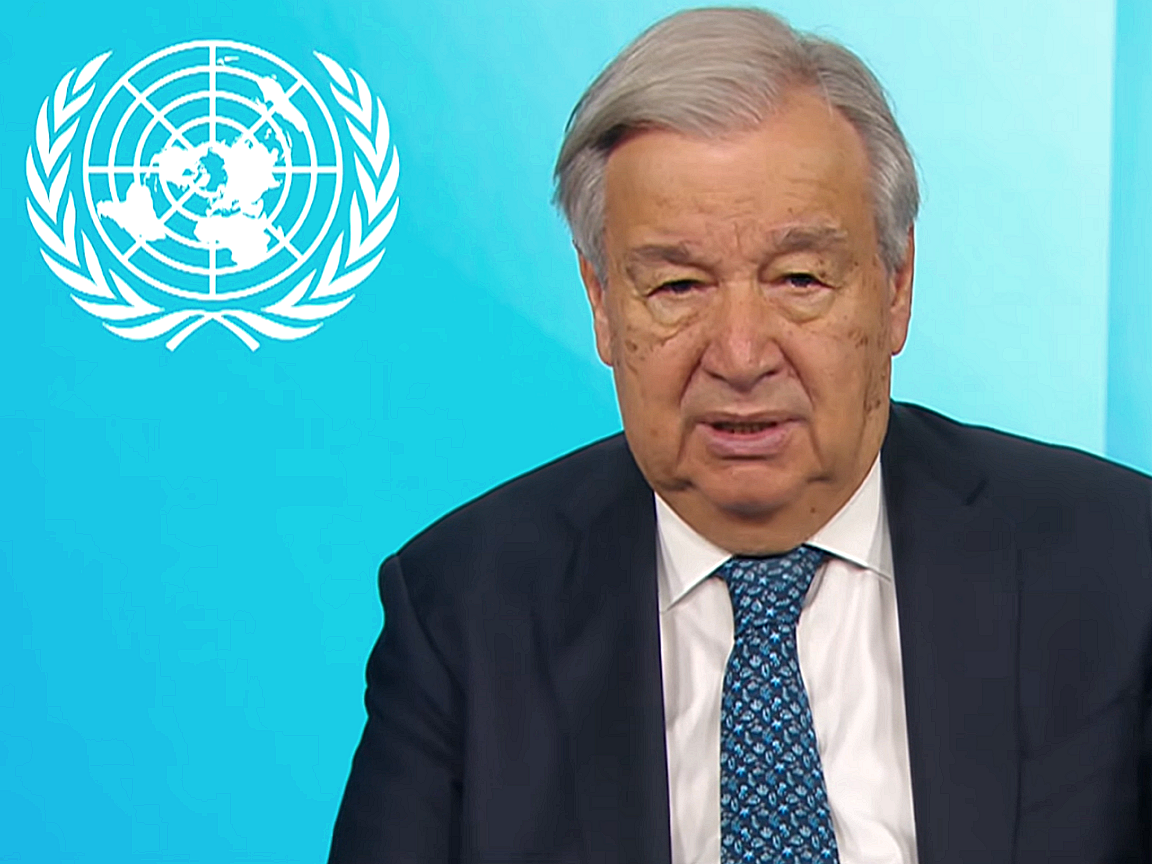
“El Niño conditions will pour fuel on the fire of a warming world,” he said in a video message (screen shot) on Heat Action Day 2026.
“Impacts will hit even harder, travel even farther, and cross borders with devastating speed.
“The only effective response is climate action equal to the crisis – ending the addiction to fossil fuels, accelerating the shift to renewables, protecting the most vulnerable, and delivering early warning systems for all.”
In its most recent update, also issued today, the World Meteorological Organization foresees an 80 per cent likelihood of an El Niño established by August, with the virtual certainty that it would continue until at least November.
“Although some uncertainty remains about El Niño peak strength and timing, most forecast models suggest it will be at least moderate – and possibly strong,” a WMO press release adds.
‘Advance seasonal forecasts’
WMO Secretary General Celeste Saulo said today: “The WMO community will be carefully monitoring conditions in the coming months to inform decision-making by governments, humanitarian agencies and climate-sensitive sectors.
“Advance seasonal forecasts and early warnings are vital to save lives and cushion the impact on our economies and our communities.”
El Niños generally develop between March and June and peak between November and February the following year, during which impacts on global temperatures are typically the most pronounced.
With above average temperatures now forecast nearly everywhere for June to August, IFRC Secretary General and CEO Jagan Chapagain said today: “More than 500,000 people die each year from heat-related causes, yet it remains a silent crisis.
“Through the IFRC’s extreme heat initiative, we are helping communities prepare for and adapt to extreme heat. Resources must reach local communities, and local actors must be empowered to lead.
“Governments, businesses and communities all have a role to play. We can no longer afford to look away. Extreme heat is here, and it is deadly.”
Consensus inputs
There is no evidence that climate change increases the frequency or intensity of El Nino events, but it can “amplify associated impacts because a warmer ocean and atmosphere increases the availability of energy and moisture for extreme weather events,” the WMO explains.
The UN agency’s updates on El Niño/La Niña are based on a consensus inputs from various global centres, and national meteorological and hydrological agencies and climate prediction centres, and are produced in collaboration with Climate Centre partners IRI (the International Research Institute for Climate and Society).
El Niños are associated with increased rainfall in southern South America, the southern US, parts of the Horn of Africa and central Asia, and drier conditions over Central America, northern South America, the Caribbean, Australia, Indonesia, and parts of southern Asia – with opposite impacts occasionally relatively close together.
The Greater Horn of Africa Climate Outlook Forum, for example, predicts below-normal rainfall across much of the northern Horn of Africa during the critical June–September rainy season, while South Asia can expect below average monsoon rainfall and Central America drier and warmer conditions, according to local forums.
UN Secretary General António Guterres speaks on El Niño impacts today. (Screen shot: UN)