
In a warming Arctic, Norwegian Red Cross ’snow-how’ helps communities prepare for emergencies
By the IFRC
(This story is an IFRC multimedia feature published last week that also included survival tips from the Norwegian Red Cross Mountain Code. It has been edited here for length.)
Long distances, harsh weather year-round, and limited resources – this is the reality for Norwegian Red Cross volunteers in the Arctic.
They are used to working in remote locations, navigating challenging terrain, and making the most of the resources they have.
“I often drive long distances. It’s often very cold. I always make sure I have a shovel, food, and a sleeping bag in the car, something I’ve done for many years,” says Gabriella Jurisic Ottesen from the Norwegian Red Cross.
“It’s not certain that there will be other cars that can help if your car stops, and so with the equipment I know that I can take care of myself.
”In minus 30 degrees, toilet breaks along the road are quick. It’s common knowledge to leave the car running.”
Basic survival and rescue skills are more critical than ever as the Arctic climate changes. Warming is happening three to four times faster in the Arctic than the global average, which leads to more frequent extreme-weather events.
Permafrost thaw, sea ice loss, coastal erosion, torrential rain, avalanches and wildfires take a heavy toll on local communities and ecosystems.
‘When we go out on a search, it’s important that we all have the same knowledge’
Traditional livelihoods are being upended. Remote communities face isolation and struggle to access healthcare and emergency support. Preparedness and response services are overstretched.
Climate change also impacts the mental health of people in the Arctic, disproportionately affecting indigenous populations whose connection to the land is deeply interlinked with well-being.
Individual and community resilience is being worn down by climate-induced stress, grief and worry for the future.
In the years ahead, climate change will define what life in the Arctic will look like, challenging communities’ routines and demanding rapid adaptation.
These realities underscore why the IFRC holds observer status at the Arctic Council, engaging in projects on emergency prevention, preparedness and response across the region.
Drawing on the knowledge and expertise of National Societies, the IFRC collaborates with Arctic Council member states and permanent participants to build community resilience amid the changing climate.
“It’s often when the weather isn’t at its best that we’re called to action,” says Sandra Asmyhr, one of the Norwegian Red Cross volunteers in Sør-Varanger doing search and rescue missions.
“Then it’s a matter of finding shelter to check maps, plan further searches and have a little break.”
The climate and weather conditions make such operations physically challenging. A stretcher or a patient carried in deep snow in the dark becomes heavy very quickly.
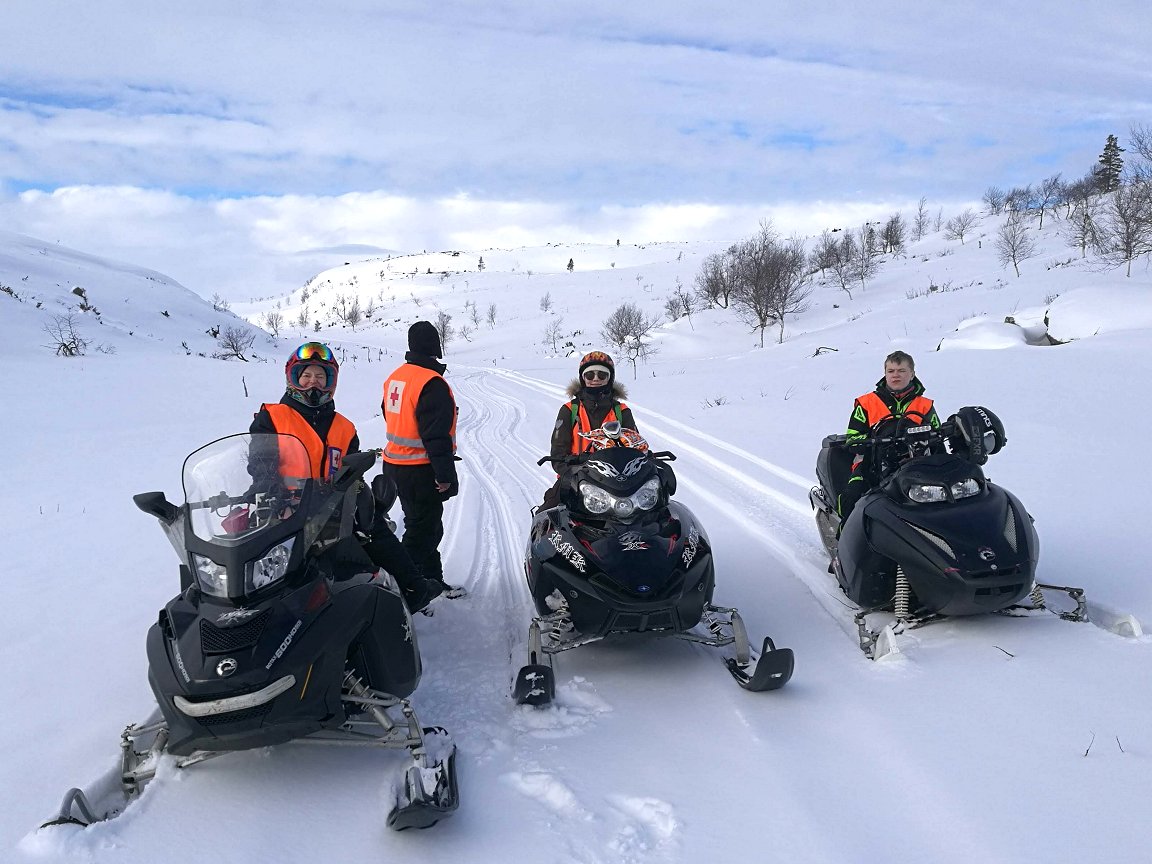
But understanding the environment and having local know-how – or “snow-how”, as they call it – the volunteers are ready to step in and provide support to their communities in all types of weather.
Given the vast distances and scarcity of resources in the Arctic, making first aid available for communities is vital for saving lives.
The Red Cross volunteers are extensively trained to provide first aid. They are well prepared for cases when professional emergency responders are not available, or where distances or harsh weather conditions mean assistance is too far away.
The Norwegian Red Cross has also developed a self-preparedness workshop, which in addition to physical and practical preparedness planning, includes psychological preparedness for emergencies.
If enough people are prepared to be self-sufficient for up to several days in crisis situations, the authorities and response organizations can prioritize their resources to the most vulnerable groups.
“It’s important to get to know each other across organizations during ‘peacetime’, when things are calm,” said one Red Cross volunteer. “Then it becomes much easier to collaborate when the storm hits.”
Joint exercises between multiple organizations allow volunteers and other first responders to build trust and develop confidence in working together.
“Crews from the Red Cross and Norwegian Rescue Dogs train for searches after an avalanche,” says Judith Fjeldberg from the Norwegian Red Cross.
“When we go out on a search, it’s important that we all have the same knowledge.
“We need to be familiar with each other’s search strategies so that we can achieve the best possible results. For me, it’s reassuring to know the people I’ll be searching with, and that we’re training together.”
Local Red Cross branches are also frequently engaged in exercises with their local municipalities and emergency responders to train their role in supporting information and support centres that are temporarily established following a crisis or evacuation: for example, after a maritime accident or during extreme weather.
Volunteers help register evacuees, distribute food and blankets, treat minor injuries, assist in transportation to hospital, and provide psychosocial support to people affected.
‘I am part of something that can make
a difference’
Despite the efforts to build local preparedness and response capacities, the region’s sparse population and vast distances pose many challenges.
“Up here in the north, we miss having a few more people to rely on,” said one Red Cross volunteer. Another adds: “It makes us very vulnerable, especially when it comes to winter preparedness. If it’s just two of us going out, there’s a real risk that we might not be able to respond because safety is compromised.”
Furthermore, volunteers who contribute to emergency response often face chaotic situations, lack of information, long hours, and potential high risk.
In addition, not all missions end well. Such experiences place significant emotional strain on volunteer responders.
Many of them have faced adversity and struggled with feelings of stress, uncertainty, guilt or inadequacy in the aftermath of a mission.
For this reason, the Norwegian Red Cross has developed a structured programme for emotional debrief to support volunteers and staff that have experienced challenging incidents.
Local volunteers in Norway’s remote Arctic regions hold a broad and nuanced understanding of what constitutes emergency preparedness for their communities.
Their approach is rooted in local knowledge, trust among community members, and the ability to identify and support those most in need.
Beyond contributing to emergency response efforts, their work as volunteers also strengthens the social fabric that resilience depends on.
“An important part of preparedness is taking care of the mental health of vulnerable groups,” explained volunteer Sandra Asmyhr.
“Together, we create good memories and prevent exclusion, where the impact lasts beyond the summer holidays and when everyone is back at work and school.”
By being on standby as first aid responders at a concert or organizing psychosocial activities for children, volunteers get known by the community but also learn ”the nooks and crannies of the municipality”, as one described it.
“I am part of something that can make a difference,” says one Red Cross volunteer.
Norwegian Red Cross volunteers on snowmobiles take part in an orientation trip to learn about the environment they will be operating in during emergencies. (Photo: Judith Fjeldberg/Norwegian Red Cross)